
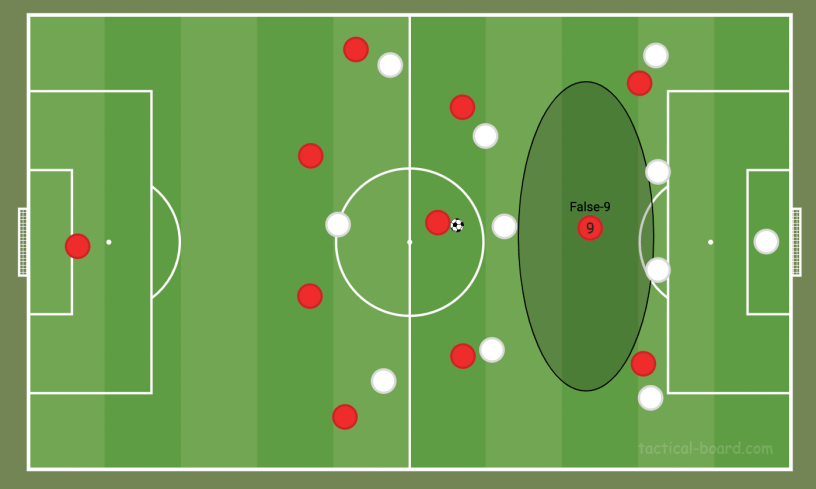
The first thing to say here is that the false-9 is the hardest role in all of football to defend against. Its popularity is greater today than it ever has been, and that’s no surprise. It asks so many questions of the opposition and requires so many players to combat it, that defending teams end up temporarily abandoning their game plans to deal with a false-9.
False-9s have become the modern day solution to the decreasing effectiveness of a classic No10. Teams playing a 4-2-3-1, such as Liverpool in 2016, found that opposition sides were also using this shape to combat them. It left No10s like Roberto Firmino marked by two midfielders.
The response to this allows for an extra midfielder and a player whose qualities can be used to replace a No10 and a No9 all in one.
False-9s start in disguise as a true striker, but drop in to offer a 4v3 overload in midfield build-up, drifting between the lines.
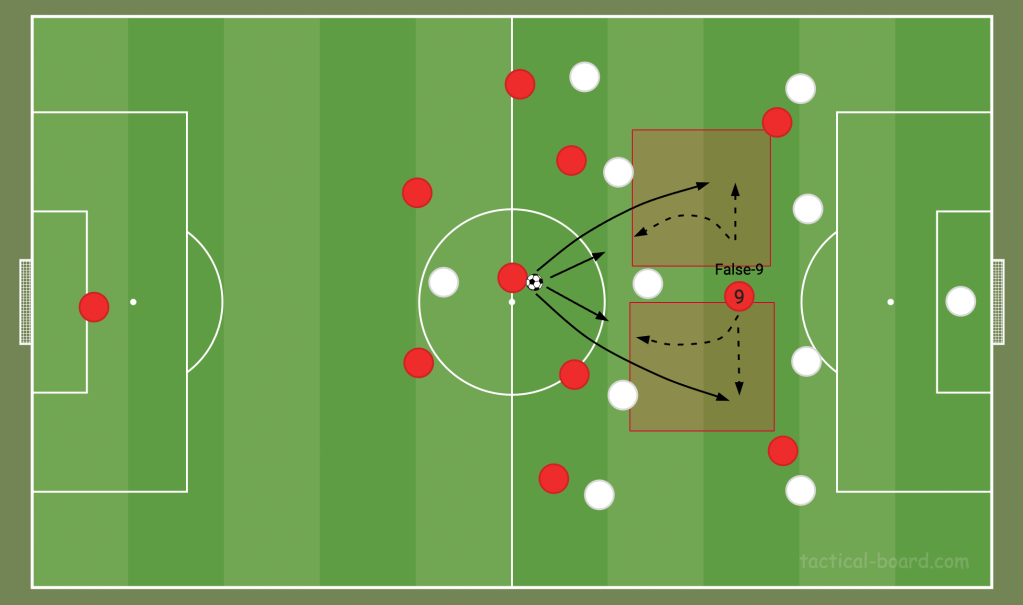
They massively increase the number of receiving options from those of a striker, and are the most inconveniently positioned player on the pitch to defend against. It is important to note that a centre-back should never be left to mark a false-9 alone, as they will get dragged out of position and third-man runs can be made by wingers or midfielders.
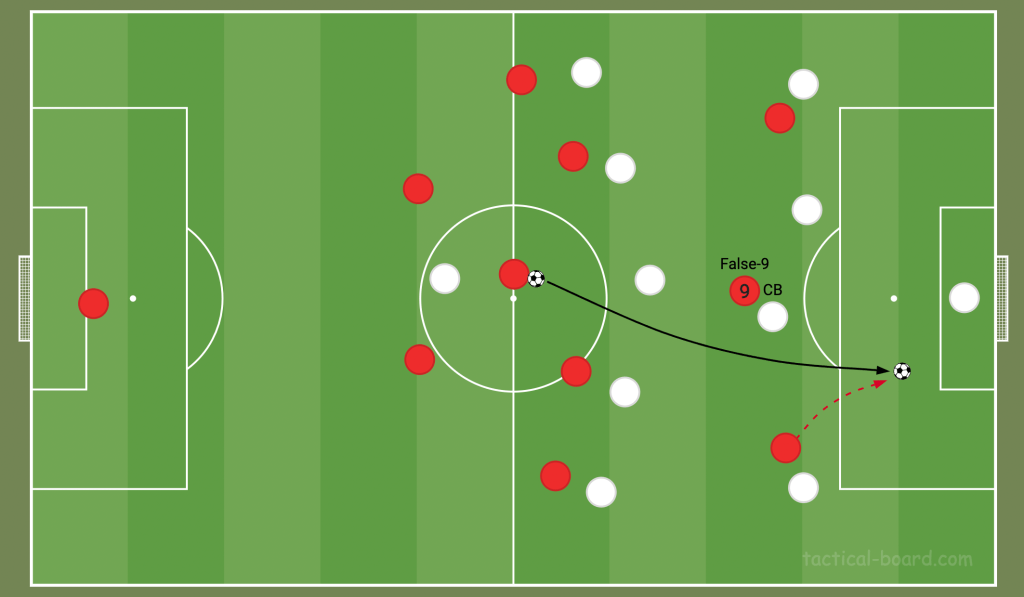
Two different systems were trialled by European teams in an attempt to defend against teams using a false-9. Some teams found that just playing with four midfielders themselves — matching the opposition up man-for-man — was effective in preventing overloads from occurring so easily. Other sides, who didn’t mind conceding possession for long periods in games, found that simply reducing the space between the lines of defence and midfield would suffocate a false-9 and prevent them from exploiting gaps.
However for many clubs, it doesn’t align with their philosophy to drop back. Instead, they preferred to find a way to defend a false-9 while still pressing aggressively high up the pitch.
Here is how this can be done:
The 4-2-3-1 shape is the best. The reason for this is that it provides a safety box around the false-9 through the centre-backs and double-pivot, eliminating all the positions a false-9 likes to occupy. The vertically-staggered nature of this formation helps to limit the space between the lines both horizontally and vertically.
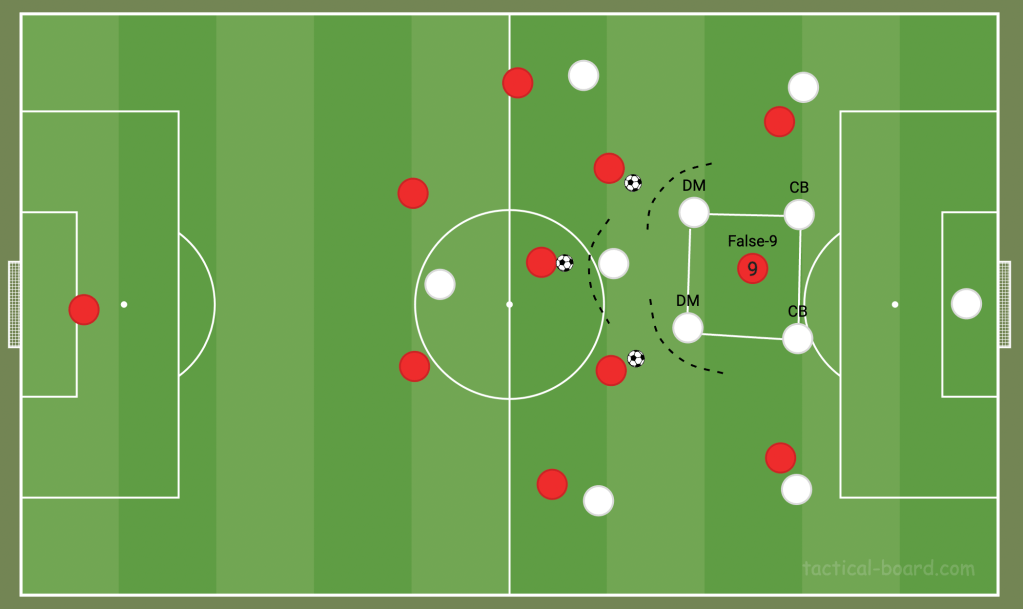
However, to pull this system off, the two pivots need to be constantly aware of where each other are in relation to the false-9. This is because of the roles they each have to play at particular points.
When the false-9 team is attacking in the second phase, their defensive midfielder should not be a worry, as the defending team’s attacking midfielder should be marking them out of the game. This means that the closest pivot player should cut the passing lane between the ball-carrier and the false-9, with the other pivot ensuring no late runs can take place by tightly marking the false-9, as seen below.
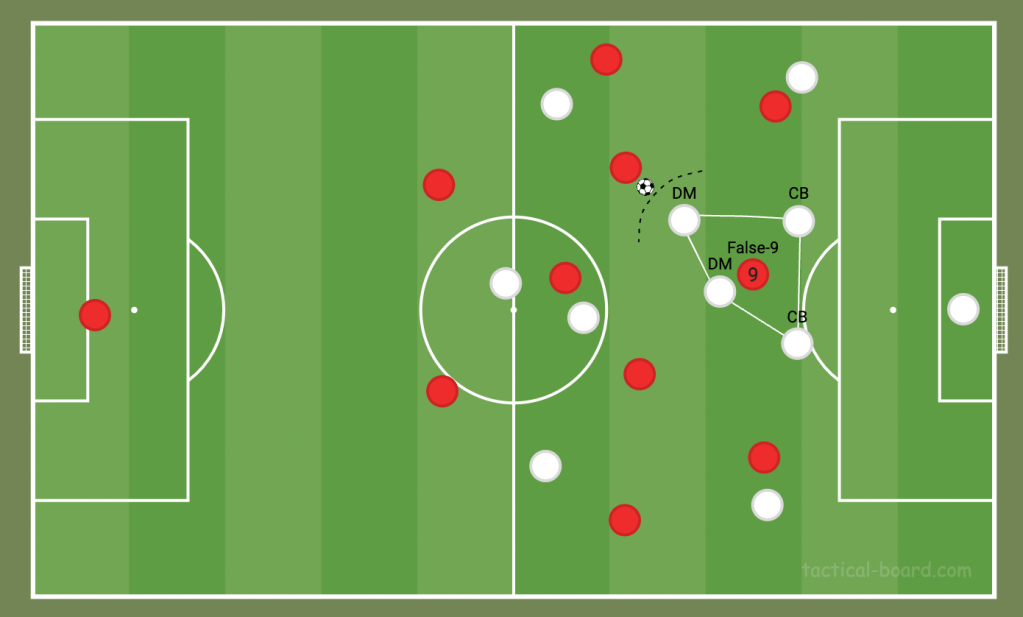
Manchester United attempted something similar to this last year against Liverpool, but neither of their pivots were aware of their surroundings and Harry Maguire was left to defend against Firmino in false-9. This gave Liverpool’s devastating wingers options to run in behind with ease.
 Tactically Speaking