
One of the main positions up for grabs in Gareth Southgate’s England team is central midfield. Kalvin Phillips made the role his own at the European Championships last year, with Jordan Henderson and Jude Bellingham coming on as so-called ‘finishers’ from the bench to hold games out.
However, it is in fact Southampton’s James Ward-Prowse who may be best suited to unpicking this current Iran side.
Quite aside from his set piece prowess, there are a couple of features of his game — already on show this season — which make him an appropriate candidate to start alongside Declan Rice.
Firstly, Ward-Prowse’s roots in wide midfield, at England and Southampton junior level, have come in handy both with linking play and providing rotation.
England tend to attack down the left flank more regularly than on the right. This is because of the passing angles offered by right-footed Harry Maguire, along with the overload created by Mason Mount and Declan Rice in the half-spaces between the lines.
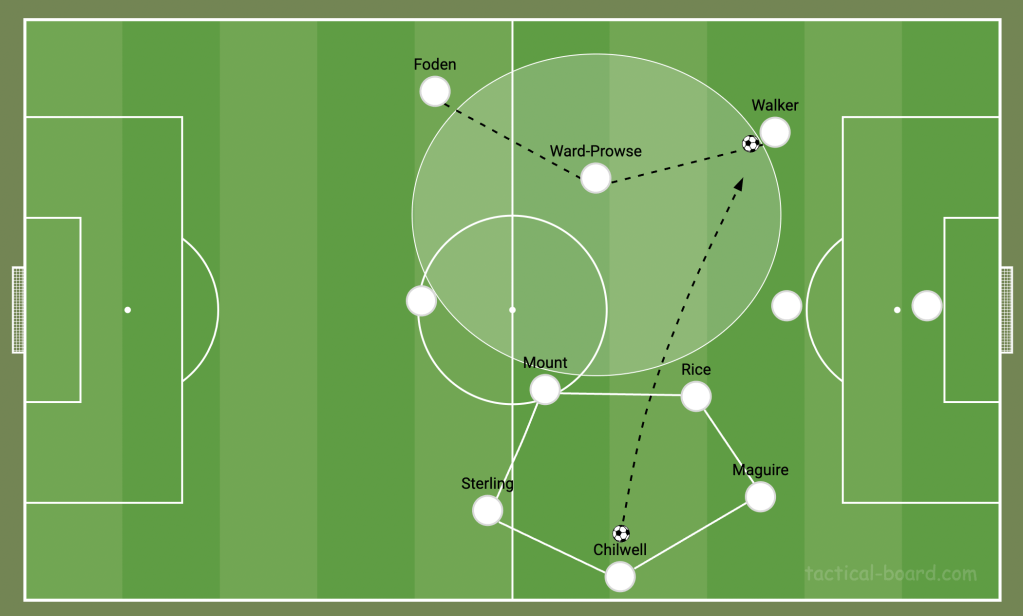
Therefore, when the ball gets switched from the left to the right side, only one of England’s midfielders is ever an option to receive. The advantage of this player being Ward-Prowse as opposed to another squad member (such as Kalvin Phillips) is that he is comfortable drifting wide to link the play from right-back to right-wing. When Ward-Prowse has offered himself in this kind of area before, his team have been able to launch a quicker and more direct attack.
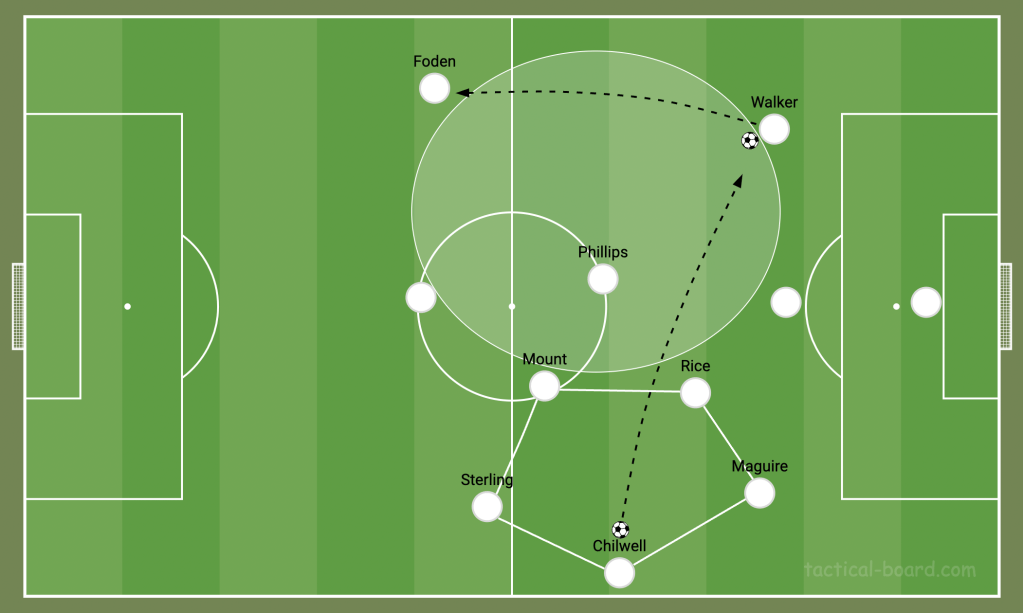
During the Euros, Phillips wasn’t particularly well-drilled in making this movement instinctively (as seen below), and Kyle Walker was often forced into attempting a speculative pass to Phil Foden.
Iran are a team who, since becoming a back-four team, have preferred to stretch the play horizontally and bypass the central zones. Deploying a 4-1-4-1 system has meant they always have two wide men on either side of the pitch.
England will have to strike a balance between overloading midfield to exploit Iran’s clear weakness and combatting their main threat out wide.
The likelihood is England will start Kyle Walker at right-back, and if so, will need one of the midfielders to cover Iran’s wide man on the left — since Walker is used more to prevent counter-attacks than to press players. Ward-Prowse has the perfect skillset to offer central overloads and wide cover when needed, giving England the best chance of playing on the front foot.
So far this season, we have seen Southampton use one set move in particular on numerous occasions during the first phase. Inspired by the tactics of Napoli manager Luciano Spalletti, Ward-Prowse has dropped into the right-half-space to receive the ball from the goalkeeper or centre-backs. This asymmetric rotation also involves Kyle Walker-Peters starting high up, ready to receive a short pass from Ward-Prowse to begin an attack and bypass the press of other Premier League sides. Against Manchester United, this was Southampton’s main path out of defence.
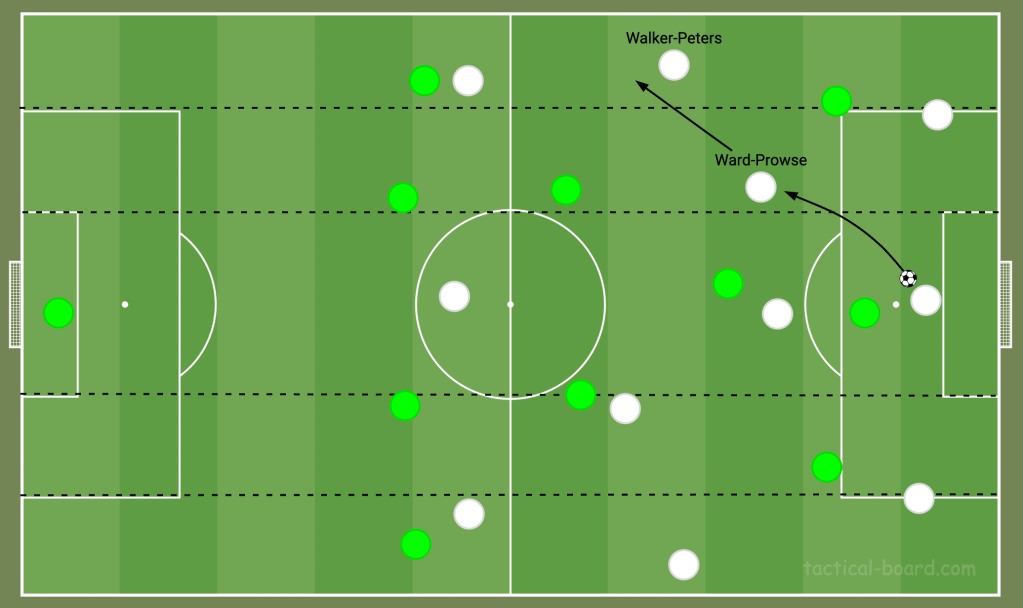
Southgate likes to incorporate elements of the tactics used by his players’ domestic teams, and this move could be one to practise ahead of England’s opener.
Rotation will be key to breaking down Iran, especially in their flat, rigid midfield block. For the left-footed players like Phil Foden and Bukayo Saka vying for the right-wing spot in Southgate’s team, an inverted run would be the fastest route to goal. It’s something England were able to use frequently against Italy in the Nations league this summer with Ward-Prowse starting in midfield, due to his excellent positional awareness. Ward-Prowse would end up the widest man on England’s right-side while Foden would temporarily dart infield, just as below.
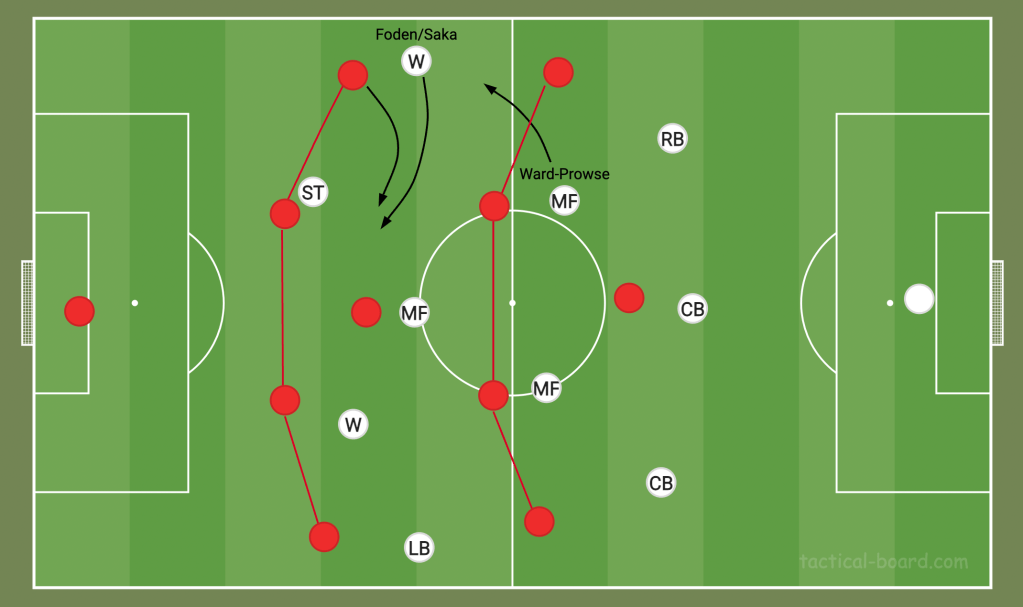
Especially effective against teams who leave more space in the middle, rotations like this may prove the most lucrative way to attack through the spine of Iran’s XI.
 Tactically Speaking