

Take a look around Newcastle’s training ground, and you’ll see the word ‘intensity’ written up a lot. This has been the main message from Eddie Howe since he took over as coach. The team’s fitness levels have improved massively, from being near the bottom of the table under Steve Bruce for distance run per 90 minutes. Newcastle are now fit enough to play the way that Howe wants to, and the players appear to have an improved understanding of each other and the game plan. Newcastle finally play with intensity and cohesion.
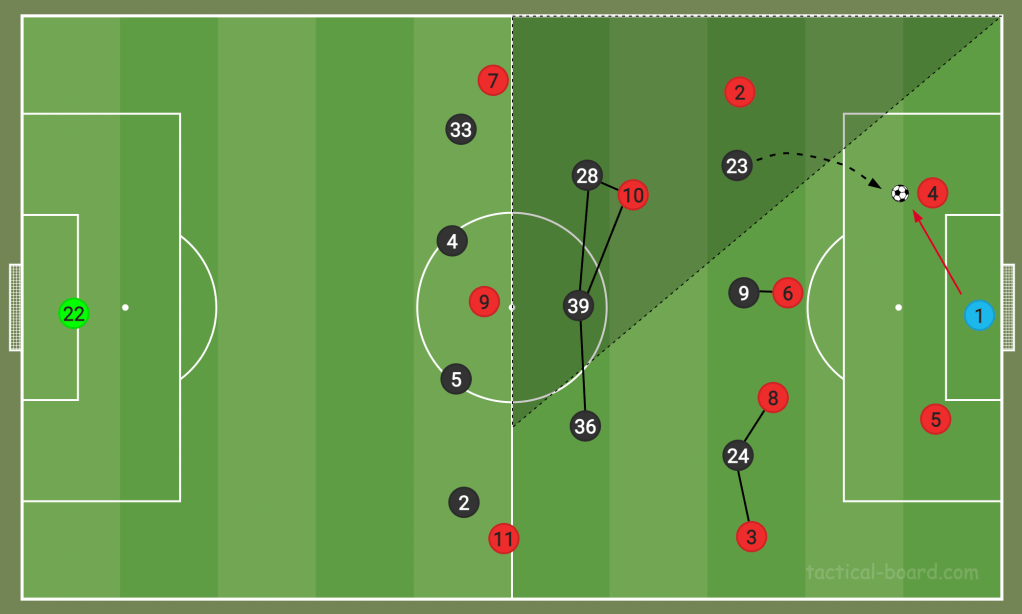
Much like Liverpool over the last five years, Newcastle have adopted a kind of Gegenpress. The idea is to swarm around the opposition player with the ball — committing between four and seven players — with a view to winning back the ball quickly, or at least preventing them from playing a short pass. They start very narrow off the ball, and bend their pressing runs to eliminate passing options for the other team. This was seen very clearly against Manchester United in the Premier League, when a goal kick was taken short. Murphy’s run immediately blocks off the wide area of the pitch, forcing the opposition to play inside where Newcastle have strength in numbers.
From open play Newcastle are just as dangerous. Their wingers are their most technical players. (This is not revolutionary. Steve Bruce knew this too, but deployed them in a different way.) The quality of players such as Miguel Almirón, Jacob Murphy and Allan Saint-Maximin would be wasted on third-man runs, so the team look to get them on the ball as much as possible.
What’s often seen with Newcastle is a ball up the channel from either full-back towards the wingers — capitalising on the gap left in behind by the opposition full-backs. What’s interesting here is that the entire team will dart upfield when this ball is played. Newcastle get more numbers in and around the box than most teams, and it causes overloads in attack.
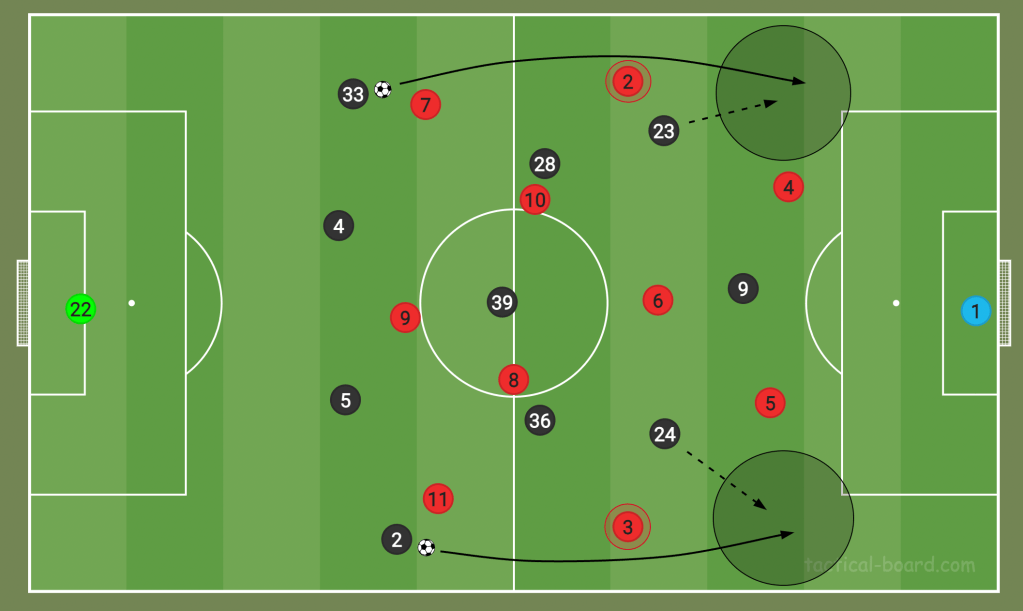
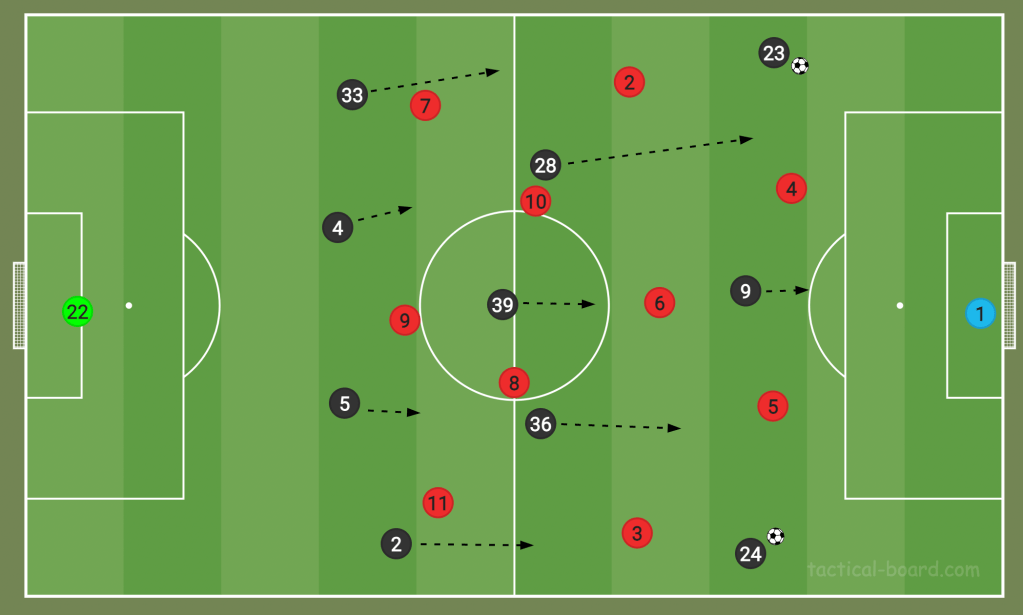
From here, they have sometimes used the full-backs to cross into the box, and other times the wingers have held the ball up, waiting for support in the final third, then dribbled into the box themselves.
Like in a chess match, Howe’s game plan is based around always looking multiple moves ahead. Creating overloads not only increases their chances of scoring a goal, but also fits their defensive principles for if they lose the ball during an attack. The Gegenpress mentioned earlier requires Newcastle to have a lot of players near and around the ball when possession is lost. The success of Newcastle’s Gegenpress has been particularly tangible this season, with many of their goals coming directly from turnovers of possession high up the pitch.

While Newcastle’s Gegenpress is so fruitful, it is the most taxing on energy levels of any defensive strategy out there. Later in games, when play has become stretched, the cohesion of the team becomes arguably even more important to their defence. They have to be selective in when to press and when to sit off. They hunt in packs, and their wide players in each third of the pitch are especially good at maintaining vertical balance.

The image above shows the typical movements of each player to perform simple rotations while pressing. Most often, left-winger Murphy and right-back Kieran Trippier are the widest men on the pitch. This makes sense, as Murphy’s position on the flank opens up a hole for Joe Willock to make push up into at times, and Dan Burn’s experience as a centre-back as well as a left-back makes him adept at covering both narrow and wide zones. Similarly, on the right, Trippier can afford to push higher at times, since Sean Longstaff in midfield is defensive minded, and can cover for him.
Newcastle are very clear on their game plan, and now they really can make it work. There’s a reason they don’t lose games.
 Tactically Speaking