
Trying to predict who the so-called ‘dark horses’ will be when each new tournament rolls around is one of the hardest things to do. At Euro 2020, we had Denmark, Switzerland and the Czech Republic. Four years ago it was Sweden and Russia, and most notably the finalists Croatia. This tournament is bound to produce a few shocks, and here are three teams who have what it takes to go further than most would say.
Ecuador:
Group A promises to be one of the most interesting, with no one able to agree on how the final table will look. Few have Ecuador down as one of the two to progress, however. But why?
Traditionally, Ecuadorian teams have been notorious for their aggression and power. This Ecuador side is no different. Playing a 4-3-3, they are able to get the most out of players like Pervis Estupiñán — their marauding full-back, and 33-year-old striker Enner Valencia.
Despite having the second youngest squad at the competition, opposition teams have struggled to play attractive football against their dogged defensive unit. Indeed, Ecuador haven’t conceded a goal for six games. The last time they did was in March, in a draw with Argentina.
This is largely down to the fact that they defend very deep with a tight structure. The 4-4-2 and 4-5-1 are their most common defensive shapes, but it’s important to note that they tend not to press opponents on the ball, but instead drop back swiftly — shutting up shop.
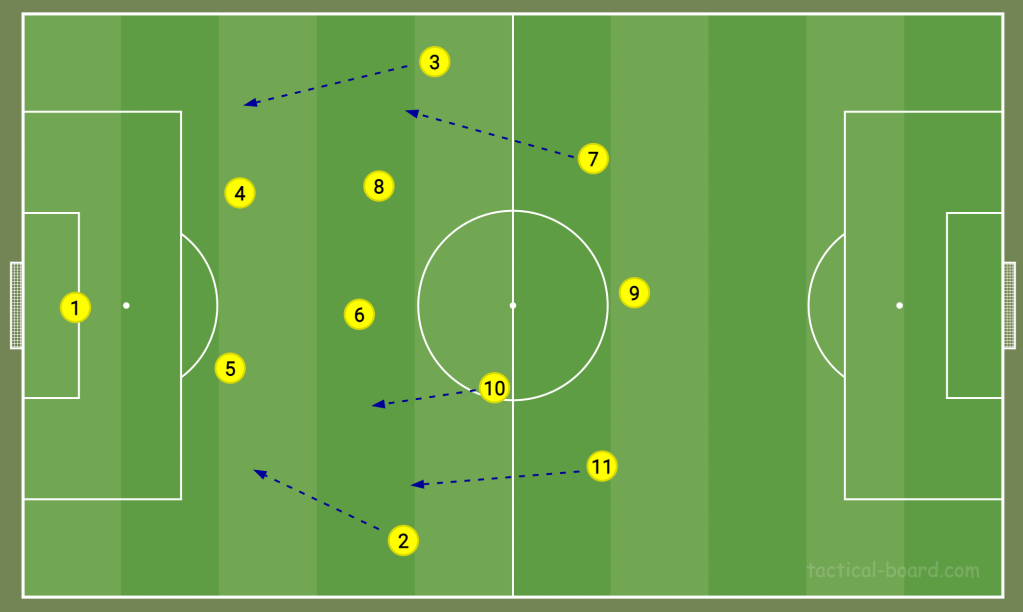
While this may sound like a boring tactic deployed to disguise weaknesses throughout the side, there can be no denying that it works. Only one of their last 15 matches has ended in defeat.
The trends seen from Ecuador in attack are far more exciting. Darting forward at pace, and getting their full-backs high and wide, they find most success when they catch teams off guard. As a team with great stamina too, they often rely on wearing the opposition out gradually, and winning games late on. The final 15 minutes of a match are always crucial for Ecuador, with over 40 percent of their goals in World Cup qualifying coming after the 75th minute of a game.
Serbia:
The first thing to say here is Serbia dominate games. If they don’t have the majority of possession, then something has gone wrong. They have had more of the ball in all of their last nine games, and they managed a total possession percentage of 58 across their six Nations League fixtures this year.
Serbia have become famous in international football of late for playing a very well-oiled 3-5-2 system. A relative lack of quality in defence, they have benefited from adding an extra centre-back in the last two years, and with three devastating strikers, it makes sense for them to have at least two of them on the pitch at all times. If you can afford to put players like Luka Jović on the bench, you must be good.
What’s most interesting about Serbia’s formation is the lack of natural width. Teams using a 3-5-2 typically like to play through the middle of the pitch. It’s often used by teams who have real quality at wing-back, and want to isolate these players one-on-one with an opposition wide player. And while Serbia do play largely through the central zones, and they do have excellent wing-backs (especially in Filip Kostić), they use them differently to what would be expected. Their wing-backs are most commonly seen making inverted diagonal runs in behind defences to get on the end of a long ball over the top. This is why their wing-backs rack up so many goals and assists.
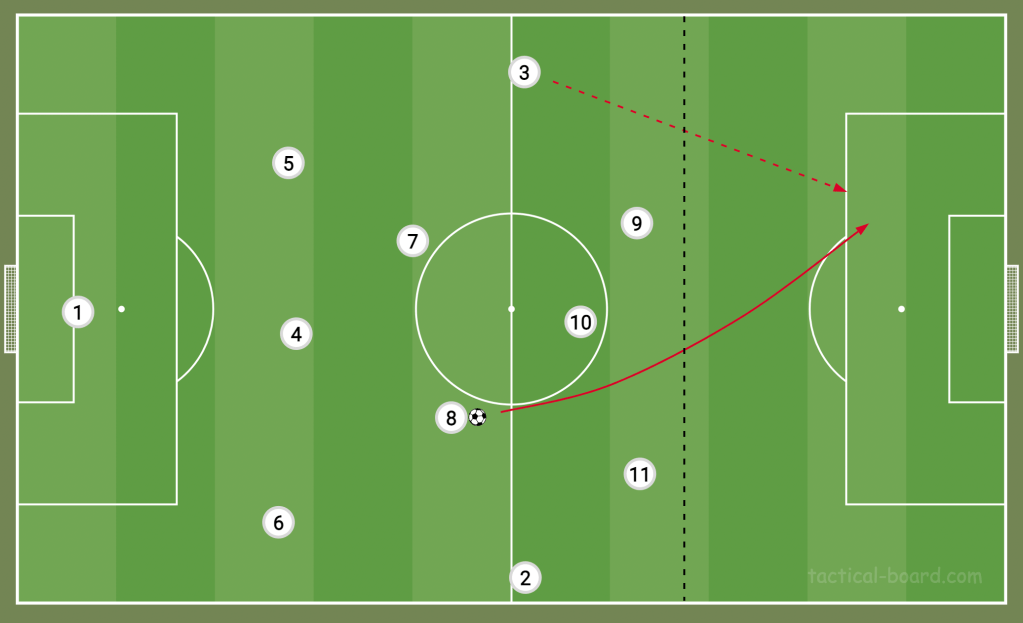
This might come in particularly handy in their game with Brazil, who play a high line and are susceptible to the threat of a long ball over the top.
Switzerland:
While Switzerland are also in Serbia’s group, there is just no telling which of them will make it out of the group — likely alongside Brazil.
Switzerland are never tipped to surprise, but usually come out of competitions in a better place. Managed by Murat Yakin, Switzerland have transitioned seamlessly from their time with Vladimir Petković, who made them very hard to beat.
In the last 18 months Switzerland have beaten Portugal and Spain, knocked France out of the European Championships, drawn again with Spain as well as twice in qualifying against Italy — whom they finished ahead of in the group.
How do they do it? Well, there are few teams in world football who favour the central zones more than Switzerland. They hate playing out wide. It means they are automatically in a tight, compact unit, which makes defensive transitions very simple.
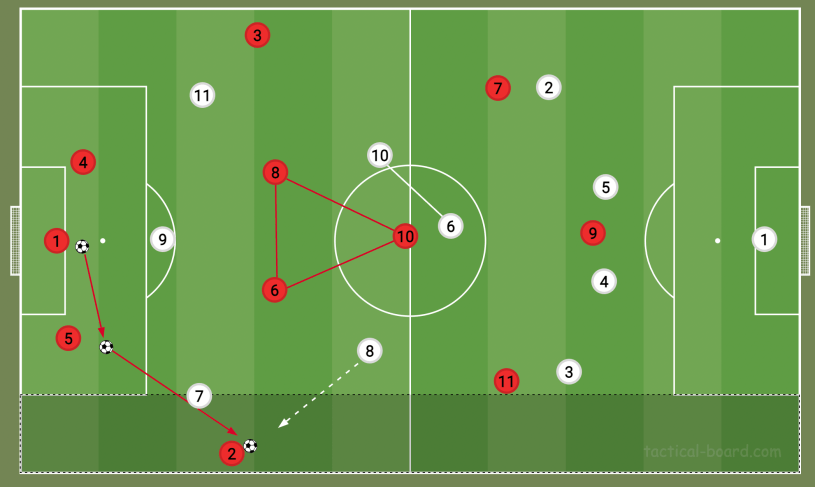
In fact, the only times they really choose to play into wide areas is in the first phase of build-up. What you’ll often see with Switzerland is the goalkeeper playing the ball out to his full-backs first. As this stretches the opposition, leaving gaps in the middle of the pitch, where they always have two deep midfielders.
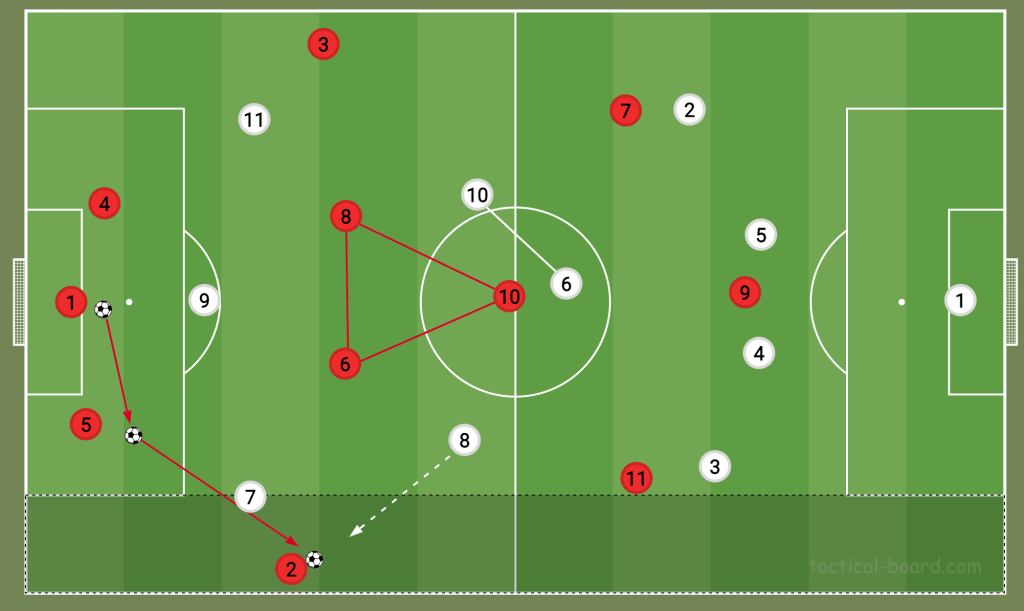
Switzerland are not a particularly mobile team compared with other top nations in Europe, and they tend to play more passes to feet than through balls for a teammate to run onto. This means that other countries will try to man-mark their players out of the game. However, the antithesis of a 4-2-3-1 — to deploy when man-marking against it — is a 3-5-2 with two attacking midfielders. This is not a formation many teams on the planet are well-versed in playing. It’s not one which is all too easy to transition into either.
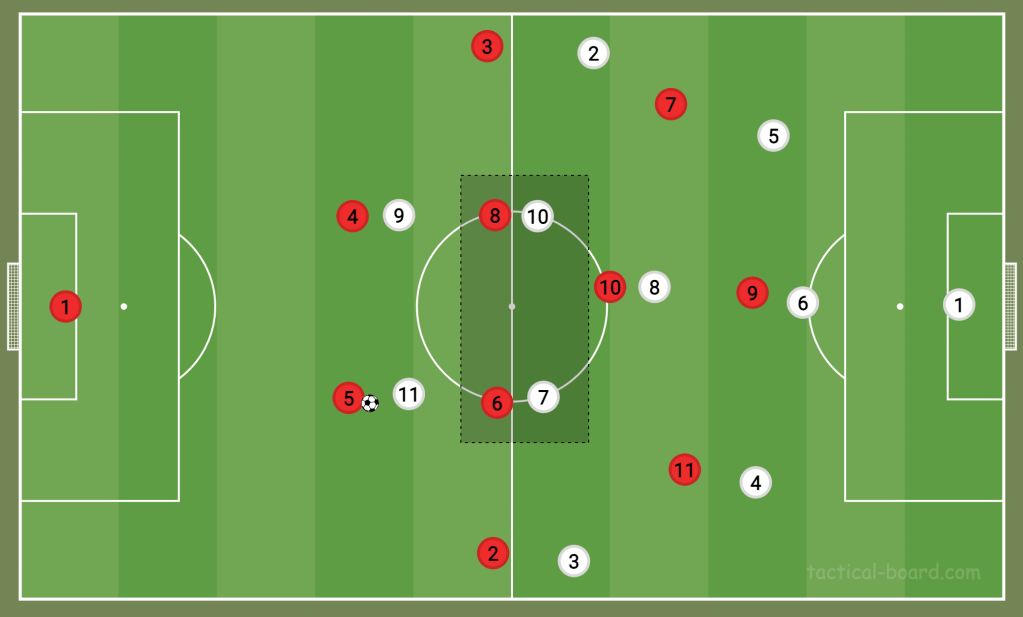
Because of this, one of Switzerland’s two deep midfielders tends to be free at all times. Serbia might find success against Switzerland, but man-marking is also not their forte. That match will be an interesting one for sure.
 Tactically Speaking