

It’s safe to say there have been some shocks in this first game week. Argentina, Germany, Denmark and Uruguay have dropped points, while Brazil and the Dutch struggled for 70-plus minutes. Here’s an overview of the best tactics deployed so far.
Saudi Arabia’s high line:
Argentina are a team who can create space anywhere on the pitch, if they get the ball on the floor and play. They can also play the running game if you let them. So how can you possibly combat both? Well, Saudi Arabia were brave.
They played a high line, knowing full well there was a risk of Messi and co running in behind their defence. Why? Because they wanted to disrupt the flow of the game, and not allow Argentina to enjoy comfortable possession for long periods. They wanted Argentina to play long balls over the top.
Their offside trap had to be perfect, and was. The South Americans had three disallowed goals in the first half.
Saudi Arabia went man-for-man against Argentina’s 4-4-2. Pressing high forced them to play long balls over the top a lot. There would be a danger of Messi and Lautaro Martínez being too fast for Saudi to cope with here, so they did something very interesting in response.
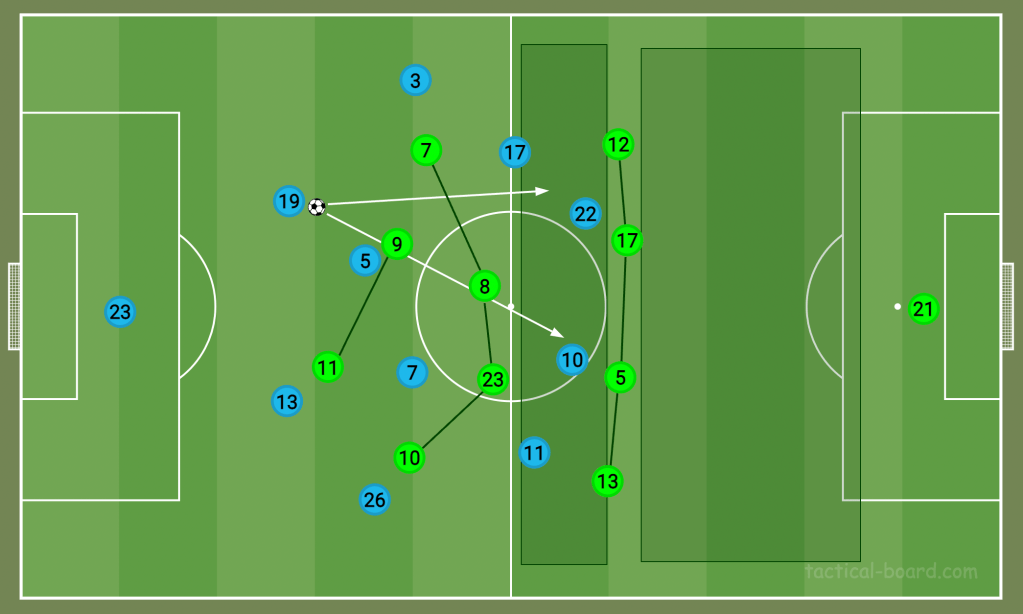
Their midfield pushed up higher than you’d expect of a team playing a high defensive line. It left a gap between their defence and midfield as well as behind their defence. This was an easier area for Argentina to pass into, but Saudi had done this knowing that their centre-backs could dominate Messi and Martínez aerially, and that the balls into this space would be cut out.
Spain creating space:
Spain’s 7-0 win over Costa Rica will surely be the tournament’s biggest win come the end. They were fantastic. Forward-thinking, unpredictable, and fast. Costa Rica would surely have wanted to keep tight and narrow — affording Spain no space between the lines. Spain had a plan for this, and it’s exactly what Argentina weren’t able to do.
In midfield build-up, seven of Spain’s ten outfield players would stay deep and close, to play lots of short passes with little intention of breaking Costa Rica’s 4-4-2 down. Again, why? They did it to draw Costa Rica out, attracting them to the ball. Pedri, Gavi, and left-back Jordi Alba were key to this.
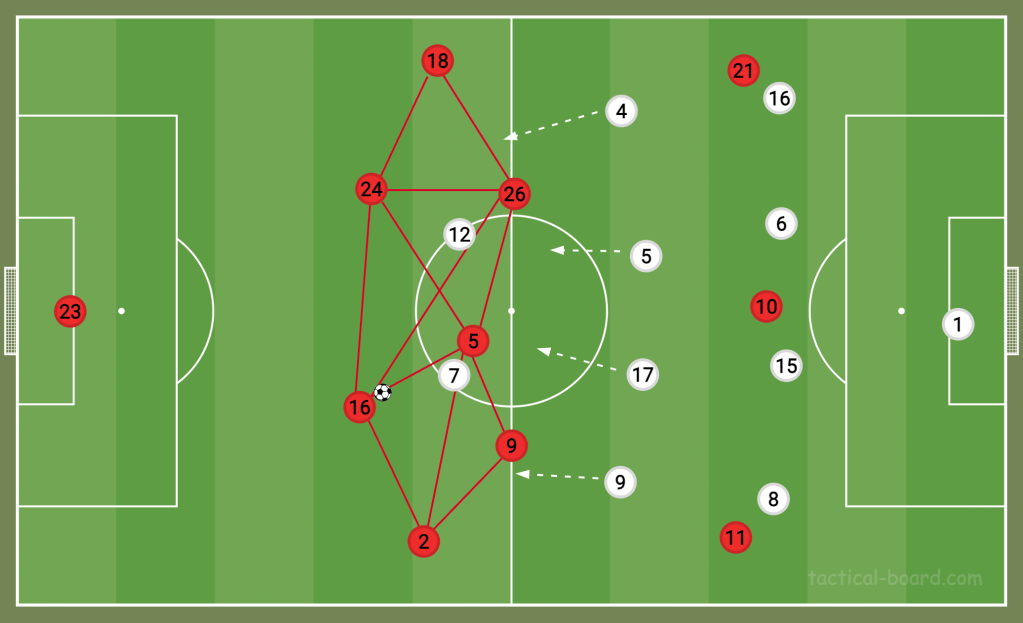
It’s important to note that throughout all of this, Spain’s front three had to all stand on Costa Rica’s last line, pinning them back. When their opponents’ midfield naively pushed up the pitch, to join in with the press, there would be a huge gap between their defence and midfield. Pedri, Gavi and Jordi Alba were the three players who would exploit this by occupying the gap with third-man runs. It was also clear to see that makeshift striker Marco Asensio would drop into the same hole, as a false-9 to help out.
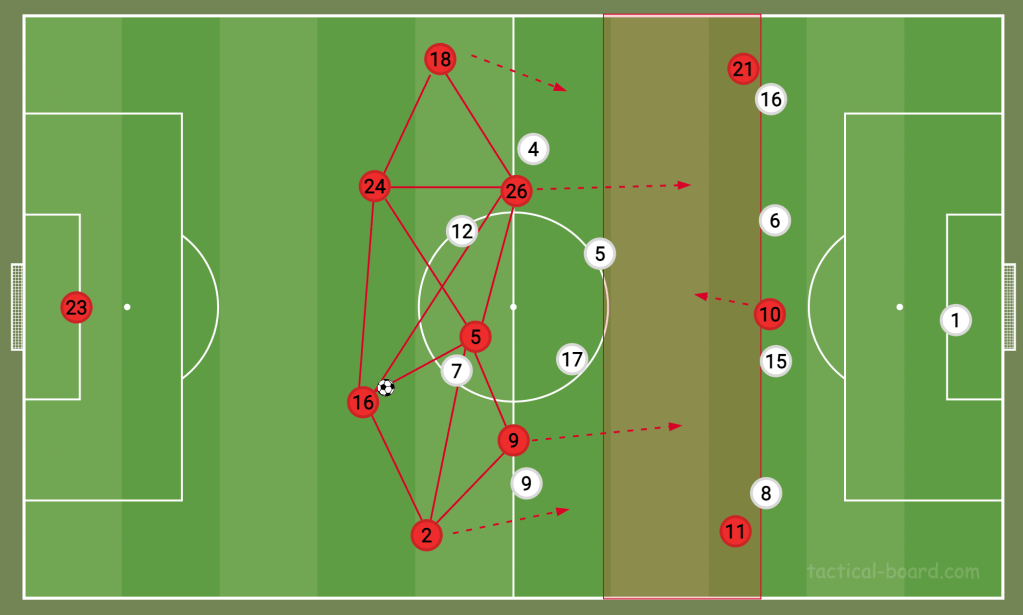
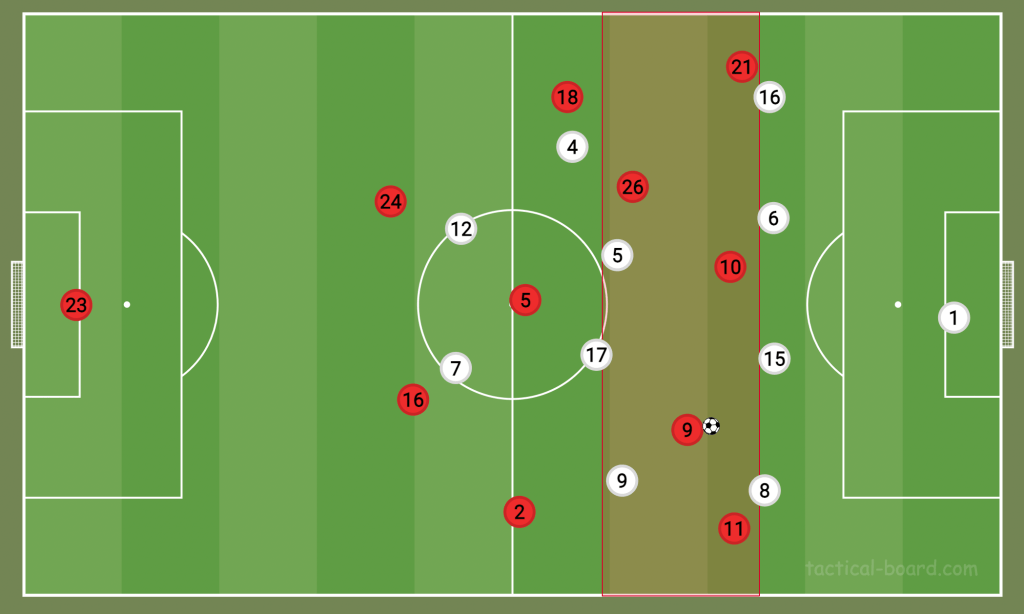
Momentary wide overloads were the chief way Spain got the ball safely from the back line to this space between the lines. The result was that up to six players were able to occupy this area, having completely bypassed the Costa Rica midfield. From here, chance creation was far easier.
Japan’s pressing traps:
Japan pulled off a late comeback to beat Germany 2-1 in the same group as Spain. They changed their shape from a 4-2-3-1 to a 5-4-1 at half time, which meant they were able to create pressing traps for Germany.
Staying very narrow, their initial press included three players instead of the two they had used in the first half. Germany, playing a back-three, then needed two midfielders to drop into deep positions to help get past Japan’s press. Especially given that Japan’s midfield-two joined the high press too.
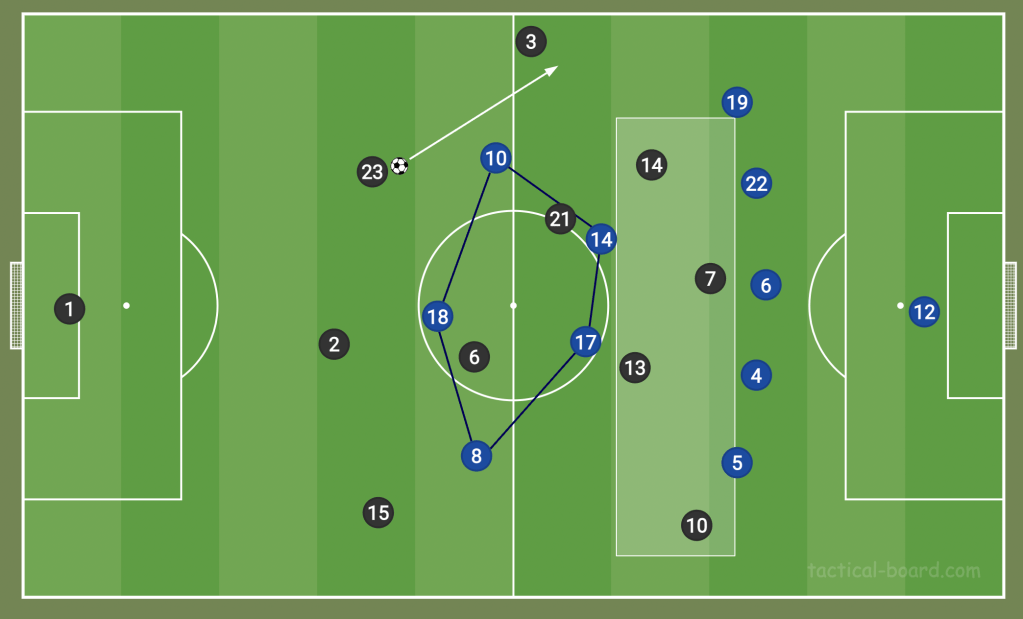
The aim was to force Germany into wide areas instead of letting them play the ball to Joshua Kimmich — their best passer. It’s safe to say this worked excellently. When Germany were forced wide, Japan’s midfield-two would swiftly drop back, blocking passes into dangerous central areas, as seen below. Germany were subsequently shepherded back to the centre-backs.

Germany began to commit more players to their attacks, and left themselves far too exposed in defence. Japan needed just two chances to turn the game on its head, and pull off one of the great comebacks of the tournament so far.
 Tactically Speaking