

Matchday two has not offered the thrashings we saw on matchday one, but surprise results remain a constant throughout tournament football. Costa Rica shocked Japan and Morocco saw-off Belgium. Here are the best tactics from the second round of games.
Ecuador’s back-three:
Ecuador produced the first upset of the World Cup, by beating Qatar comfortably in the opening game. For their second opponents, the Netherlands, they changed shape to a 3-4-3.
Despite only managing 45 percent of the possession, they tallied 15 shots to Holland’s two. How? Well, it all came from their high press.
Ecuador’s 3-4-3 allowed them to press man-to-man against the Dutch back line and wing-backs. This almost instantly blocked all wide routes up the pitch for the Netherlands, as their wing-backs were the only players offering width.
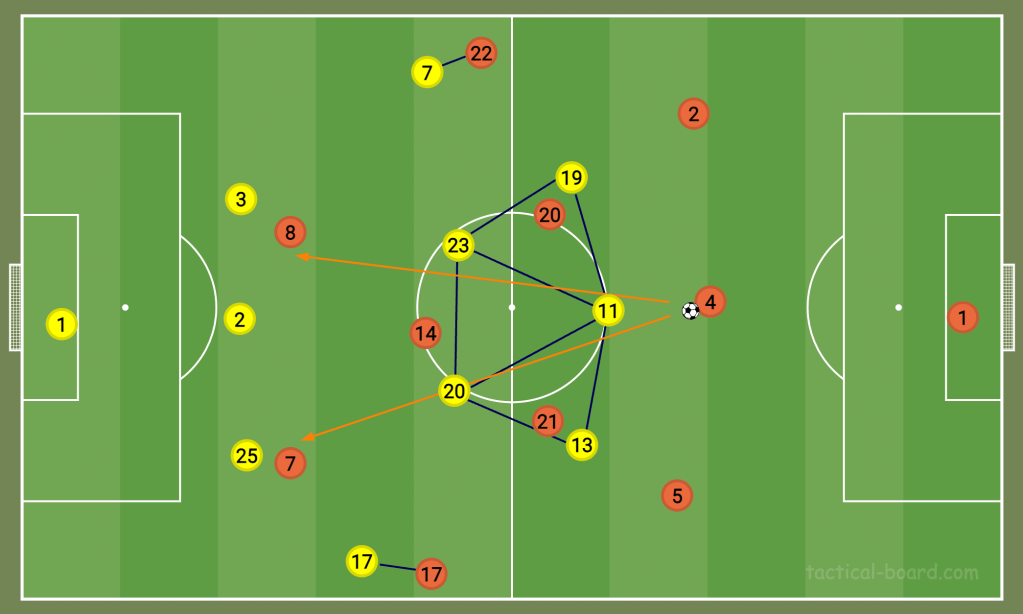
The interesting thing was how high Ecuador’s central midfielders pressed too. As seen above, they tried to also mark Holland’s central-three out of the game, meaning a long ball from the centre-backs to the forwards was the only available option at times. They left a large gap between midfield and defence, but this was inconsequential since their very tall centre-backs were able to deal with long balls forward better than the Dutch front-two — neither of whom are particularly adept at winning headers. They outnumbered them, and aerially dominated. It was a masterclass.
What Ecuador did in possession helped them to gain control, when they did launch an attack. As is commonly seen with Chelsea, they made their 3-4-3 into a 3-box-3, with their wide forwards coming deeper than their wing-backs. This is one of the best ways for a team using 3-4-3 to maintain central control against a midfield-three.
Ghana’s overloads:
Ghana did not dominate South Korea. Far from it. In fact, they only racked up 36 percent of possession. But they were loud. When they had the ball, they used wide overloads to help create crossing opportunities.
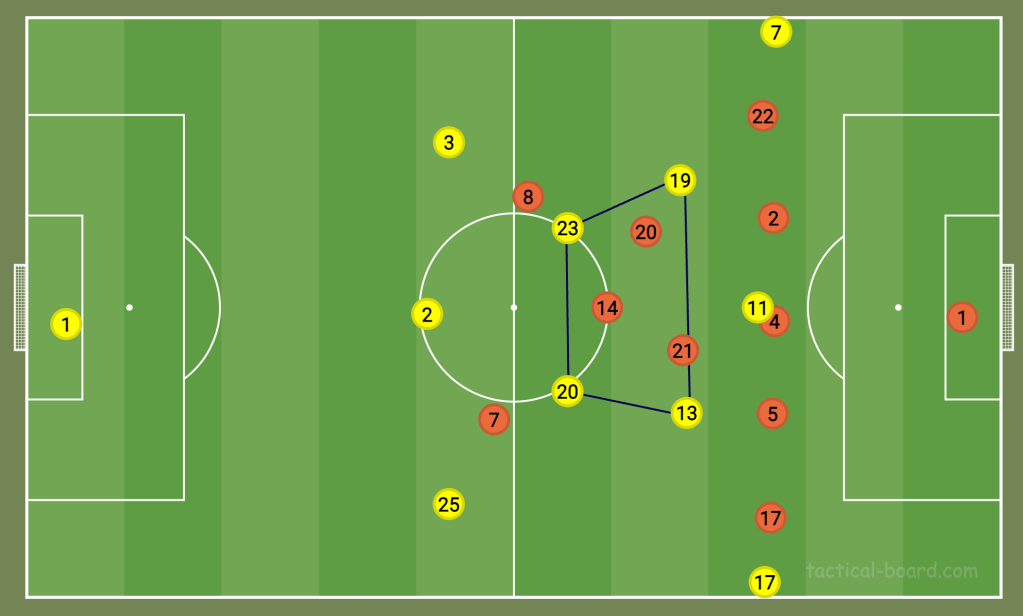
Ghana’s main strength is in their attack. Each player can play numerous roles, and so they use constant rotations to be unpredictable. On numerous occasions, Mohammed Kudus — their most dangerous player so far in this competition — would receive the ball on the right-wing, and receive support from right-back Tariq Lamptey and attacking midfielder André Ayew. A three-v-two on the flank was seen a lot, and Ghana were able to expose South Korea’s weakness of dealing with crosses into the box.

South Korea made a fatal error in defence, leading to both first-half goals. Their defensive line was often found far too deep inside their own box. As seen below, Ghana were able to exploit this, and load the box with up to four players at times. All it took was one cross and South Korea were in danger.

Croatia’s fluidity:
Croatia 4-1 Canada. This was one of the most complete performances of any side at these championships so far. Croatia were excellent. And while Canada posed threats, they were naive in their approach and have ultimately been eliminated for it.
Canada are up there among the most athletic and energetic sides at the World Cup. That’s why playing a 4-4-2 has ruined them. It has been catastrophic. Energy and athleticism brings excitement and speed, but it also brings defensive naivety and instability.
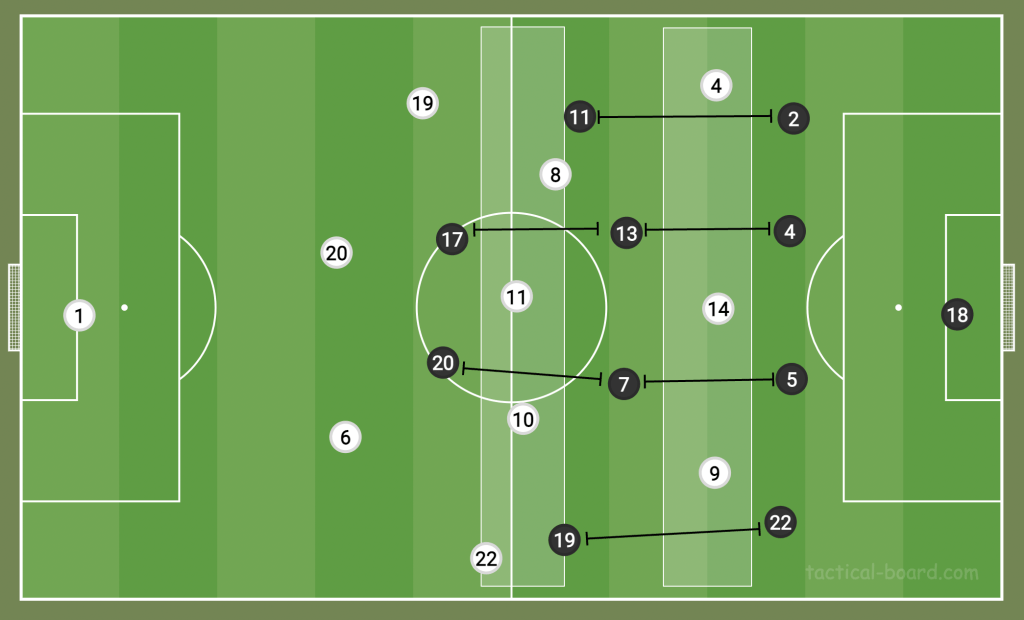
As seen above, the spacing left between the lines was the chief factor at play, allowing Croatia to play commanding football. The forwards got between the lines, and so did the midfielders. It meant no one was marked and third-man runs were simple.
Canada were forced to dive into challenges and race towards Croatian players to apply pressure, but it left them vulnerable to a pass or run in behind each line. The press was not cohesive, and Croatia knew just how to bypass it. In the last group match, Croatia will have the chance to knock Belgium out.

 Tactically Speaking