
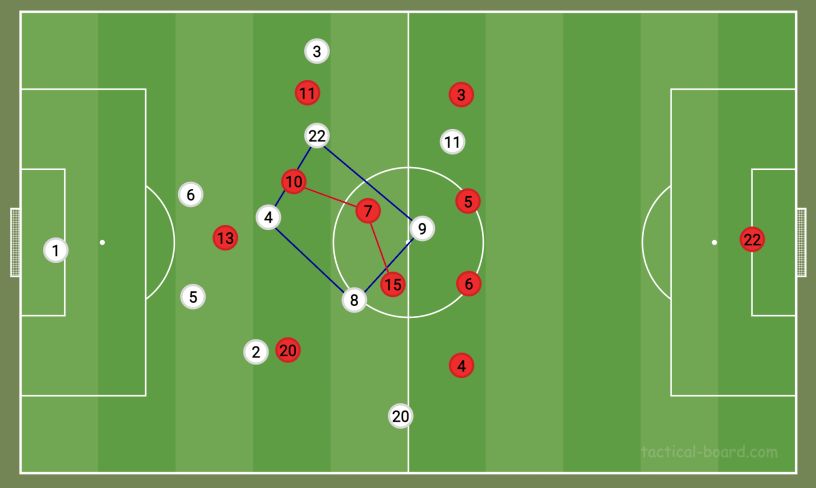
The group stages have concluded, and we’re on to knockout football. But matchday three offered some of the biggest surprises of Qatar 2022 so far. Germany and Belgium are going home, and Morocco and Japan finished top of their groups. Here are all the best tactics from the final round of group fixtures.
South Korea’s quick transitions:
South Korea had to beat Portugal if they were to progress to the last 16. Portugal made six changes, and the specific personnel chosen did create one glaring issue for them.
In possession, left-back João Cancelo tucked in narrow, where midfielder Vitinha is also most comfortable. This left Portugal’s left flank exposed and vulnerable. South Korea were able to launch many counter-attacks throughout the game, and were clever enough to exploit this hole. Portugal’s transitions were demanding as a result, and there was confusion around who should drop back and who should make a challenge.
England’s false-9 and wide overloads:
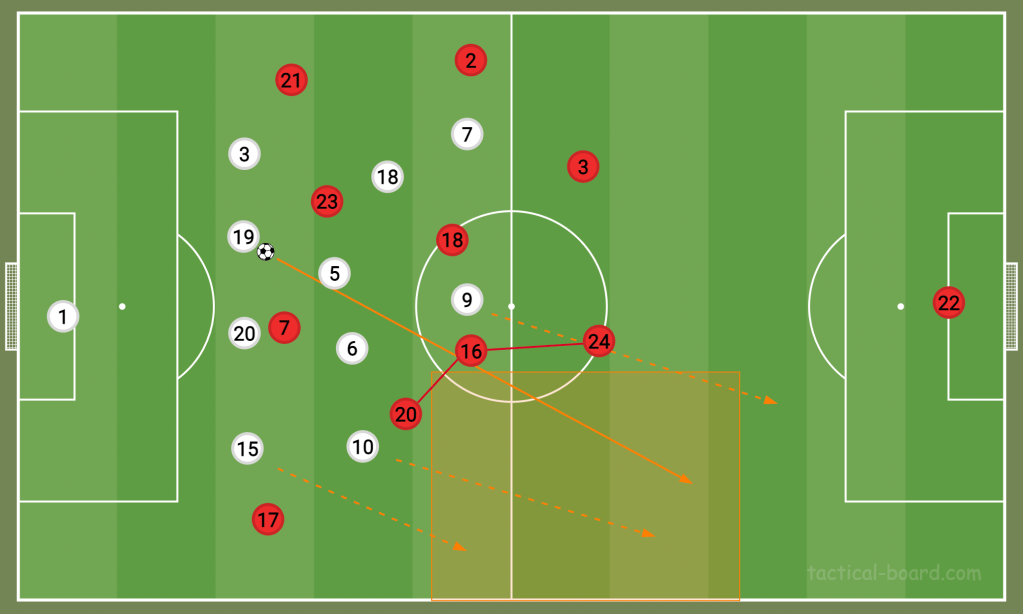
Against Wales, England decided not to play Mason Mount, the No10. Gareth Southgate instead opted for a flat midfield-three, with Jude Bellingham and Jordan Henderson either side of Declan Rice.
To make up for the absence of a No10, whose job it would be to play with their back to goal and receive the ball on the half-turn, Harry Kane dropped into this space between the lines as a false-9. This gave England a similar sort of threat, while still keeping three players in midfield to control the game. Against Wales’ midfield, it created a four-v-three overload.
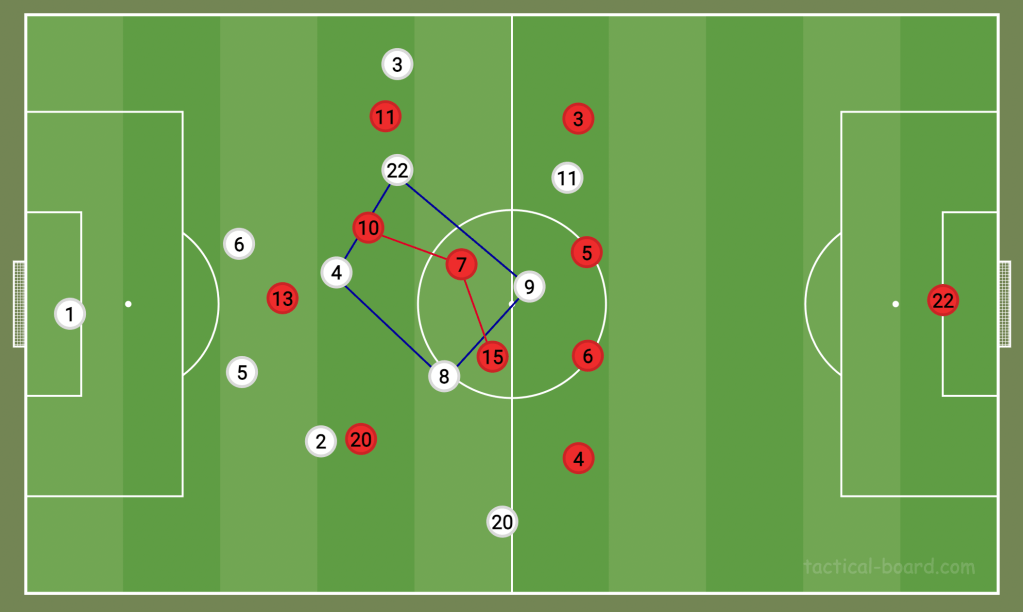
In wide areas, England had to adapt to a surprise from Wales, who played a 4-2-3-1 for the first time since March. This gave them two wide players as opposed to one, in order to deal with England’s dangerous wingers. However, England were still able to make two-v-twos on the flank into three-v-twos by employing the services of Bellingham and Kyle Walker on either side. Often arriving late, they would sneak into close proximity unmarked to help England regain numerical superiority.

Tunisia’s aggressive press:
One of the big shocks on matchday three was Tunisia’s 1-0 win over a reshuffled France side.
While France look as though they play a back-four, in practice this is more often a back-three, with the right-back becoming a third centre-back. France have no attacking right-backs in the squad, so this is a compromise they have had to make to their style.
Tunisia’s famous 3-4-3 shape worked fantastically against the French shape, allowing the African side to press man-for-man from the back, with their forwards used to chase.
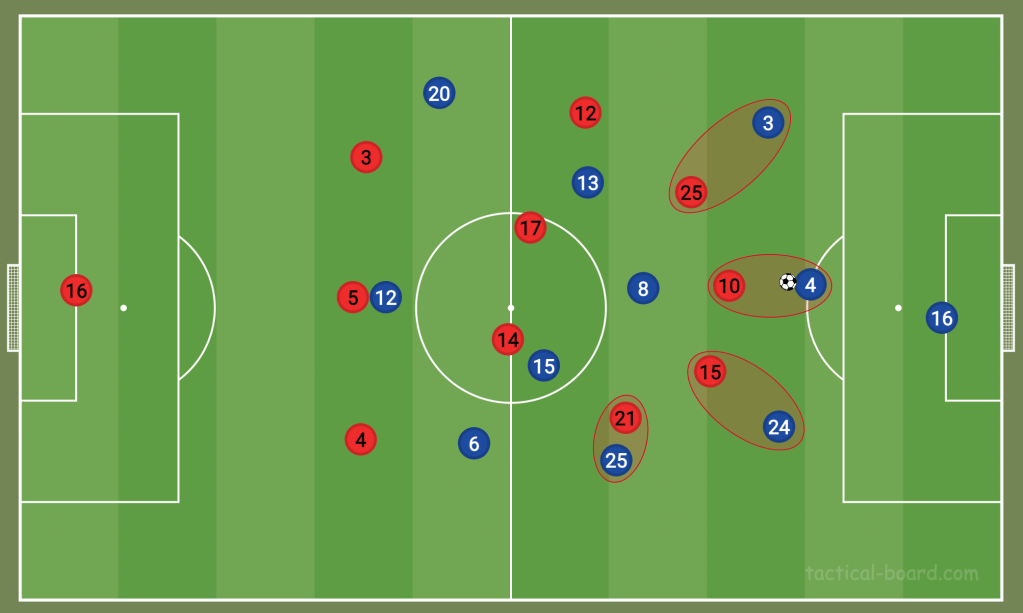
France’s centre-backs aren’t always the best on the ball, and can panic when pressed. Due to personnel France were very narrow even in attack, so Tunisia were able to pack the midfield with little concern for the defending wing.
 Tactically Speaking