

Here’s the problem Fulham pose. They play the game with total trust in the laws of probability. Their main threat: Serbian striker Aleksandar Mitrović. One trick pony? Sure, but if it works, it works. Fulham win the ball, attack out wide, and cross the ball for Mitrović to head it. They’ve tallied 418 crosses this season, knowing that if they do it 20 times in one match, as their average suggests, there’s a good chance they’ll score from one. It’s so effective because it doesn’t matter how many defenders are piled in the box, they can’t guarantee the movement of Mitrović and the ball won’t cross paths.
So how do you play against it? Well, Fulham themselves give a rather big hint as regards this in how they defend. Their 4-2-3-1 allows them to sit deep with two banks of four in a low-block. It means they can double up in wide areas with their winger and full-back working together to stop crosses into the box. Sometimes their wingers drop so deep that it appears to be a back-six — which manager Marco Silva knows will always prevent an opposition overload across the back line.
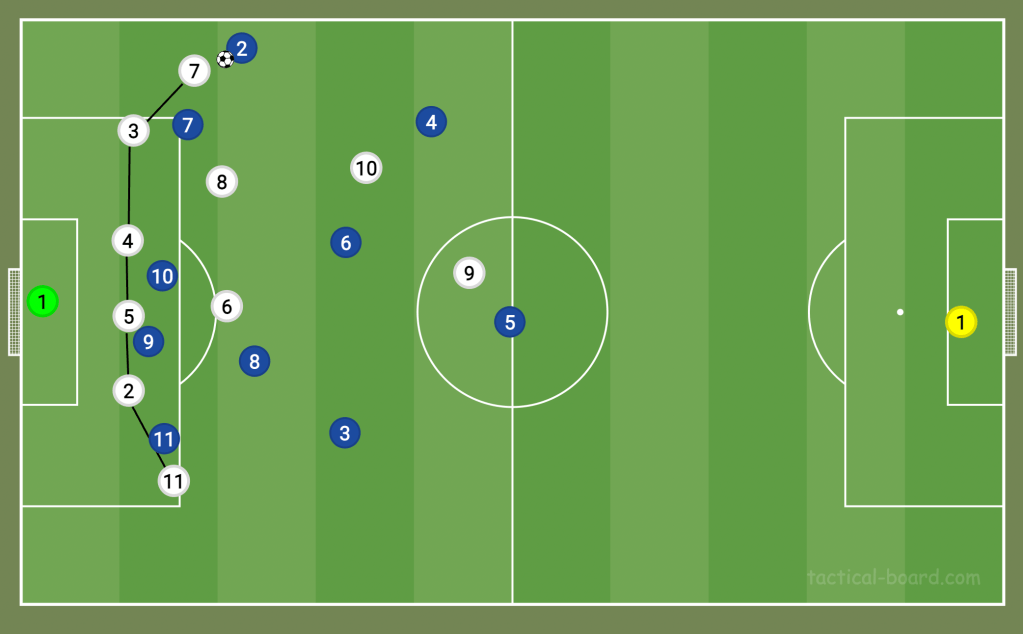
So to defend effectively against Fulham’s wide attacking threat, teams should double up out wide, trying to prevent the crosses at source. The best shapes for this are the 5-4-1 and the 4-5-1. Almost any shape can transition to either of these two, but the problem is Fulham are a very athletic side that attack at pace, often not allowing opposing sides the time to transition effectively. It makes sense to play with a 3-4-3 or a 4-3-3, as these systems naturally become the 5-4-1 and 4-5-1 in low-blocks, respectively.
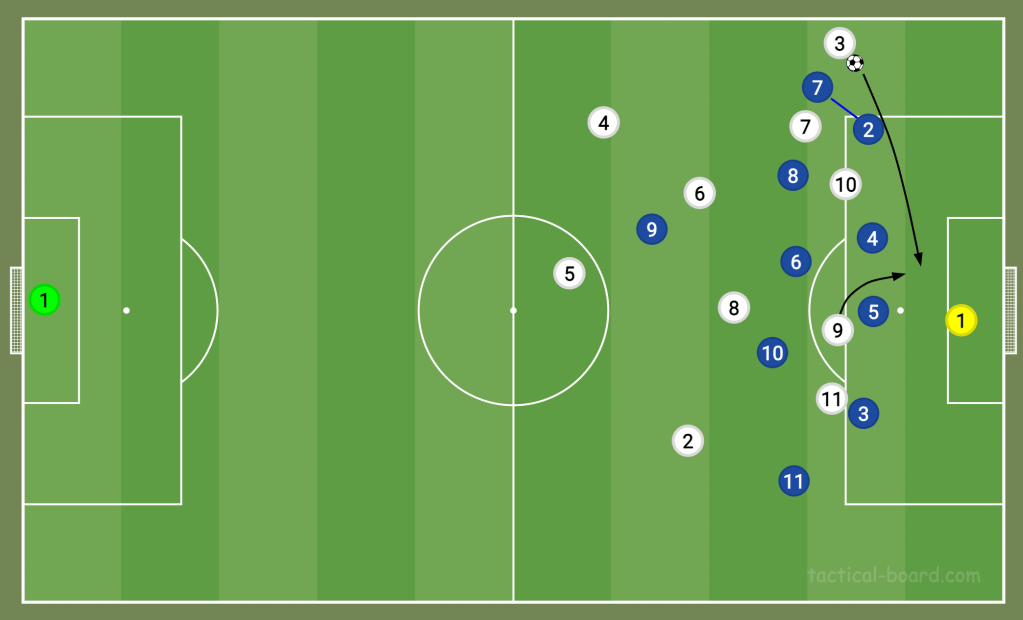
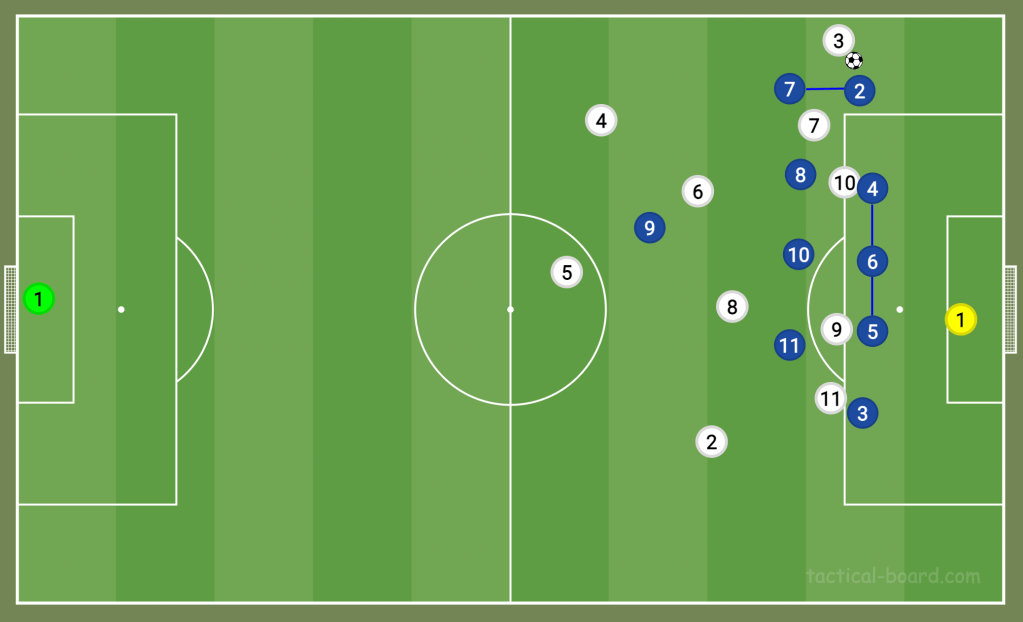
As mentioned above, this is similar to the way Fulham defend. However, they don’t always become a 4-5-1 in defence, with the No10 usually remaining higher than the rest of the midfield. This leaves a four-man midfield to cover the width of the pitch. For opposition teams playing a 4-3-3, they can get players in all five vertical zones on the pitch, and the half-spaces are often their best route into the box either with a deep cross (as seen below) or with an intricate bounce pass. That’s how to beat their low-block.

This covers how Fulham set up in defence, how they attack at the other end and how other teams can combat these. However, Fulham, with their athletic nature and fast-paced attacks, tend to win and lose possession more frequently than other sides. Transitions against Fulham are critical.
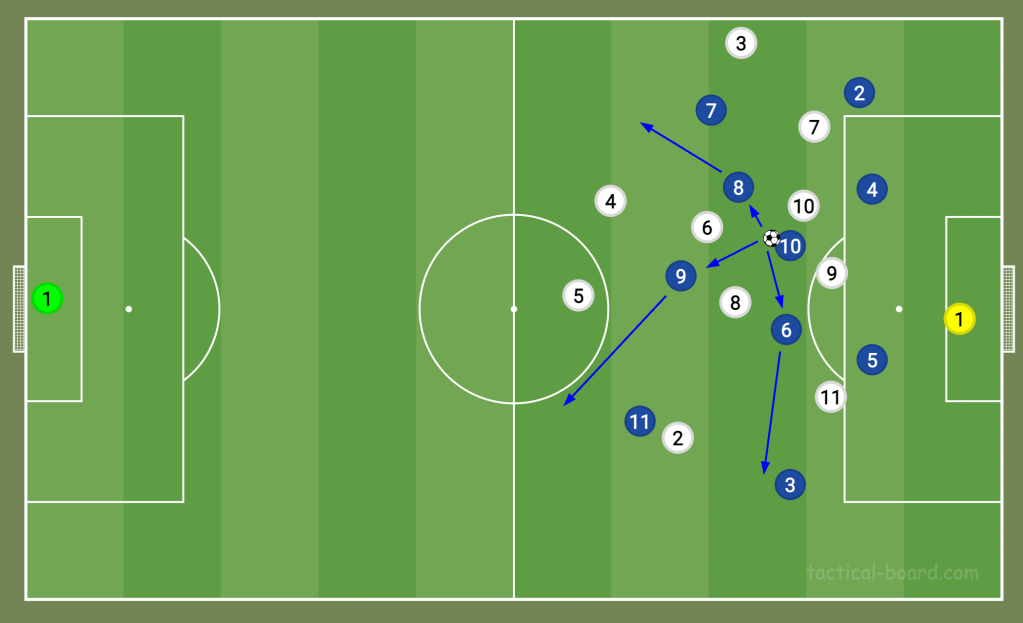
Silva’s team are more wasteful in possession when in the centre of the pitch. Knowing this, they have developed a robust plan for how to react when they lose the ball. It’s the only time they ever use anything resembling a Gegenpress. They swarm around the opposition player with the ball and make sure they cannot dribble through or make a pass that starts a counter-attack. It has worked nicely and is easily achieved through their midfield-three packing tight, striker applying pressure behind the ball carrier, and centre-back Tim Ream stepping out to block passing lanes.

One of the basics that youth players are taught is to move away from their teammate if they have space and time on the ball and to move towards them if they’re out of options. Against this Fulham side, teams absolutely must get numbers near the ball carrier when they win the ball back so that they can transition, as seen below. Once the first pass is made, Fulham do find themselves in trouble and out of shape.
 Tactically Speaking