

Throughout the history of the game, shapes have differed from one team to the next, but the role of the striker has been a constant. That was, until the last decade. Coaches desperate to find new ways of controlling possession and dominating every game found that withdrawing their striker into midfield would help create overloads. That way, their possession of the ball wouldn’t leave them exposed at the back.
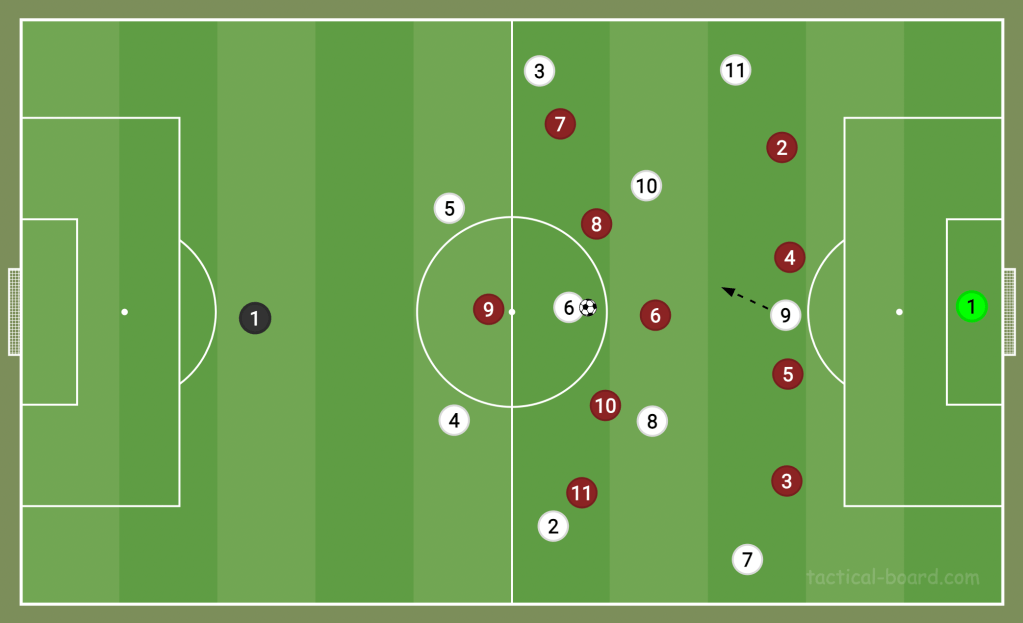
In fact, it didn’t take long — once the tactic had become universal — for traditional target-man-like strikers to go almost entirely extinct. It became arrogant to assume you could have one player waiting upfield while the others progressed the ball from the back. Everyone had to be involved in every phase.
And with that, the profile of centre-backs has since changed. They no longer need to be the tallest, strongest players on the pitch. Centre-backs like Lisandro Martínez at Manchester United, David Alaba at Real Madrid, and Ajax’s Jurrien Timber are essential in the modern game because their skills lie in helping their teams on the ball. The lack of target men now means defenders don’t have to be tall or stocky, whereas ten years ago, they may have been forced to play as a full-back or midfielder. Centre-backs these days have to be proficient at stepping up and splitting wide, both in and out of possession (as seen below).
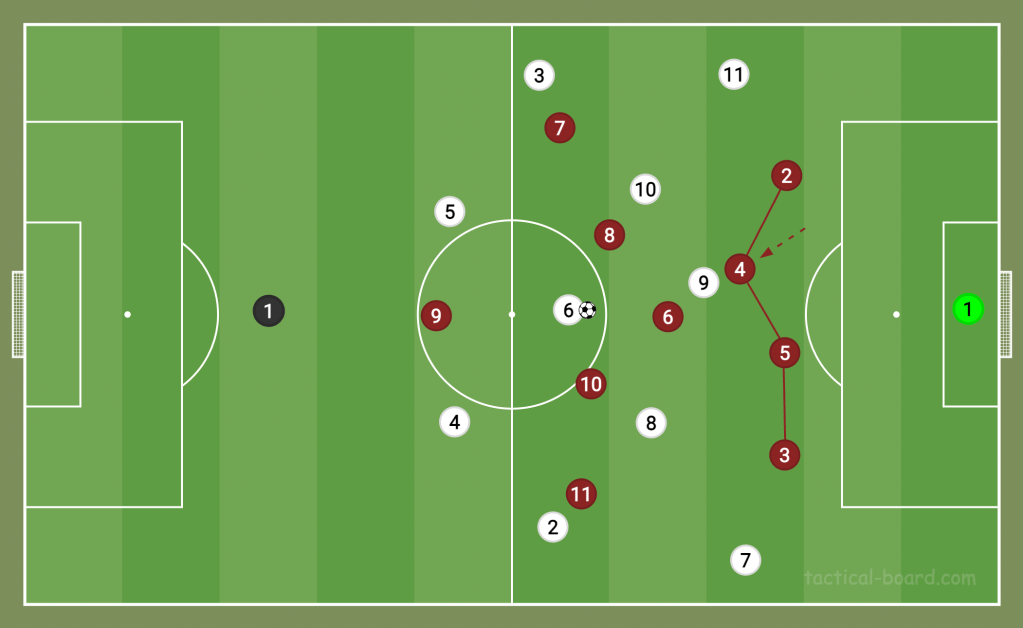
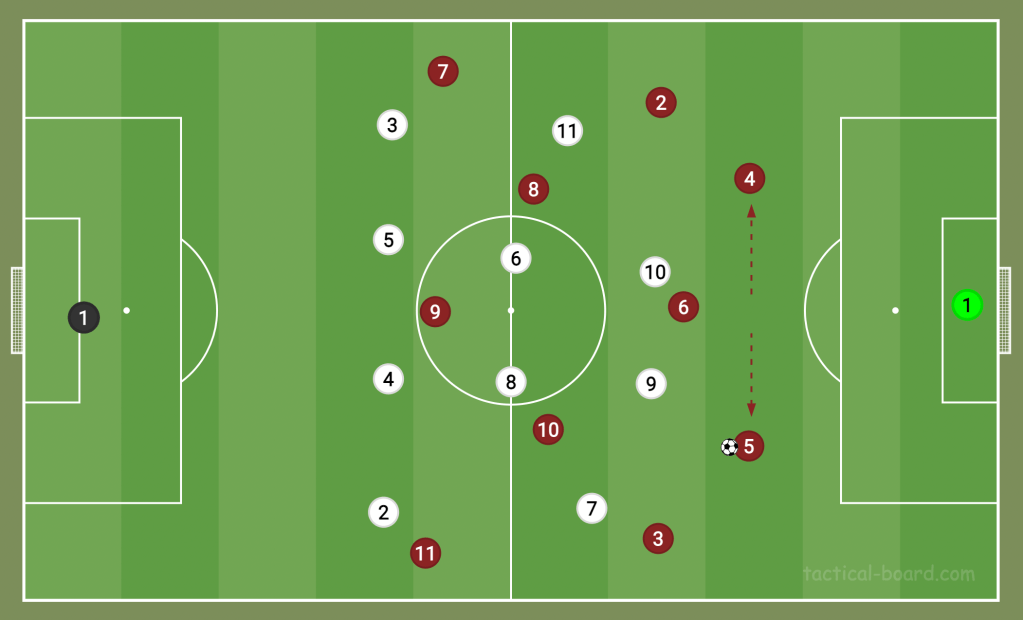

So, among other things, the last decade has been one long shift away from big strikers and big defenders. It’s all about getting the ball down and being technical on the ball. And yet, that’s left a gap in the market. With centre-backs better equipped in possession than being aerially dominant, employing target man strikers has never been more logical.
Now, it’s not the case that football has suddenly reverted back to its old ways in this sense, with target men taking over again. However, there has been some pushback from teams who feel they can exploit the physical weaknesses of their opponents.
Fulham and Manchester City are two of the best examples here. With Aleksandar Mitrović and Erling Haaland, the two teams must play target man football to some extent. Fulham have opted for wide crosses at the byline from full-backs and wingers, while Man City often use Kevin de Bruyne to supply Haaland from deeper crossing positions.
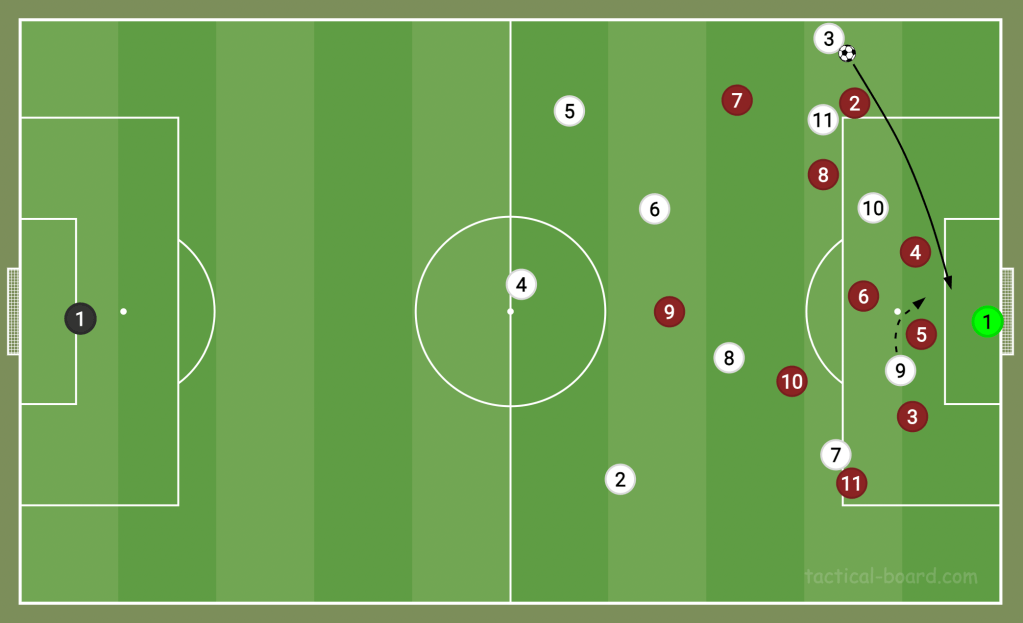

Players like Haaland will occupy both opposition centre-backs, meaning these defenders have less positional freedom to help the team.
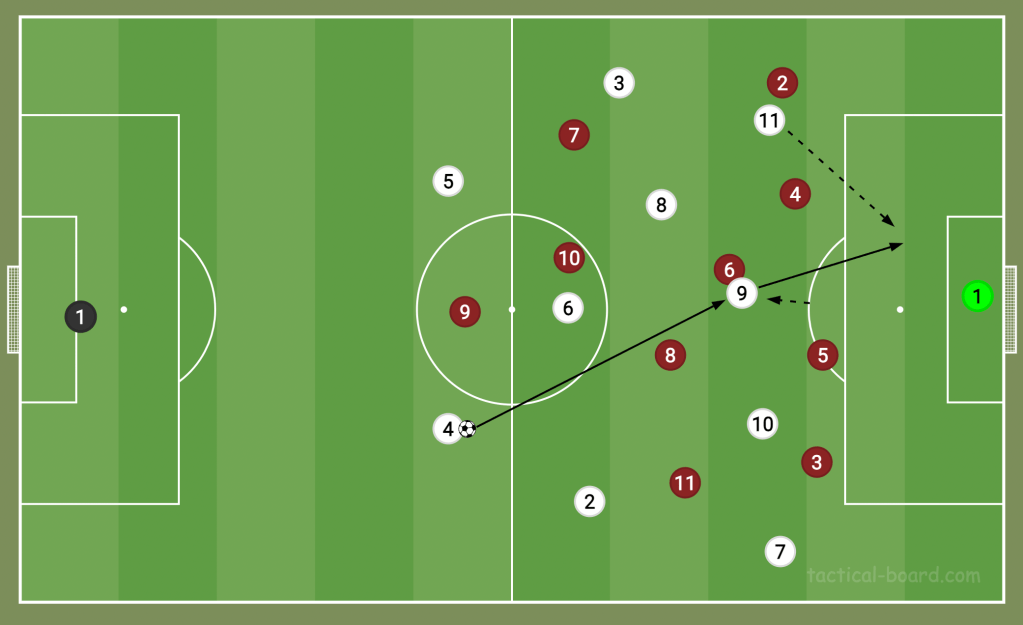
Manchester United are also enjoying the benefits of deploying a target man again, but this time it’s a bit different. Wout Weghorst, 6 ft 5, has been dropping deep into a No10 position to harness Manchester United’s threat in behind. Marcus Rashford makes diagonal runs from the deep left-wing into the box, and a target man like Weghorst can flick on a long ball with his head, allowing United to avoid playing slow build-up on the floor at times. United aren’t a possession team yet, so bypassing the midfield with long balls means they can create more chances than playing lots of short passes. However, this only works because they know Weghorst will be first to the ball.
 Tactically Speaking