

To think there was a time when tacticians split the pitch into horizontal thirds now seems baffling when, in reality, the development of the five-column model is a relatively recent one. Today, the half-spaces are the secret behind many of the world’s most revered teams and players.

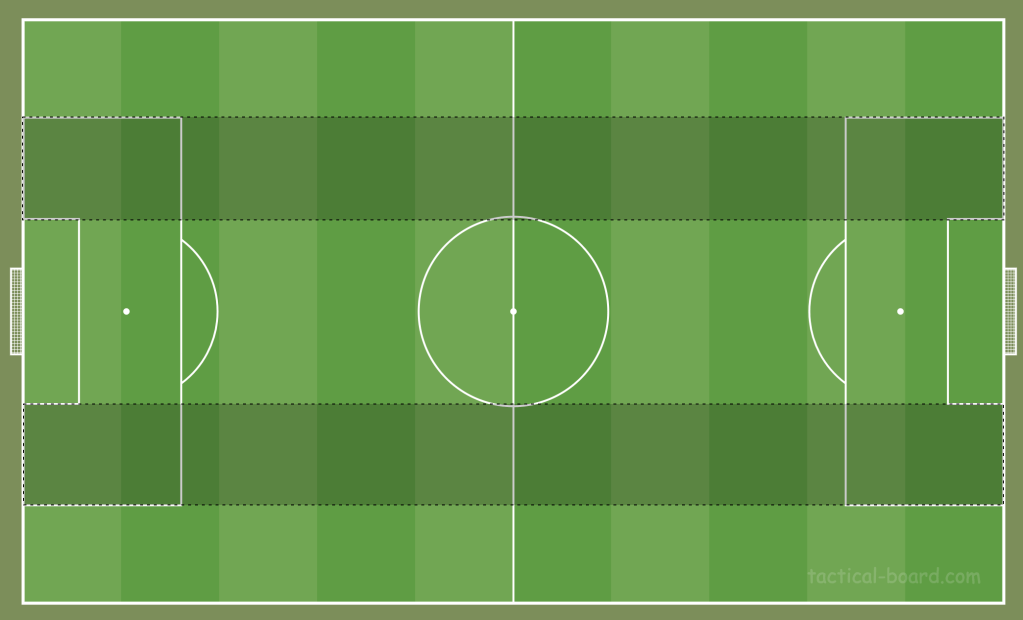
What are they, and why are they important?
The half-spaces are the second and fourth columns from left to right on a football pitch, between the wings and the central zone. They’ve become an important reference point for teams implementing styles or movements dependent on player spacing. The next best route to goal after the central zone, they’re closer than the wings to the most dangerous areas, but they still maintain diagonal passing options.
We often see that the half-spaces, when occupied by attacking teams, are particularly effective for dragging opposing players out of position and disrupting their team’s defensive shape.
For shapes like the 4-4-2, the half-spaces are difficult to defend. Defensive formations must also be staggered, so teams can’t commit five players to cover the horizontal zones within one line of pressure.
How do you use them:
The thing to remember with the half-spaces is that they give immediate access to both the wings and central zone with one short pass. This means any player receiving the ball in the half-space should be positioned side-on to the goal, usually facing inwards towards the central zone (as more of the pitch is on this side). That way, they can open up their body to play to anyone inside and have a wide outlet if needed. In contrast, when players receive the ball in the central zone, they’ll usually be facing away from goal — like a No10 — and can only play forward by turning around their marker.

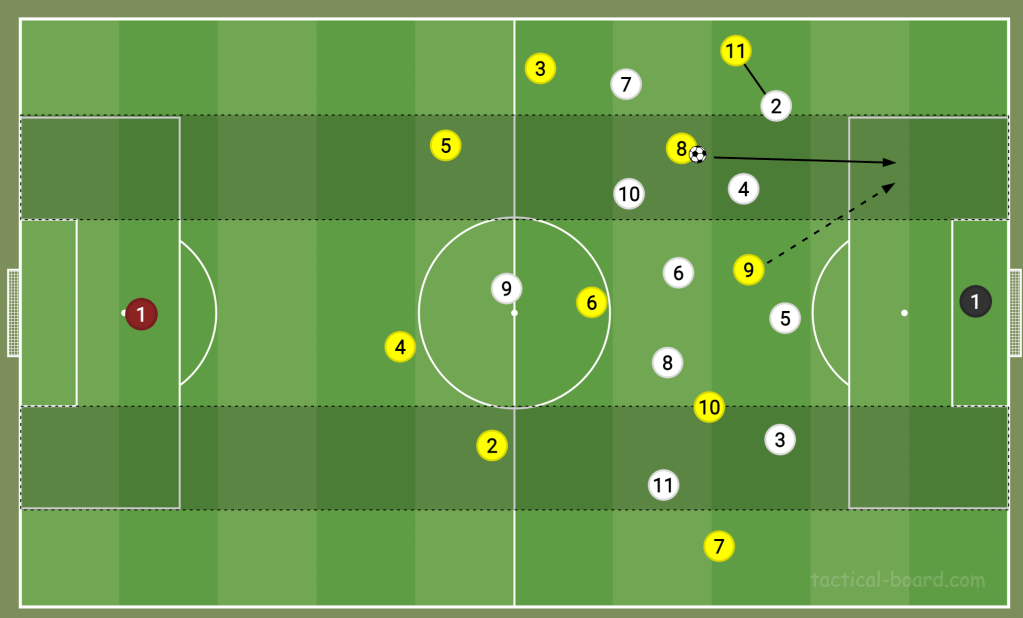
They’re hard to defend, which makes them very good for progressive passes. Often we see centre-backs playing a straight pass to an attacking midfielder, penetrating the opposition’s midfield line, as seen above.
Once the attacking team is past the first line of pressure, different coaches prefer to use the half-spaces in different ways. Some like to get a playmaker on the ball in the half-space. This player can play a straight pass for a diagonal runner into the half-space. Alternatively, they could play a diagonal pass for a straight run either out wide or in the centre.
Some managers prefer their playmakers to be central, meaning the half-spaces become the area of desire for the third-man runners instead.
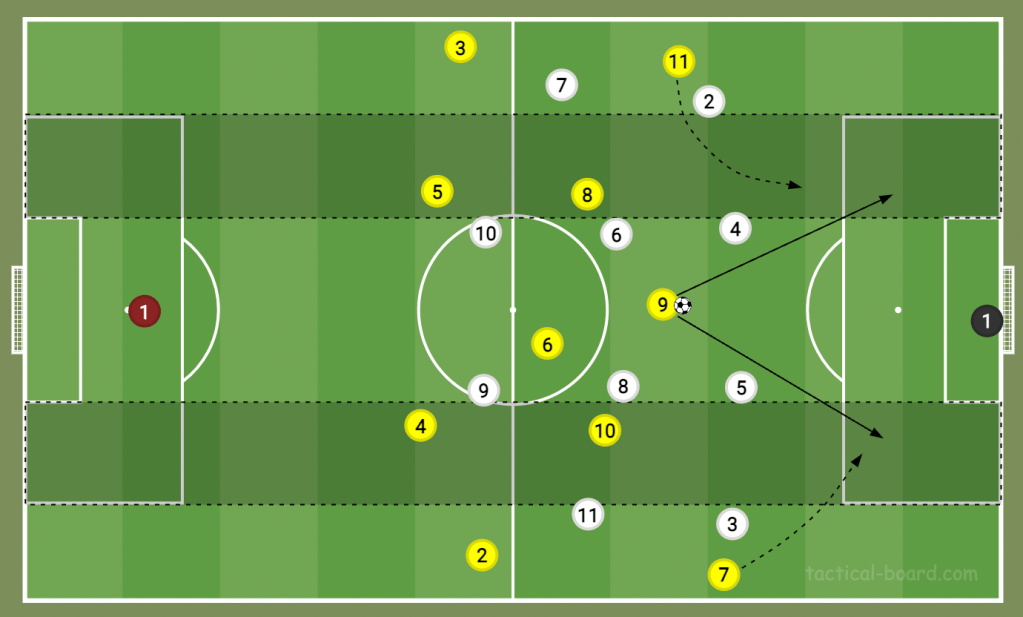
Whichever is favoured, the outcome is usually the same: the defending team is dragged out of shape as a result.
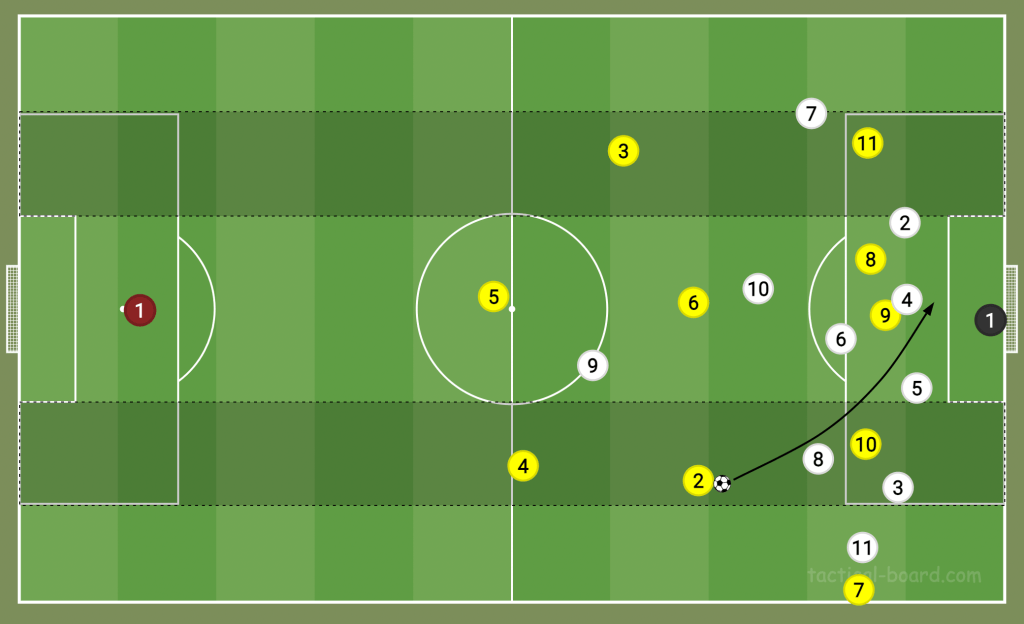
Another common use is when a winger threatens to put a cross into the box, and the opposition has a few players engaged in blocking it before it reaches the box. For support, the attacking team should always have a full-back or midfielder behind the ball in the half-space. A short pass back to this player opens up a new crossing angle (from deep) that the defending team are not set up to defend effectively.

 Tactically Speaking