

The Lionesses are just three months out from a World Cup competition they’ll feel they can and should win. However, last night in Brentford, their long-standing unbeaten run ended at the hands of the Australians, who’ll host the tournament this summer.
After Brazil’s, let’s say, naive approach in the Finalissima last week, in which England’s full-backs had far too much room against the South Americans’ 5-3-2, Australia opted for a tighter structure, denying England space. They set up in a 4-4-2 when pressing from the front and morphed into a 4-4-1-1 when England broke through or played wide.
This gave them a man-to-man pressing set-up against England’s back-four and a two-v-two out wide (which Brazil’s shape did not). When England’s No4 Kiera Walsh had the ball, Australia could deny England’s numerical advantage by dropping one of the front-two back into midfield.

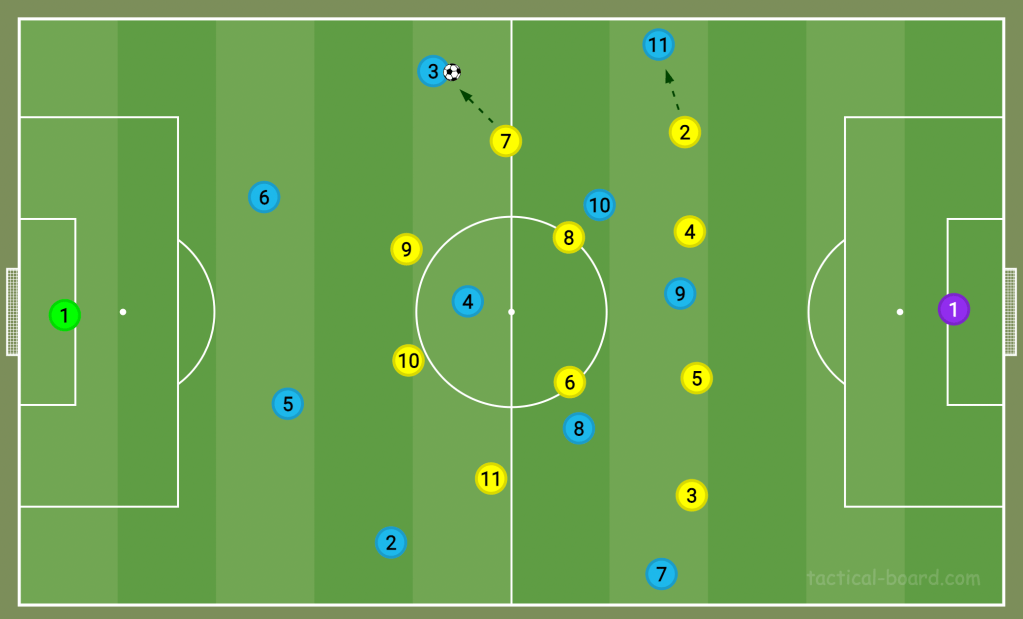
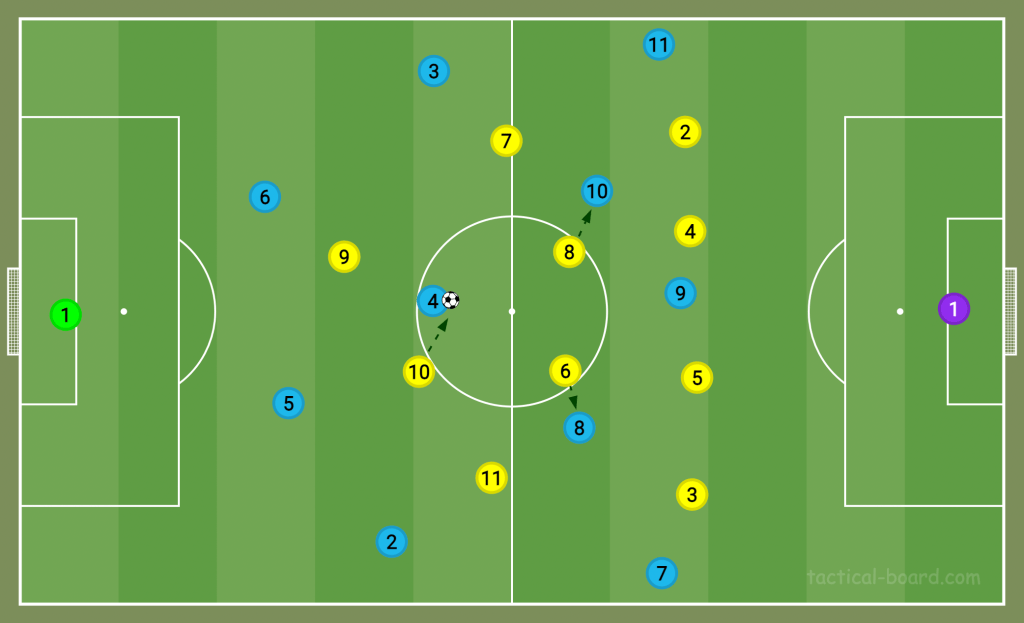
With Australia’s midfield-two blocking the passes into England’s advanced midfielders, the home side were forced wide a lot. In these situations, England needed to create a three-v-two out wide, but the lack of movement from Ella Toone and Georgia Stanway meant a great deal of England’s time on the ball was spent circulating from left-back to right-back and back again. Australia’s wingers would curve their pressing run to encourage England to play back inside while Kiera Walsh and Stanway (No4 and No8) were comfortably marked.

Had Toone and Stanway come wide on either side, Australia’s midfield-two would have been in trouble. If they had kept their shape, England could’ve used the extra player to open up effective angles, as seen below.

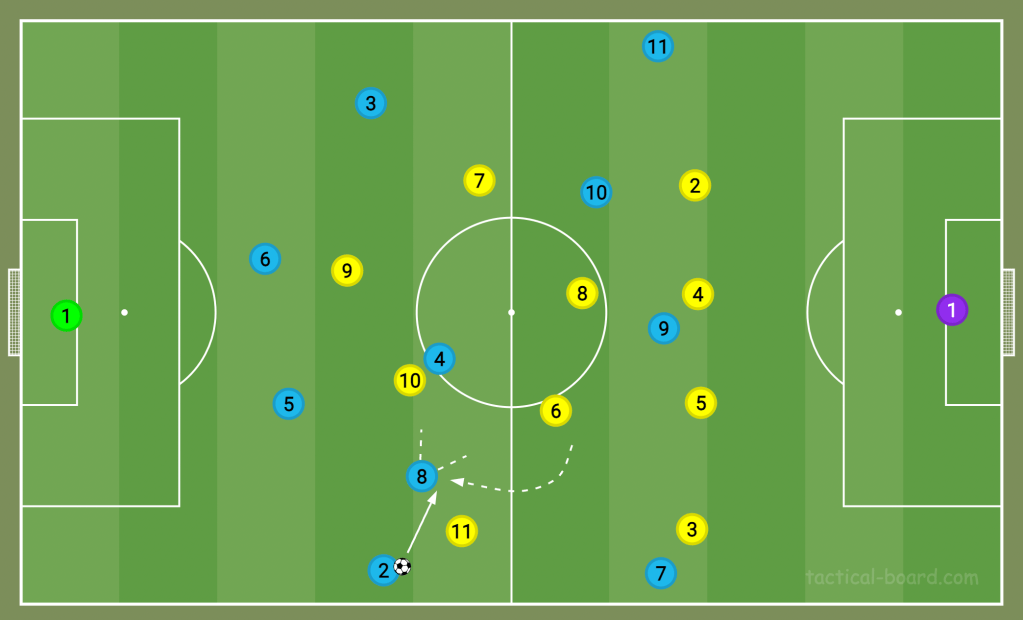
Equally, if the wide run was tracked by Australia, their midfield-two would’ve been totally disconnected, and space would have opened up for Walsh or even a false-9 run from Alessia Russo.
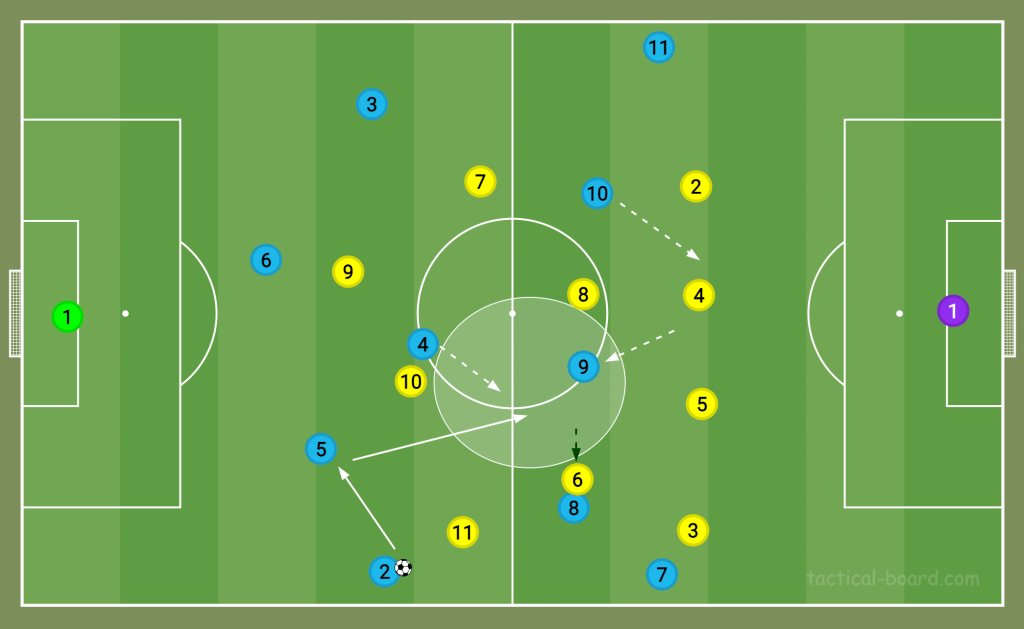
Given that this didn’t happen regularly throughout the game, England would circulate the ball back around to the other flank, where an entire third of the pitch would be free. However, these switches of play were so slow and telegraphed that Australia, keeping their narrow 4-4-2, could shuffle across with ease and in plenty of time to create the same issue on the other flank.
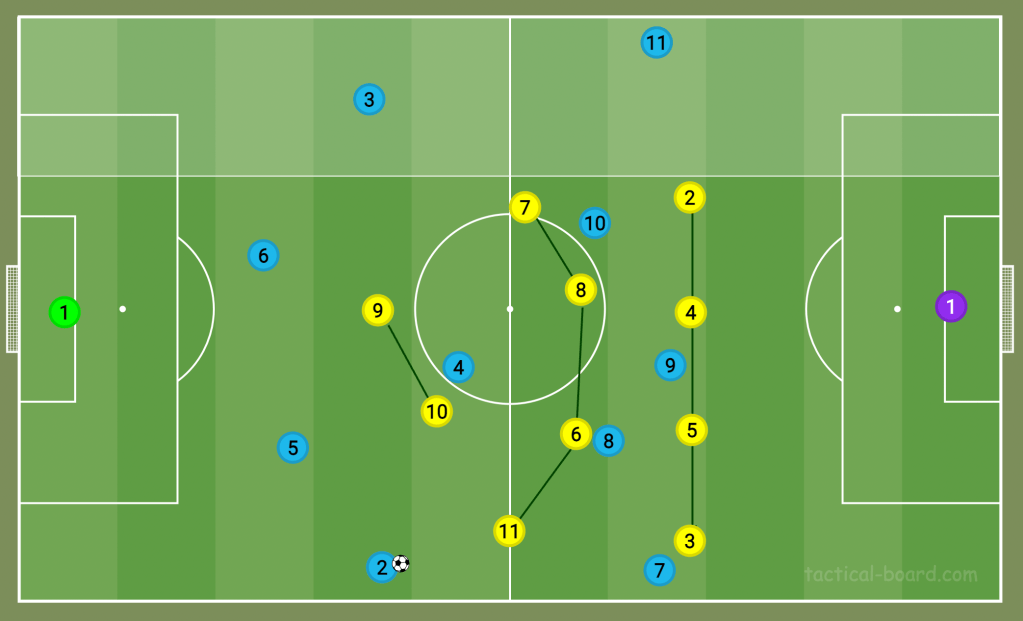
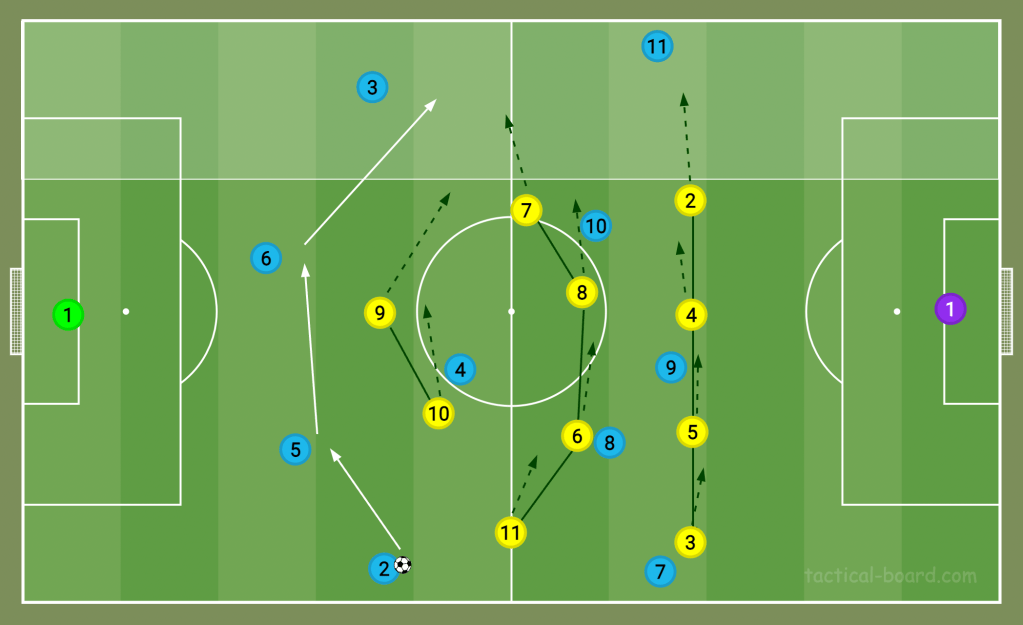
England needed quicker switches of play if they were to utilise the space left on the far flank.
One final alteration which would have helped England’s progression from the back could’ve been moving to a 4-2-3-1 with Stanway joining Walsh to make a square with the centre-backs. Much like in Roberto de Zerbi’s Brighton tactic, the De Zerbian ‘S’, Esme Morgan could have baited a press before playing across to Leah Williamson. The other forward would have pressed Williamson, but the important thing would be Walsh would now have space to receive the ball unmarked. With Stanway alongside, a final lateral pass into her would complete the ‘S’.

The addition of Stanway as a pivot would aim to draw Australia out of their deep structure and bait a press from their front-two, opening space between the lines.
 Tactically Speaking