

As the season draws to a close, it feels right to reflect on what’s been a year of many changes to how football is played. Here’s an assortment of the best tactics we’ve seen in the Premier League.
1. Graham Potter’s 3-7-0 formation at Brighton
At the start of this season, Graham Potter took a leaf out of Spain’s book (2012), playing football without a striker. Sticking with the back-three that had worked so well, he played a ‘front-three’ of Danny Welbeck, Adam Lallana and Pascal Groß. However, only one of these players would stand on the last line, and it could be any of them at any time. Mostly, it was the wing-backs who pinned the opposition, while the central players created a five-man overload. They were able to control possession and create confusing rotations while remaining most dangerous in transitions.
2. The midfield box
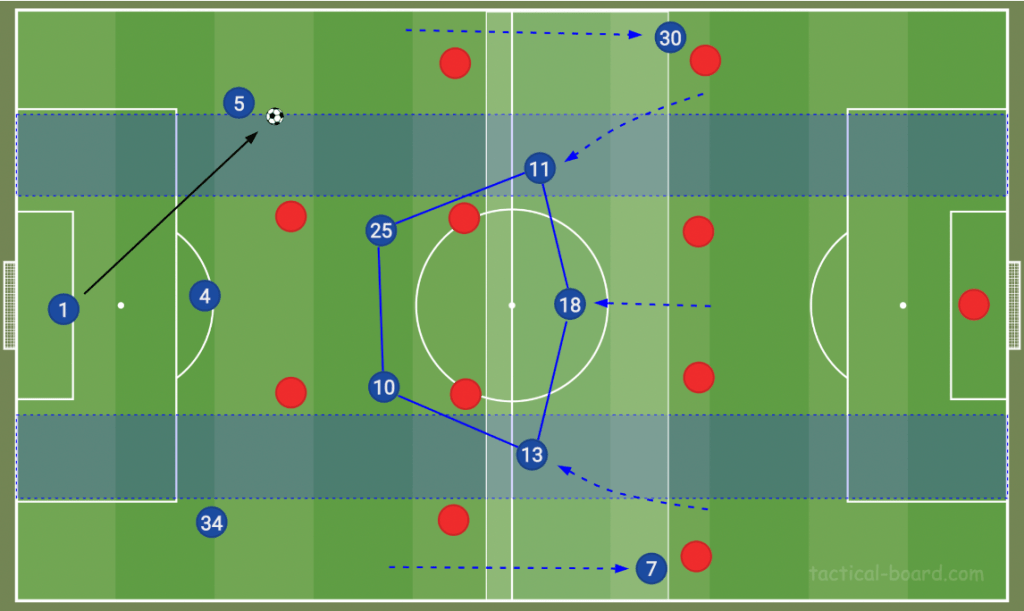
Cast your mind back to August. The midfield box didn’t exist (unless made using a false-9). Fast forward to the end of the season, it’s the shape that won Man City the league and brought Arsenal close. It wasn’t just a revelation in England either. Barcelona used it en route to winning La Liga.

Created by an inverted full-back at first with Arsenal and then Man City, it helped each of them to control matches while keeping a ‘target man’ striker. City later used John Stones as a centre-back / double-pivot hybrid which proved much safer. It took until now to be adopted because no one had the confidence to play a back-three without wing-backs. Every team that’s used it, though, have recognised that reverting to a back-four out of possession is the only way to make this shape robust enough in defence. The point is, possession football just shifted into sixth gear.
3. Newcastle’s gegenpress
Eddie Howe’s Newcastle announced their intentions early on when they deployed an aggressive gegenpress, allowing opponents no time to build up. They kept their front-three (where many use a front-two when pressing in the final third).

Committing six players to the press forced other teams to play long-ball football instead of their own game plan. With long passes more risky than short passes, Newcastle often regained possession within a matter of seconds.
4. Fulham’s 6-2-1-1 low-block
The question everyone was asking upon seeing Fulham’s defensive tactics this year was: ‘why?’
Well, Fulham’s centre-backs are very good in the air; they rarely get beaten to headers. So Fulham encourage teams to play this way. How? They drop so deep and stay so compact that other sides can’t find space between the lines. Playmakers have to play crosses into the box as their only way of getting the ball to their front players.
Fulham’s double-pivot screens the back-four, while the wingers drop so far that they’re essentially in a back-six.
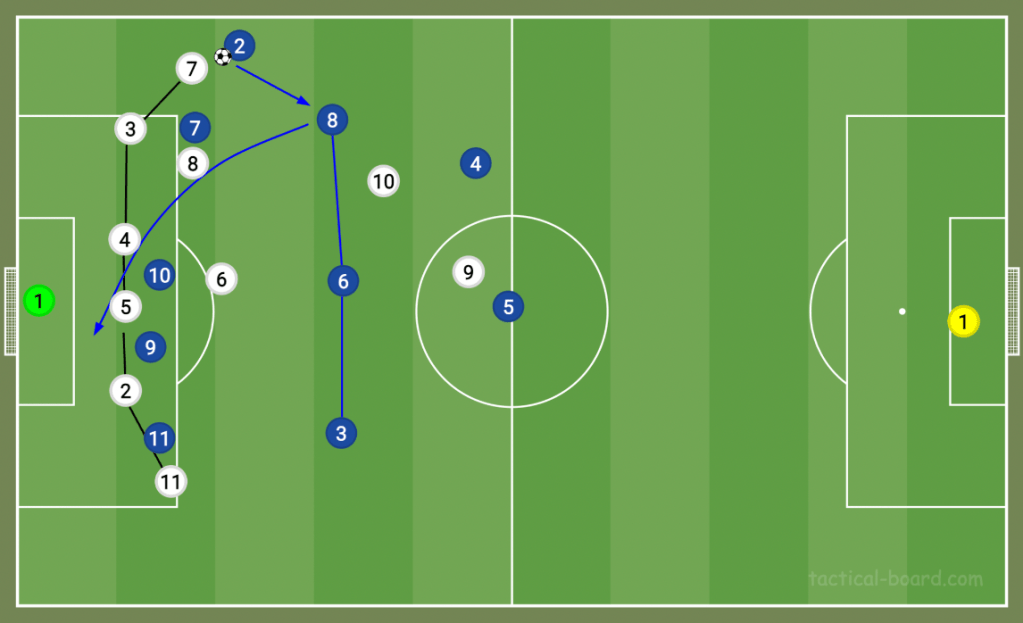
Fulham are also a team with great speed on the counter, so dropping deep isn’t an issue because they know they’ll be able to get up the pitch quickly upon winning the ball.
5. Crystal Palace’s press against Man City
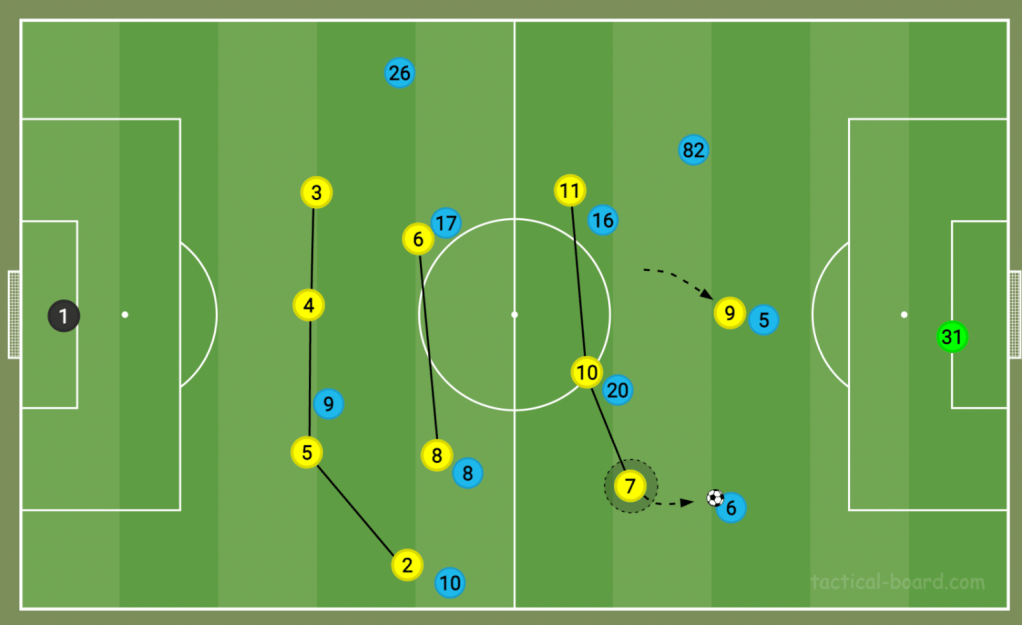
Crystal Palace 0-1 Man City is not a game many will remember from this season. The only goal came from a penalty, but the fact this game wasn’t a classic represents something more significant: Palace’s ability to totally nullify the threat of possibly the best City side we’ve ever seen was laudable.
It was all in the front-four. The No.10 and one winger covered City’s double-pivot. The striker curved his run, guiding City’s centre-backs towards the side where Palace had a spare winger. This happened almost every time, and the majority of the game saw City’s back-three struggle to progress the ball forward. They simply horse-shoed from left to right and back again.
6. Aston Villa’s build-up triangles and wide No.10s
Since November, Unai Emery has taken Aston Villa from a relegation battle to a European fight. This managerial appointment was spot on and here’s why.
He’s a manager with a track record of succeeding with a 4-2-2-2, and it’s the perfect shape for Villa’s personnel. They don’t have target-man strikers but rather in-behind strikers and wide forwards. Therefore, a front-two who could make runs in behind would get the best out of the likes of Ollie Watkins. Their full-backs are very attacking, so they should be afforded the space to advance. Indeed, they often act as the only wide men in this shape.
In build-up, Villa use seven players, which no team can ever match (due to the numerical advantage given by the goalkeeper). The double-pivot stays very close, and wide triangles help them progress up the pitch with wide channel balls.
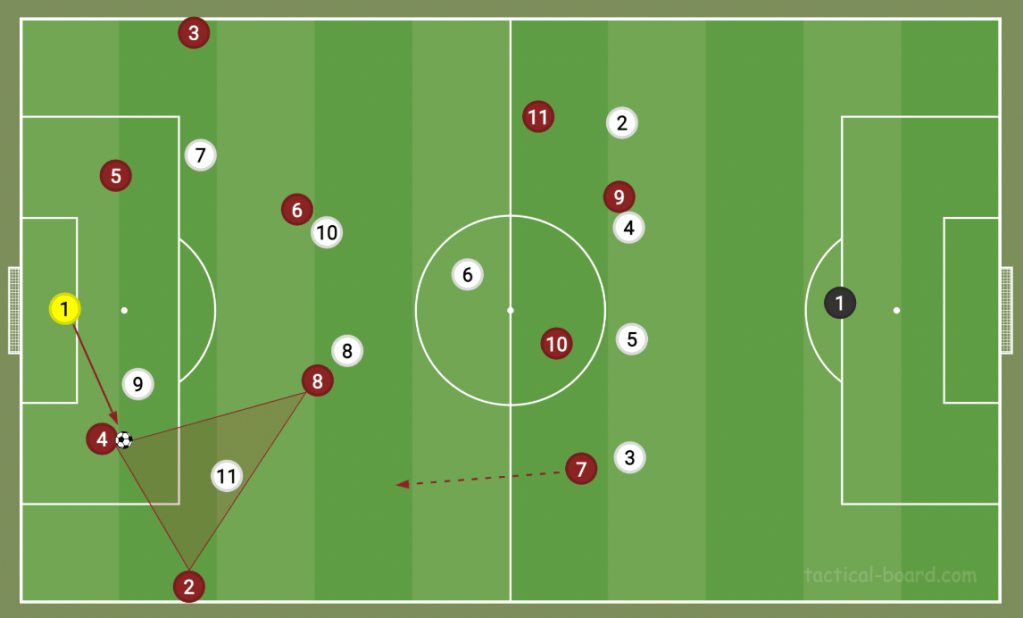
Villa also use wide No.10s instead of a classic central No.10. any player can drop into this zone at any time, making them less predictable.
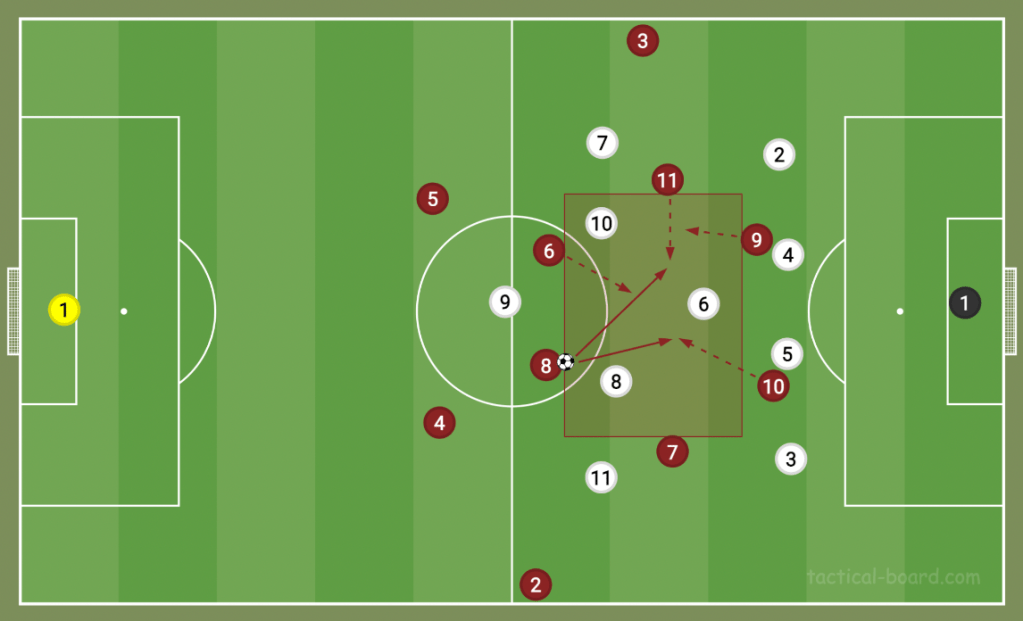
7. Man United’s Weghorst-Rashford understanding
As soon as Man United brought in Wout Weghorst, something clicked. Despite being a typical target-man poacher, Weghorst was instructed to peel off the back line, dragging a defender and opening up a clear running lane for Marcus Rashford to exploit. Is it any surprise this coincided with Rashford’s purple patch in front of goal.
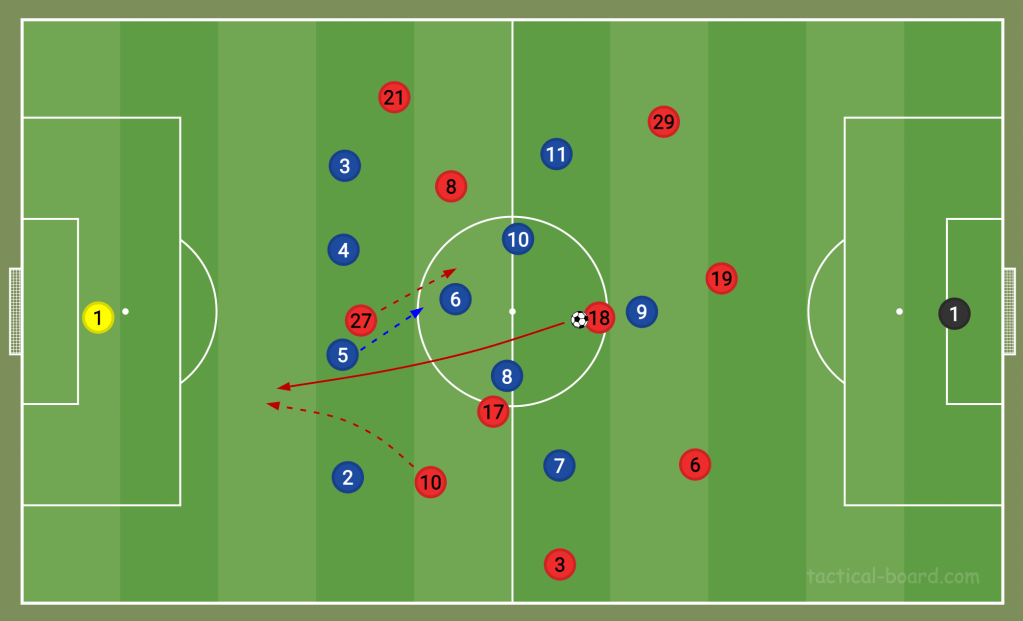
8. The De Zerbian ‘S’
We finish where we started, the south coast. You can’t have a list of the year’s best tactics without mentioning the name Roberto de Zerbi. Since replacing Potter, his tactics have been consistently analysed, and it’s the De Zerbian ‘S’ that gets him on this list. Here’s how it works…
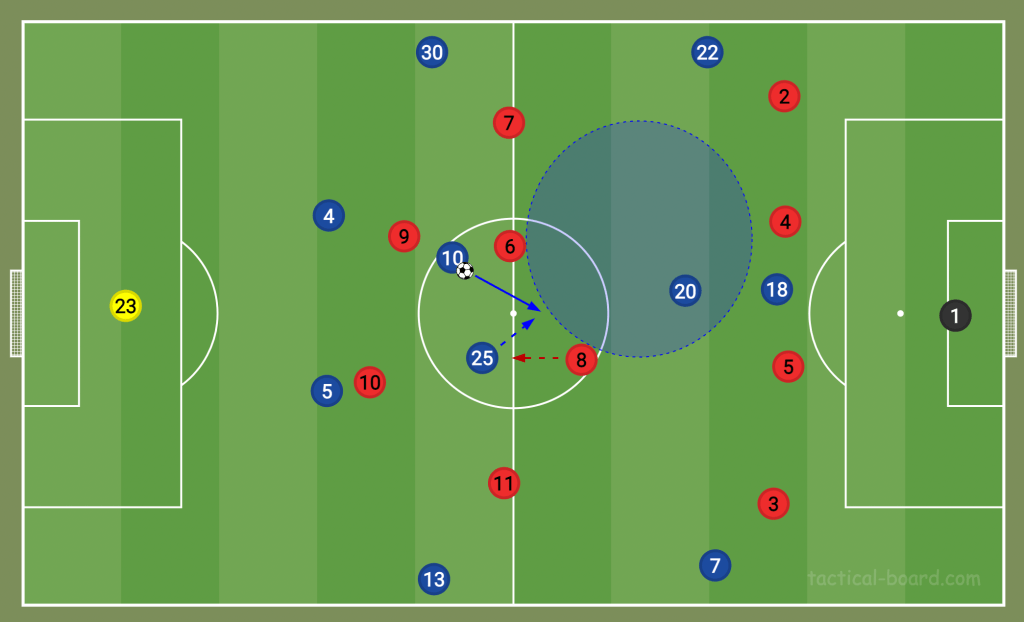
The centre-backs and double-pivot make a very compact square in possession. The centre-back will place his foot on the ball, baiting a press from the opposition striker. He’ll knock it to the other centre-back. At this point, they’ve taken a man out of the game, so the opposition frantically try to recover. However, they just fall into the trap of reacting late with a one-man press.

The other striker will press the centre-back, at which point they’ll under-hit a diagonal pass to the pivot whose marker left them.
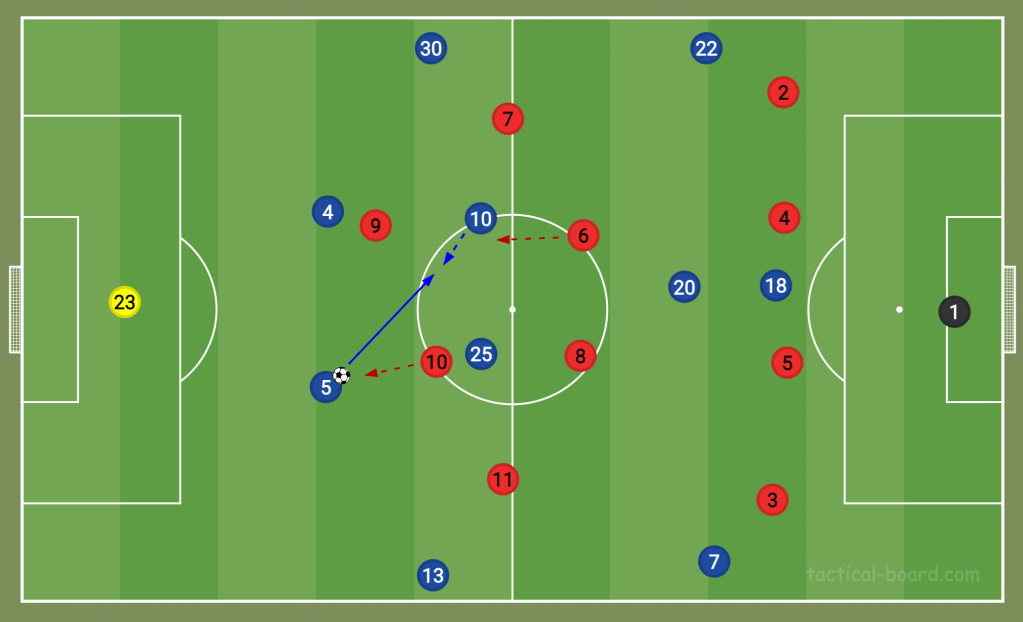
The opposition midfielder will jump to apply pressure, by which point they’ve knocked the ball to the other pivot, again slightly in front, so he can use his momentum to run into the space left by the opponent. Only Newcastle and Man United have found effective and sustainable ways of stopping this, regardless of where they are positionally. Against every other side this year, Brighton’s De Zerbian ‘S’ has helped them create many artificial transitions.
 Tactically Speaking