

The early 2000s was dominated by the 3-5-2, with its narrow core lending itself to possession football, and its wing-backs maintaining width. AC Milan, led by the now Real Madrid manager Carlo Ancelotti, were a step ahead. Their narrow 4-4-2 [diamond] was nearly identical, but used a deep-lying midfielder instead of that middle centre-back: Andrea Pirlo.
Now, he’s returned to the same formation that won him the Champions League in 2007, and while it solves many of the issues they encountered last season, there’s a feeling that it doesn’t make as much sense as it should.
Last year, he followed suit and deployed a 3-box-3 shape, with an inverted left-back. Defensive transitions proved problematic though, especially in the biggest matches.
Real Madrid’s new 4-4-2 [diamond] is helping them to control possession with a four-man midfield, while keeping the traditional back-four both in defence and attack.
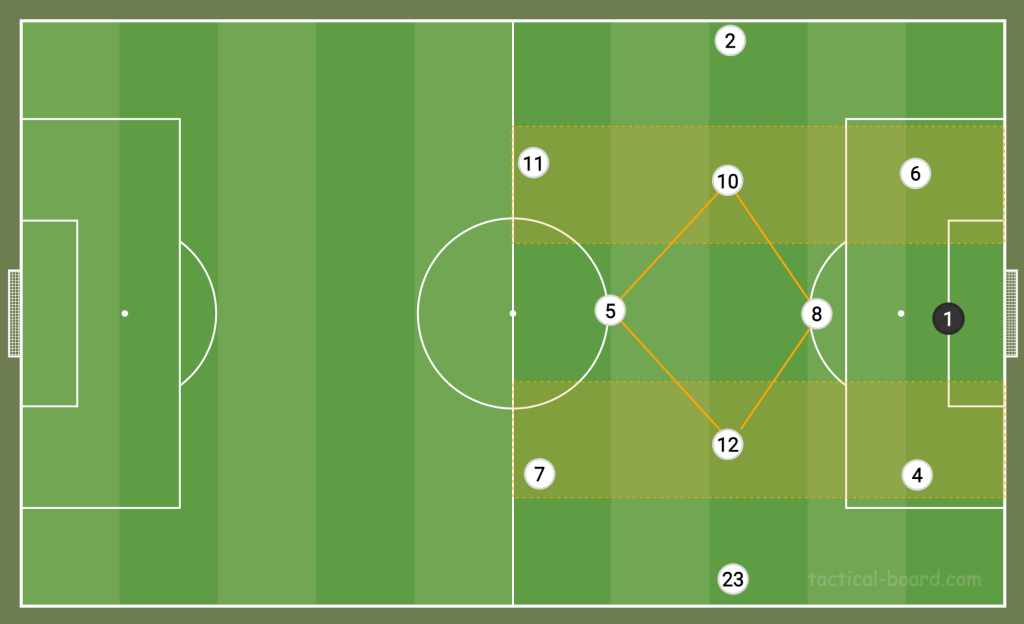
With the presence of a nominal defensive midfielder, and a nominal No10 player too, there’s natural staggering in Real’s shape that can cause so many difficulties to pressing teams.
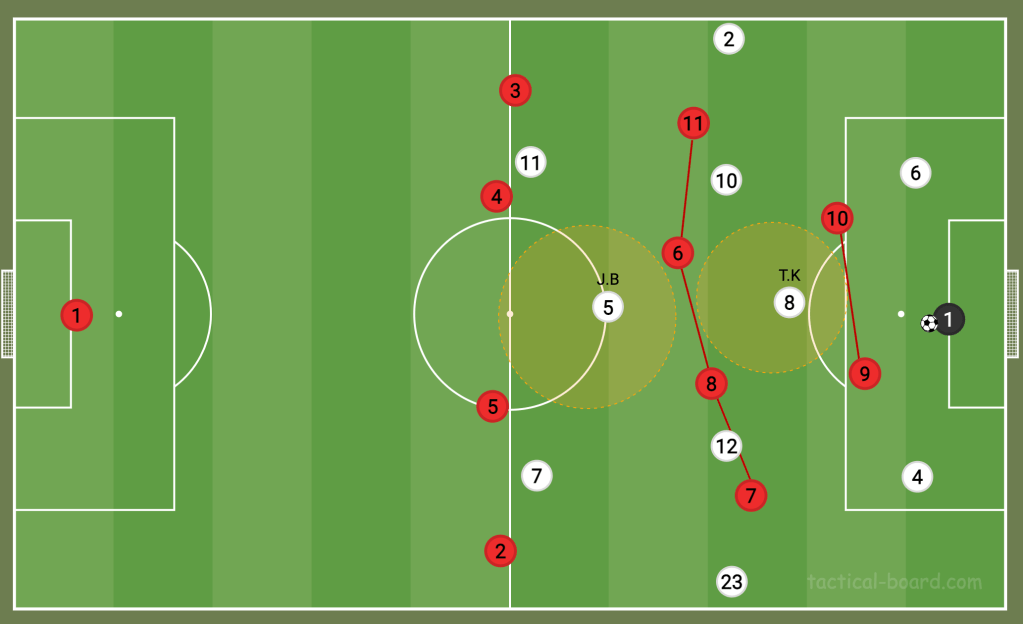
Largely, of course, this is a formation which will accommodate their best players. However, most notably, due to the uncomplicated back-four, defensive transitions will be far easier than they were last year, as none of the defenders are taking up a midfield role in possession this year.
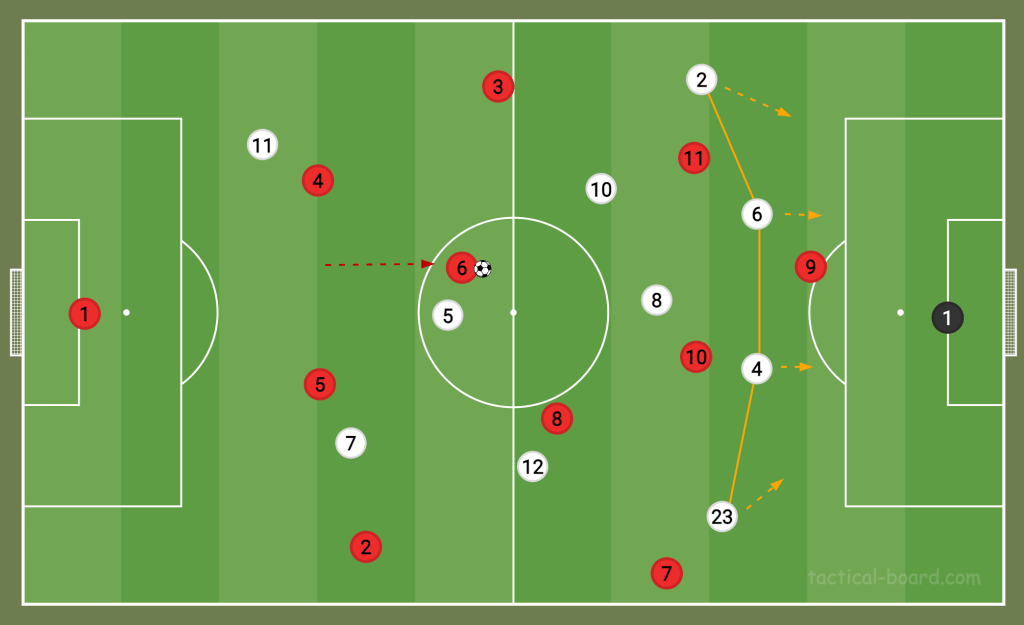
Complications arise higher up the pitch, though. New signing Jude Bellingham has been taking up the No10 position in pre-season, and he’s very much a midfielder (never higher). Real Madrid’s front-two are Vinícius Júnior and Rodrygo, traditional touchline wingers. Real Madrid will lack width high up the pitch so long as Bellingham is in midfield. On those rare occasions he advances to almost a false-9 position, the wingers can spread to familiar positions, but this won’t be common.
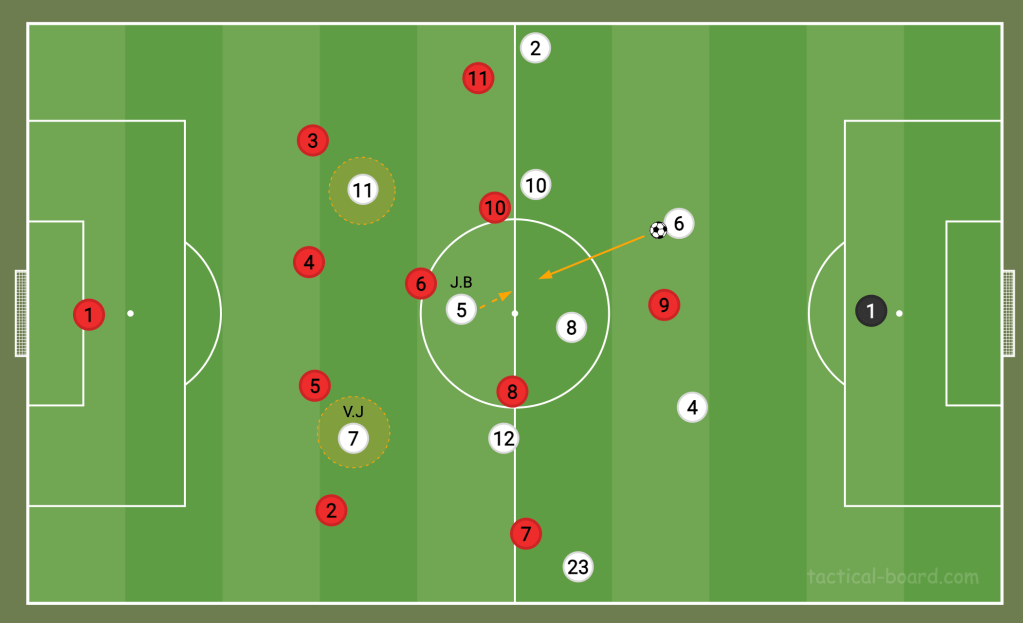
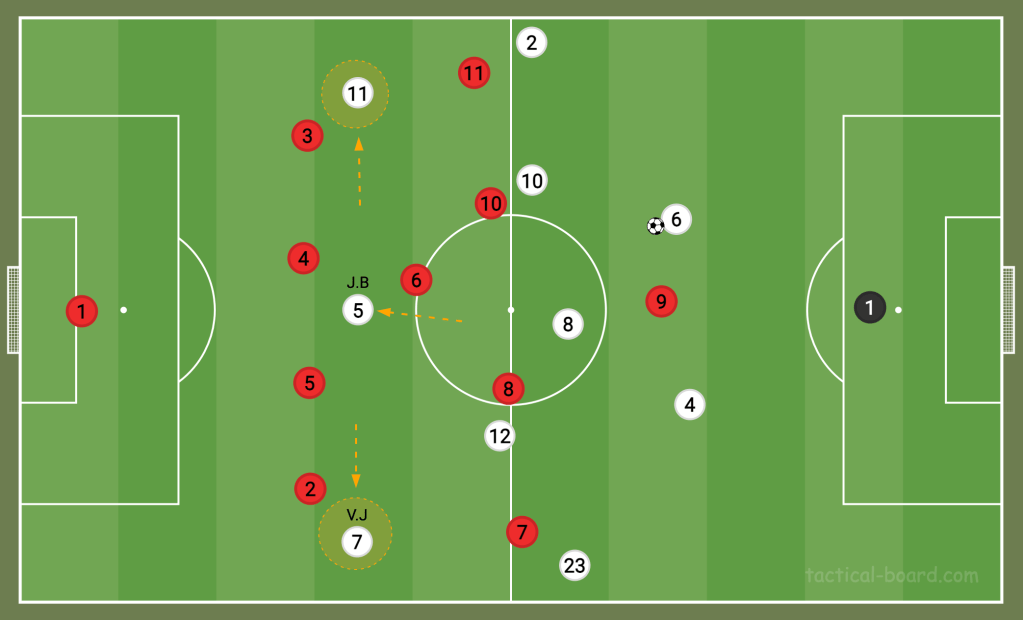
With a lack of width, Real’s favourite moves like quick switches and wide one-v-ones are going to be difficult to create. These would require the likes of Vinícius Júnior to start on the touchline like he did last season.
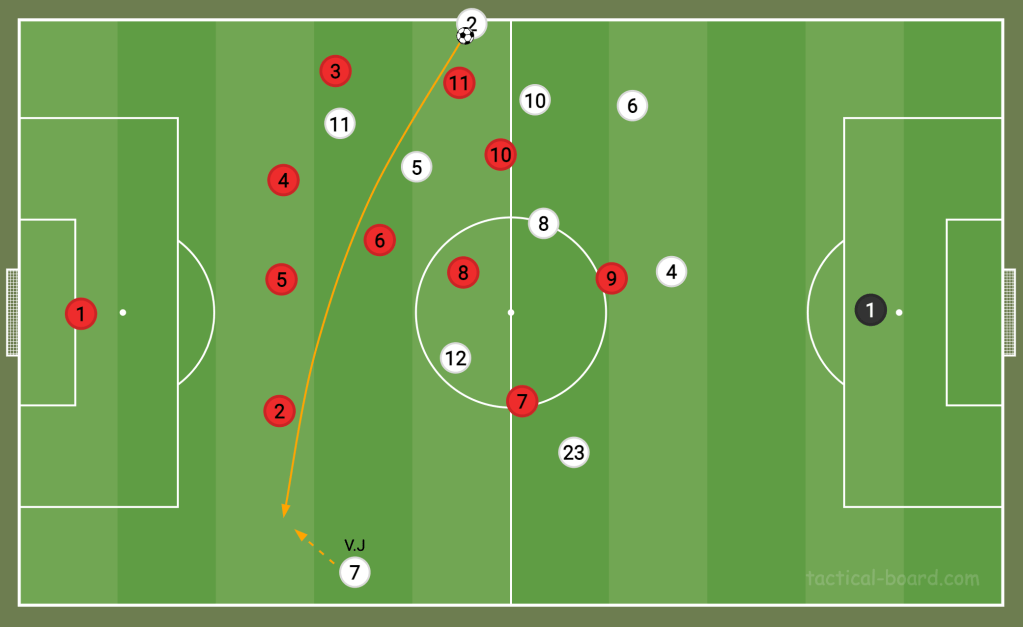
In fact, he’s not the only player in an unfamiliar position within this new shape. Rodrygo, Bellingham and Toni Kroos are all taking up roles they’re not all that used to.
Finally, back to the central point here, Real’s only wide players will be their full-backs. Eight players will be scrunched into the central zones, and Dani Carvajal and Ferland Mendy will have to shuttle up and down the flank alone, against two opposition players (full-back and winger). The teams who used to play a 3-5-2 and a 4-4-2 [diamond] in the 2000s, and the sides who use them now, had one thing in common. Their full-backs were their best players. This Real team is stronger in pretty much every other area on the pitch.

The reality is this: If Ancelotti insists on playing a 4-4-2 [diamond], Real Madrid need to find better ways of allowing Vinícius Júnior to roam wide, for his own good and the team’s.
 Tactically Speaking