
We use the word ‘transitions’ mainly in reference to the changes that occur from a team in possession to then out of possession — and vice versa. Essentially, transitions are how a team morphs from one phase of play to another. The change from one sub-phase to another is one we have often disregarded. Not anymore. This season, what happens in the moments between different sub-phases will make all the difference.
Let’s take a pressing team, for instance, who like to press high up and man-to-man. They will aim to force a mistake or win the ball back early; that’s why they’ve gone man-to-man. However, supposing the attacking team maintains possession and progresses up the pitch, at some point, the pressing team will appreciate that continuing this tactic will leave them too exposed at the back. They’ll retreat into a mid-block (4-4-2 is the most popular). Now, they can apply steady pressure without leaving themselves exposed further back.
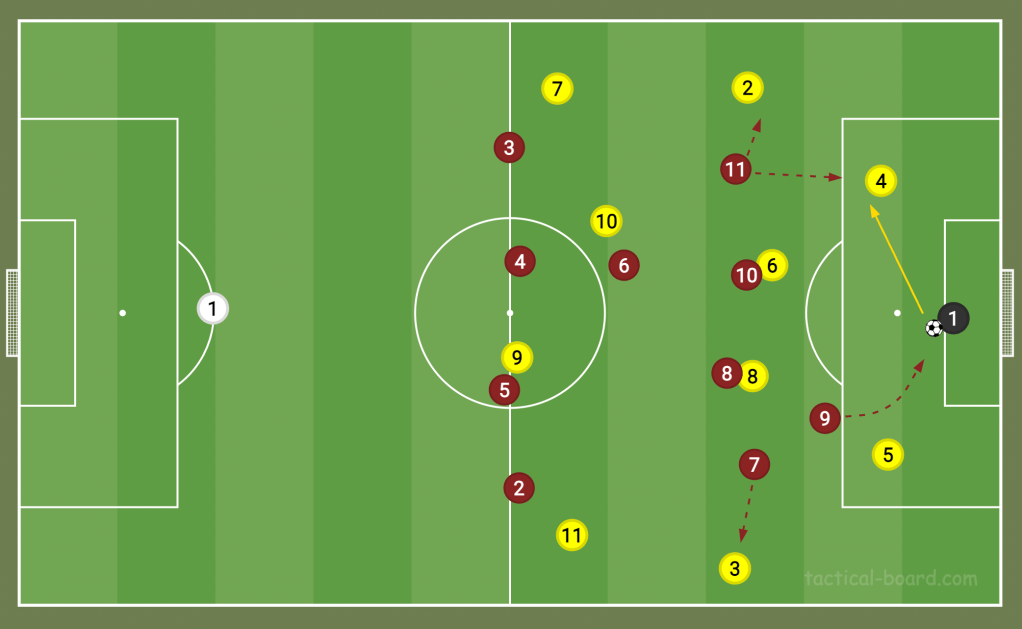
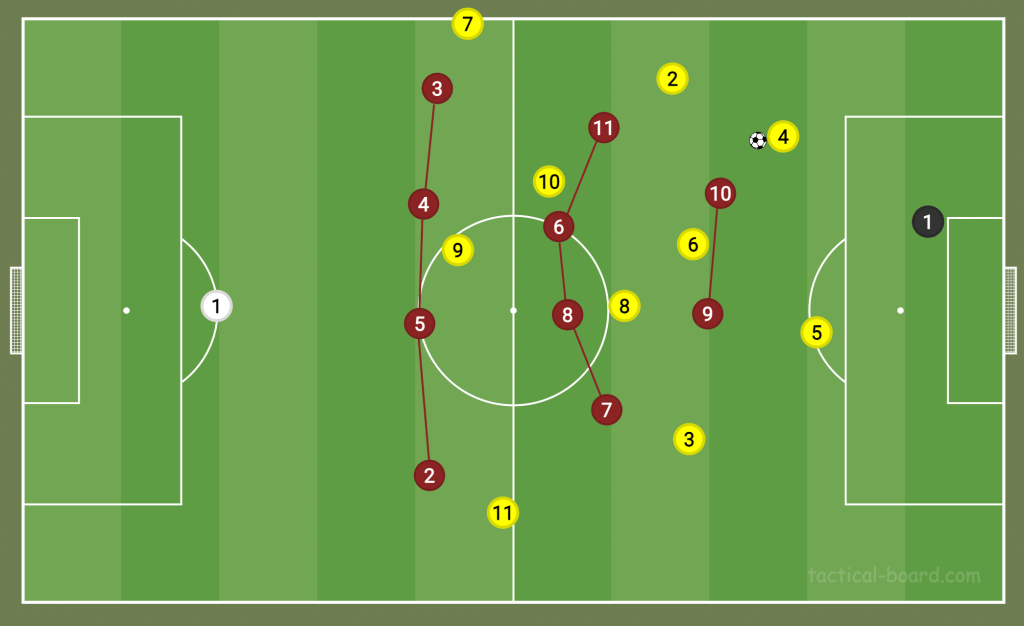
Pressing in football has become so precise that attacking teams often fail to play through the press and take time to break down a block defence. There is, however, one moment of potential weakness for the pressing side. They’re in a vulnerable state of limbo while transitioning from the high press to the mid-block. How much pressure do they apply? How important is the spacing compared to the play orientation? This is the moment attacking teams must utilise to gain any real advantage.
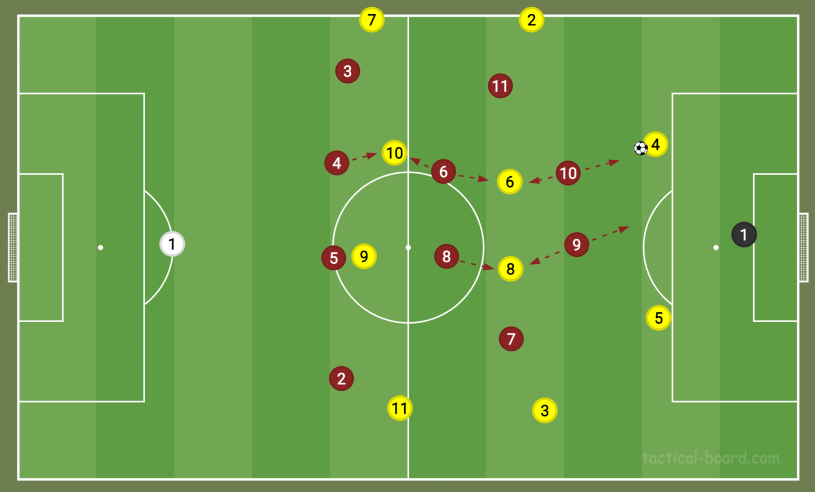
Here is the balance pressing teams must strike: They must apply enough pressure to challenge for possession and prevent facing easy build-up, but they mustn’t commit so many players to a press that they leave themselves exposed at the back.
The attacking team’s aim is to bait a press in a situation where a mid-block may be more appropriate. Brighton, under Roberto de Zerbi, have been excellent at this. Right up by the halfway line, they’ll bait a press (often by slowing their possession game to a halt and frustrating their opponents) and then take advantage of the lack of cover left behind with a neat passing sequence.
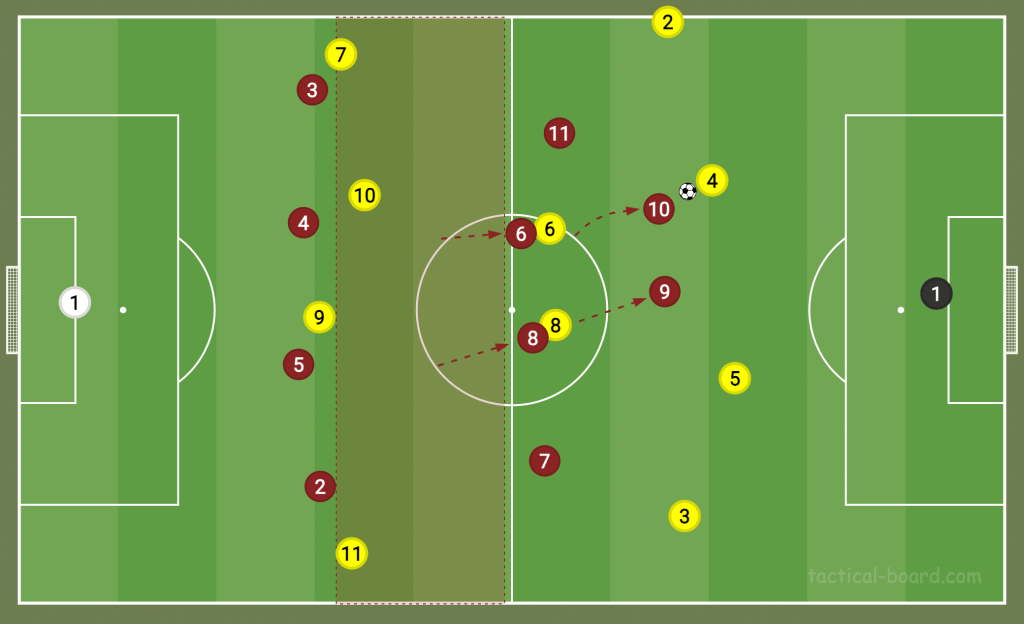
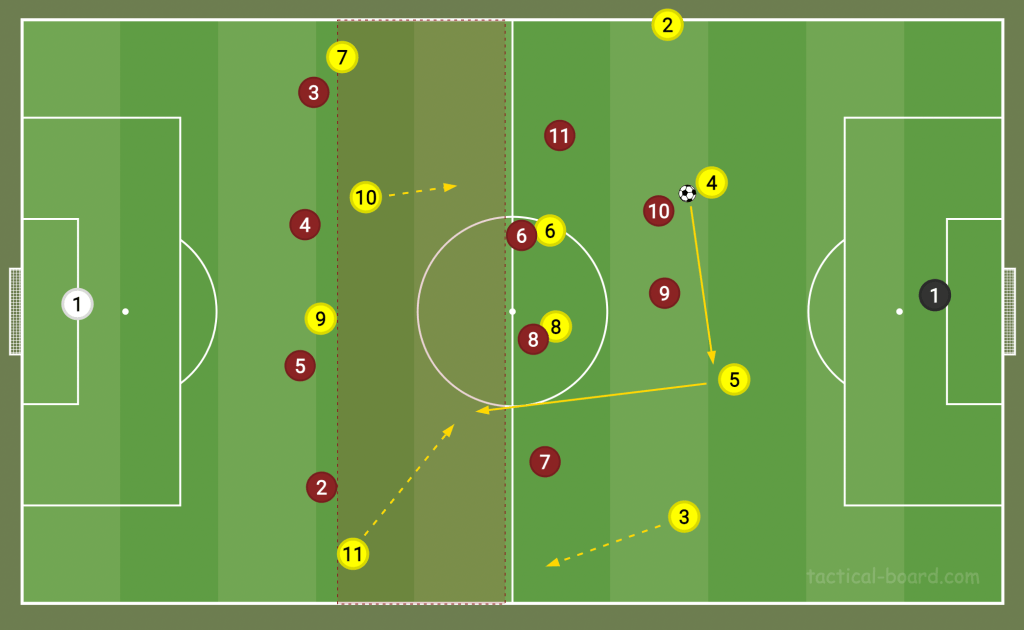
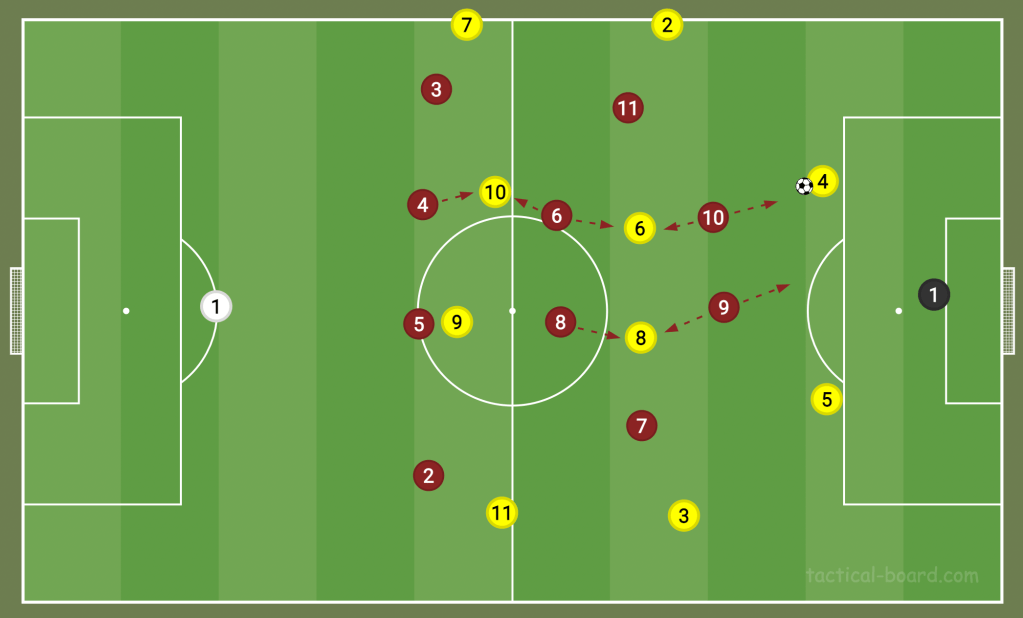
In these scenarios, drawing the press of 4+2 from the mid-block leaves space between the defensive and midfield lines. Attacking teams who can bait the press and subsequently trigger attacking movement into dangerous areas will find themselves in numerically advantageous positions higher up, as seen below.
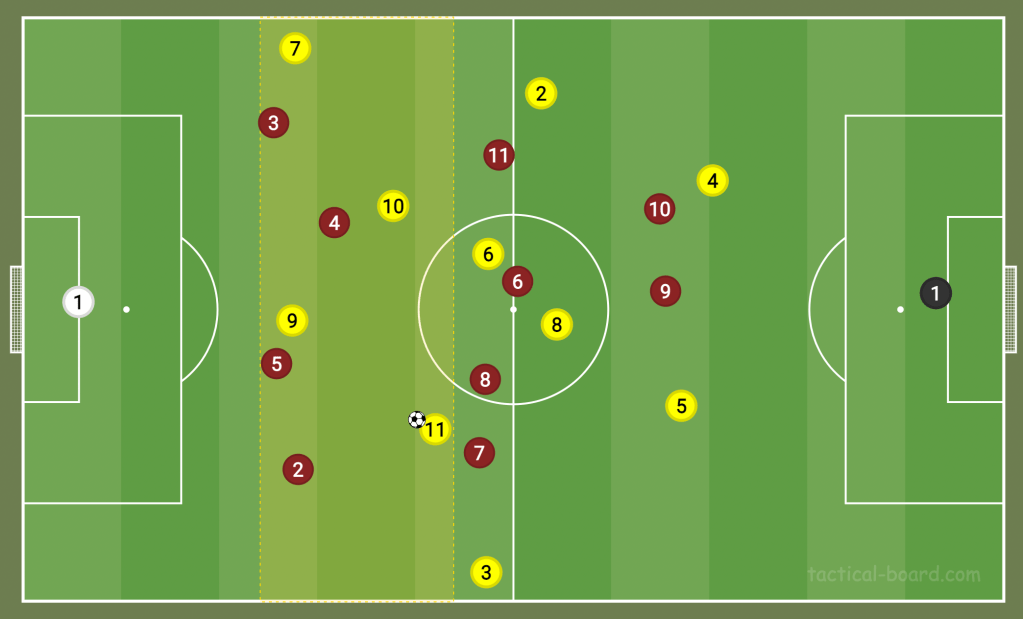
Another way of catching a team between sub-phases might be to draw a man-to-man press away from a specific zone, leaving space for a third-man runner to drop in and create an overload. We saw something similar in the North London derby when James Maddison capitalised on Arsenal’s sub-transition by dropping deep to get on the ball between their man-to-man press. Even if he, himself, wasn’t the free man unmarked, he could find them with a one-touch bounce pass and Spurs were instantly in a less congested build-up situation. In this graphic below, it’s the No.4.
Not only did this cause Arsenal issues, but it’s something Spurs have relied on a lot so far this term. Indeed, it proved one of the only ways to break through Bournemouth’s structure.
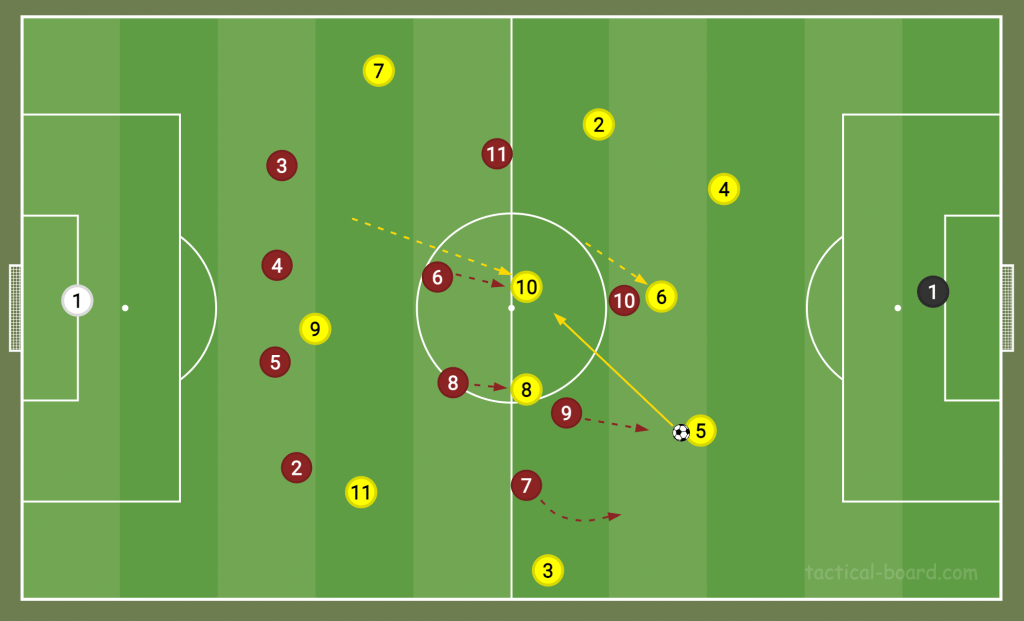
Something Manchester City have been able to display, too, is an ability to manipulate other teams’ press to the point of total disjuncture. Using many asymmetric rotations, they’ve created space between a team’s press, making it a wasted mission and far less desirable than the prospect of retreating into a passive mid-block to defend the space.
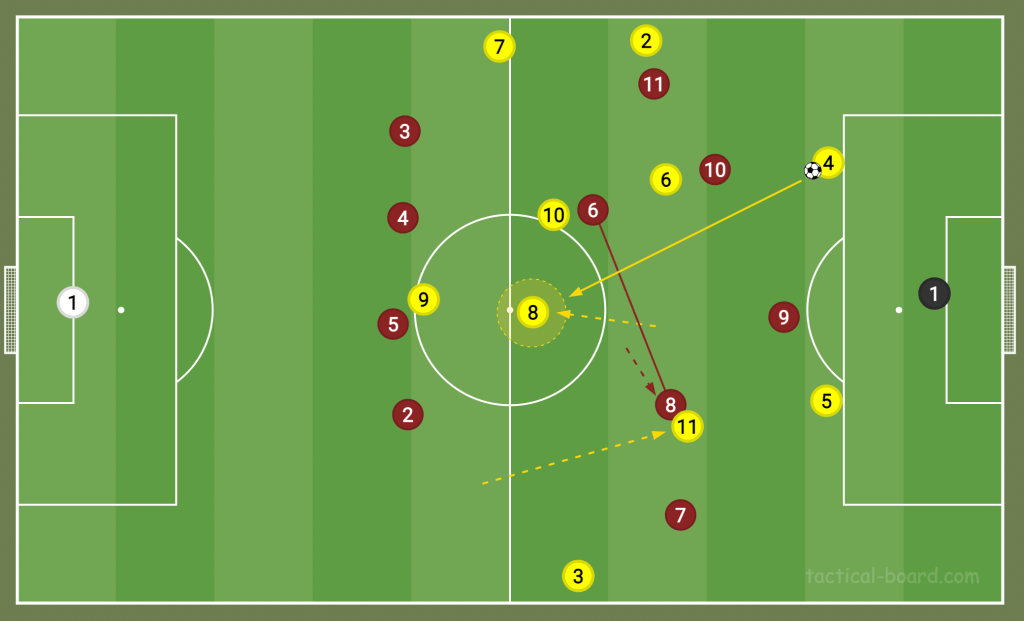
Specifically, they’ve enjoyed separating an opponent’s double-pivot to allow for a direct pass through the centre of the pitch, as the graphic above illustrates.
These moments when an attacking team can manoeuvre a press and catch their opponents between sub-phases of play will undoubtedly prove decisive in Europe’s top leagues this season. With phases of play so neat and tidy in the modern game (and as structures often prevail over skill), transitions have become focal to any team’s success. Can they be executed seamlessly, or will they be caught in the middle? That’s the question of the hour.
 Tactically Speaking