

Tactical trends change so quickly these days. Remember last season, when Wout Weghorst and Erling Haaland were showing that big target-man-like strikers were coming back into fashion? Now we see seven of the Premier League’s top 10 sides playing with so-called ‘in-behind’ strikers.
What does this mean? Well, quite simply, these are centre forwards who like to receive a pass by running in behind the opposition’s defensive line and bearing down on goal, as opposed to a false-9 who might drop into midfield or a target man who wants the ball played straight to them.
There are two main changes in how teams play now, which lend themselves to ‘in-behind strikers’ instead of target men.
Fewer crosses from full-backs
Full-backs have been the most widely covered position over the past few years due to the substantial difference they can make to a team’s identity depending on how they are played. While various sides prefer not to conform to this trend, most European outfits have begun religiously deploying ‘inverted full-backs’ to play as extra midfielders rather than marauding forward with overlapping runs.
This means that, for most teams, the wingers are the widest players on the pitch and those who will be in traditional crossing areas the most. However, wingers don’t like to provide crosses as much as take players on or engage in neat passing triangles.
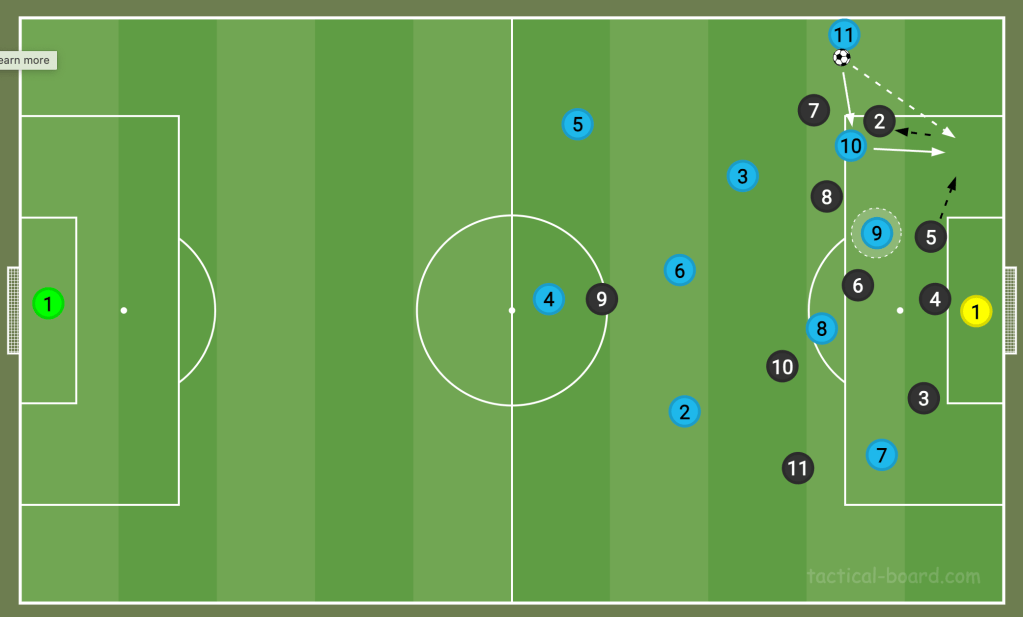
For this reason, there has simply been less need for a big forward presence in the box. Rather, if teams are trying to play around their opponents and keep the ball on the floor as they enter the 18-yard box, a striker who can rotate and drag defenders around is far more useful than one who can dominate aerially.
Pressing has led to high lines
Due to another trend (high pressing), attacking teams will often get more joy from stretching defensive lines than allowing them to squeeze the area of play vertically. This defensive desire to win the ball back quickly has meant attacking teams constantly have to improve their ability to play through a press rather than break down a low-block defence.
Pressing from the front can only happen if the whole team follows, meaning high pressing has inevitably led to high defensive lines. There is always space to be exploited as the team in possession, and when the opposition deploys a high line, that space will be in behind their defence.
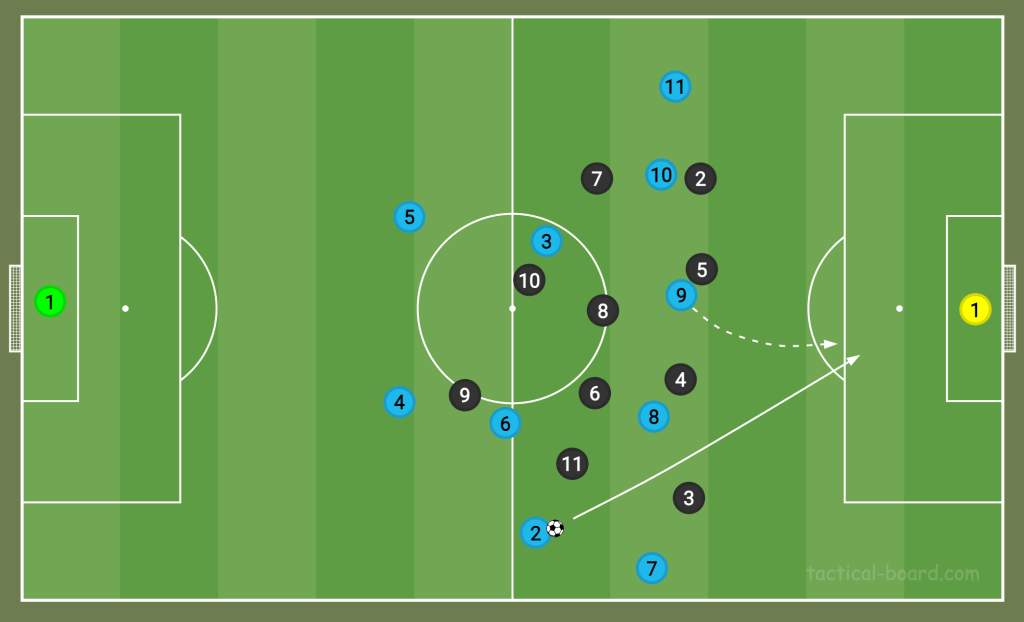
Teams need the right profile of player to take advantage of this, which means in-behind strikers instead of target men and false-9s who would each have little time and space against high-pressing teams.
 Tactically Speaking