

If told to describe Hansi Flick’s Barcelona identity, you might say ‘direct’. You might say they’re high-pressing which is also true. What would Hansi Flick want you to say? Barcelona dominate football matches, and they do so to an extent that we haven’t seen from them since Ernesto Valverde managed the club and Lamine Yamal was 12 years old.
Barcelona have paid dearly for their inability to dominate since the losses of Sergio Busquets and Lionel Messi — two players who could certainly control football matches. That’s why Hansi Flick’s impact on the team’s style of play should not be underestimated. How can he guarantee control in these games, though? He’s reinstated the offside trap.
That’s how Barcelona managed 59 percent of possession against Real Madrid last month, how they managed 68 percent against Sevilla six days earlier — two games in which Barcelona secured four-goal victories. It’s also how they recorded 78 percent of possession as they hosted Espanyol most recently.
The question for teams out of possession is always, ‘where are we going to leave the opposition space?’. This term, Barcelona are leaving all the space in the world behind their defensive line, because they know they have fast defenders who can cope with costantly sprinting back towards their own goal. That’s simply the reason why they’re able to do it. They want to do it because it means they can press higher, and leave fewer gaps between their lines, contributing to a more coherent defensive tactic.

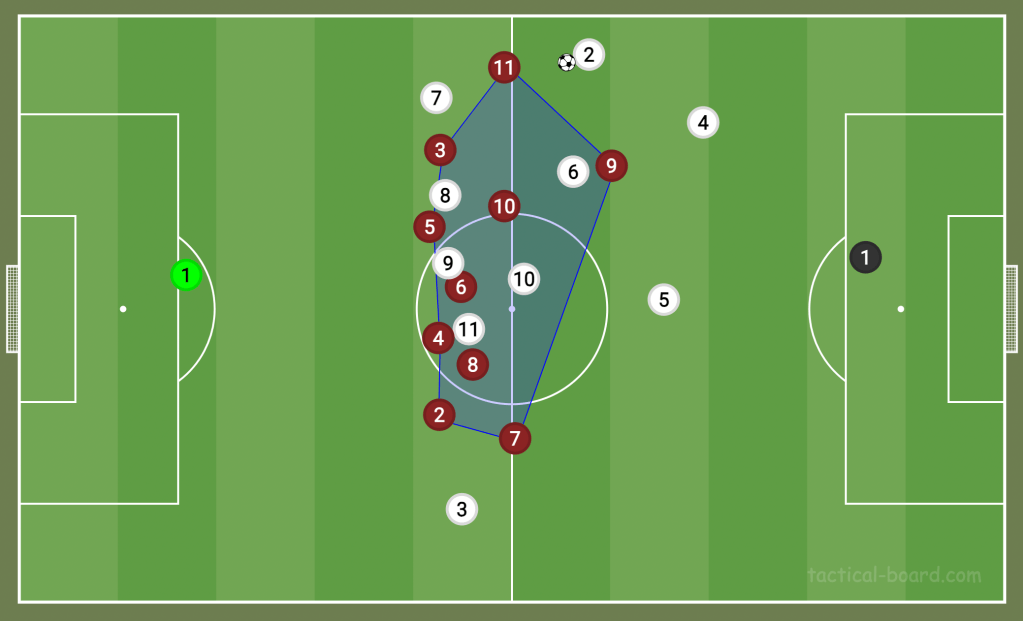
If Barcelona can squeeze their opponents’ attackers closer to the ball, everything becomes congested for the attacking team, and they’re forced to play long balls in behind the defence. In turn, Barcelona regain the ball more regularly and reliably.
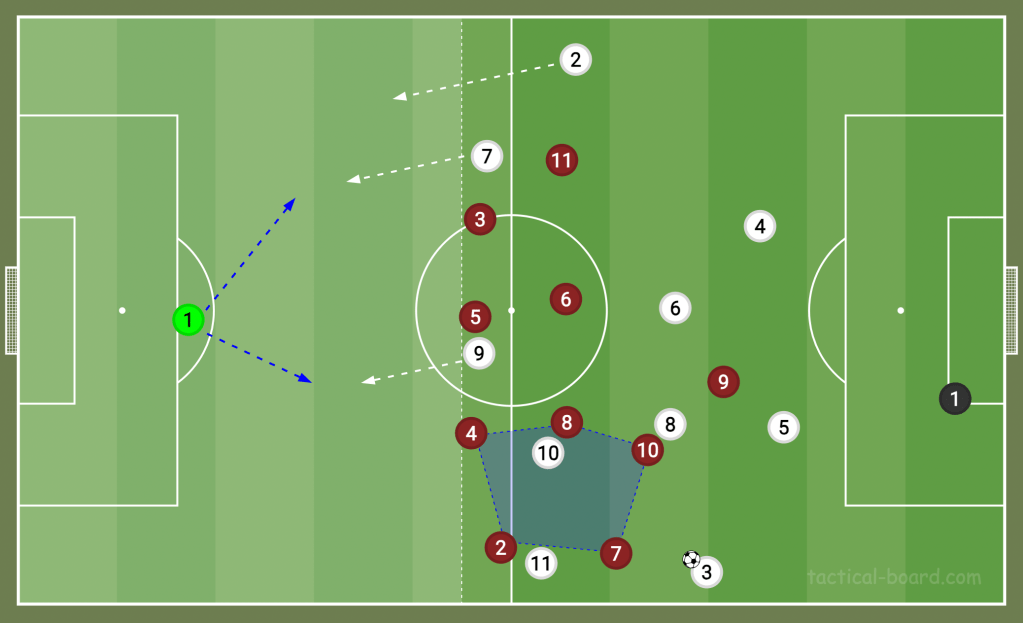
They press from the front with a 4-2-4 shape. It’s interesting that the two centre-forwards in this pressing shape merely lcok themselves onto the opposition’s pivot midfielders, while Barcelona’s wingers curve their runs, closing the centre-backs down. For this to work, Jules Koundé and Alejandro Balde must follow up behind by pressing higher, which requires the whole backline to shift across aggressively.
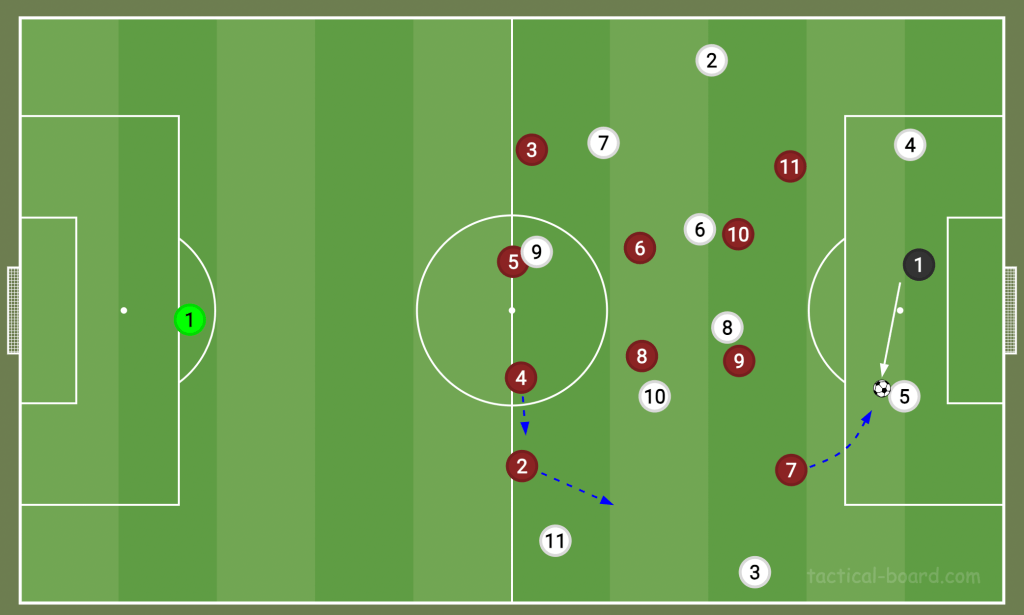

The aim is to force the opposition to play long diagonal passes to the opposite flank, or — if they dare — play to their marked teammates in midfield, who could easily be robbed by Barcelona’s own midfielders.
It’s a press which has lead to a number of high turnovers this season, and, once again, it’s all thanks to their high line.
 Tactically Speaking