
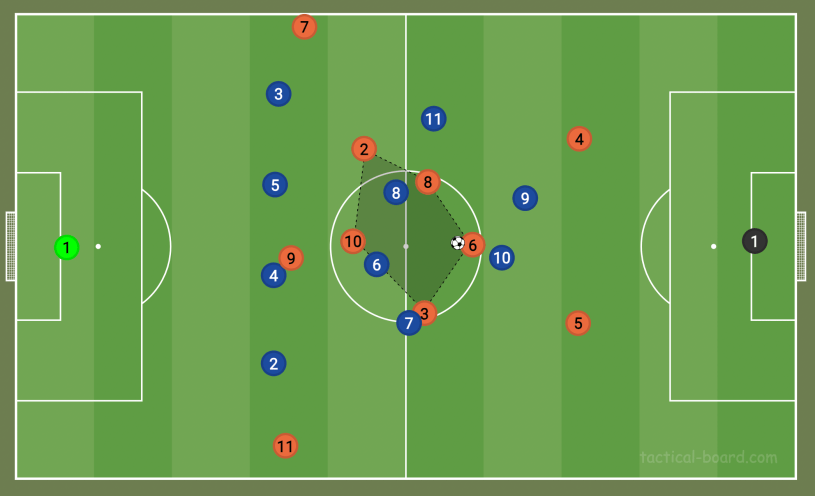
First, we had false-9s, then inverted full-backs. Then John Stones started playing in midfield, wingers drifted inside, and the whole possession obsession has churned out new iterations of a box-midfield ever since. If teams had a numerical advantage in midfield, they’d see more of the ball throughout the course of a match. That was the logic. So, what do you do when teams start to defend with the same number of midfielders as you? Add another attacker into the mix?
Some managers have tried overloading central areas, but the more this continues, the less advantage attacking teams will create. To extrapolate, a seven-man midfield — as inconceivable as it may be — would still struggle to establish control against a defending midfield of six players.
Now, we’re seeing the opposite approach, which has served those who deploy it excellently. 2024 has been the year of vacating the midfield to maximise the space in which to play.
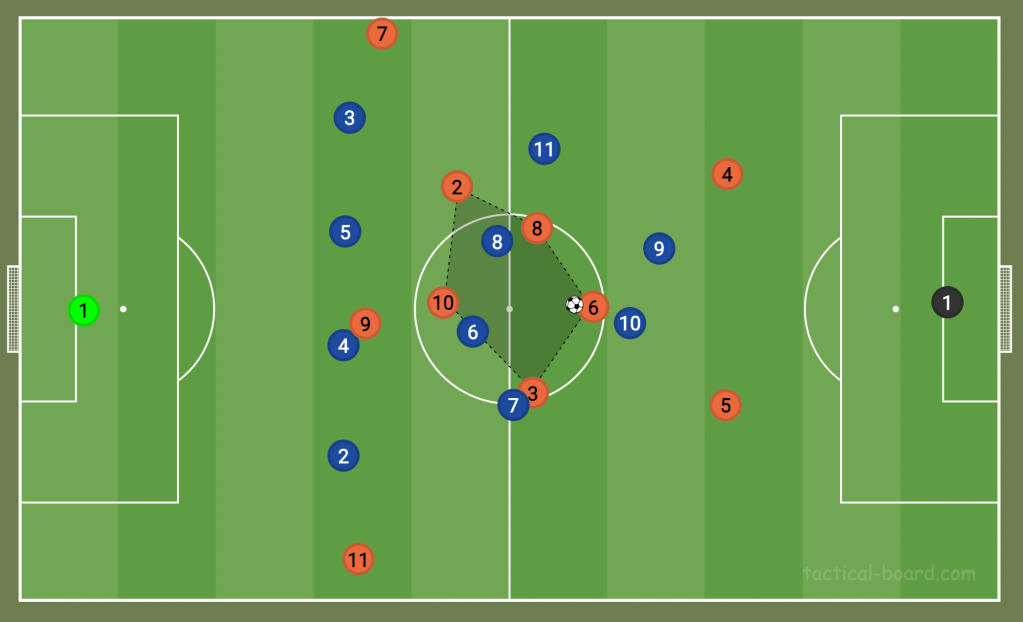
The midfield box overwhelmed opponents, to begin with. Defending teams didn’t know whether to stay compact, leaving space out wide, or block wide passes — surrendering control in midfield. The most effective defensive tactic has been to play man-to-man in midfield and let attacking sides progress out wide.
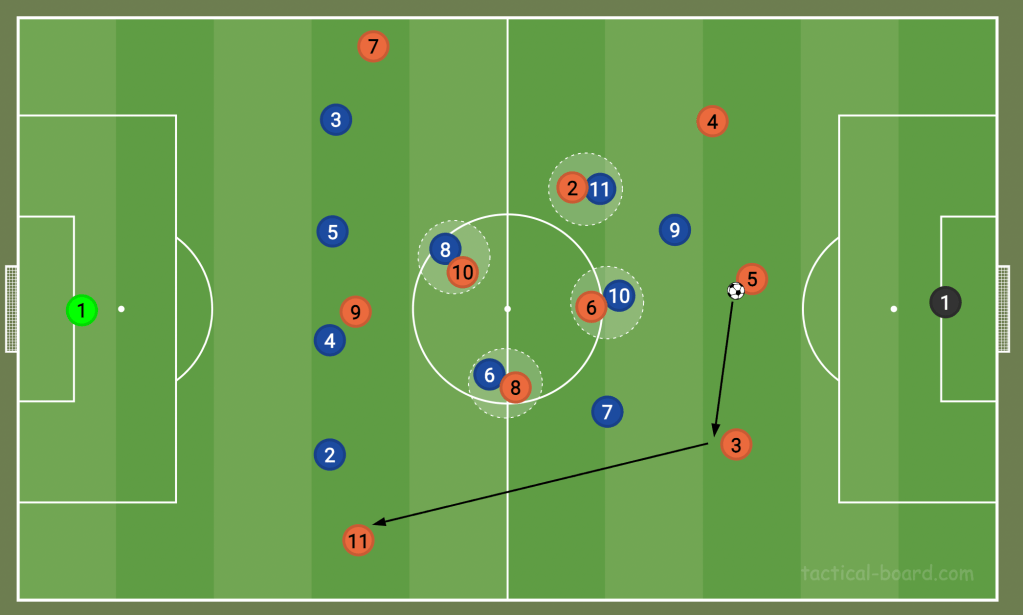
Why? Well, those teams who employ a midfield box are usually those who feel they could and should dominate possession and play intricate football in the centre of the park. At the very least, surely thwarting their Plan A is better than sitting on the fence?
This has spiralled over the last two years, and five-man midfields have been known but proved relatively ineffective over time.
Spanish football has noticed that perhaps filling the midfield has gone far enough, and any extensions of this approach will offer diminishing returns. Pep Guardiola and Mikel Arteta have started focusing on their wide threat, reverting to traditional full-backs and wingers who can double up on the wings. Arteta still deployed a box-midfield with no striker, which provided a seamless segue from inverted full-backs while suiting the profile of his players.
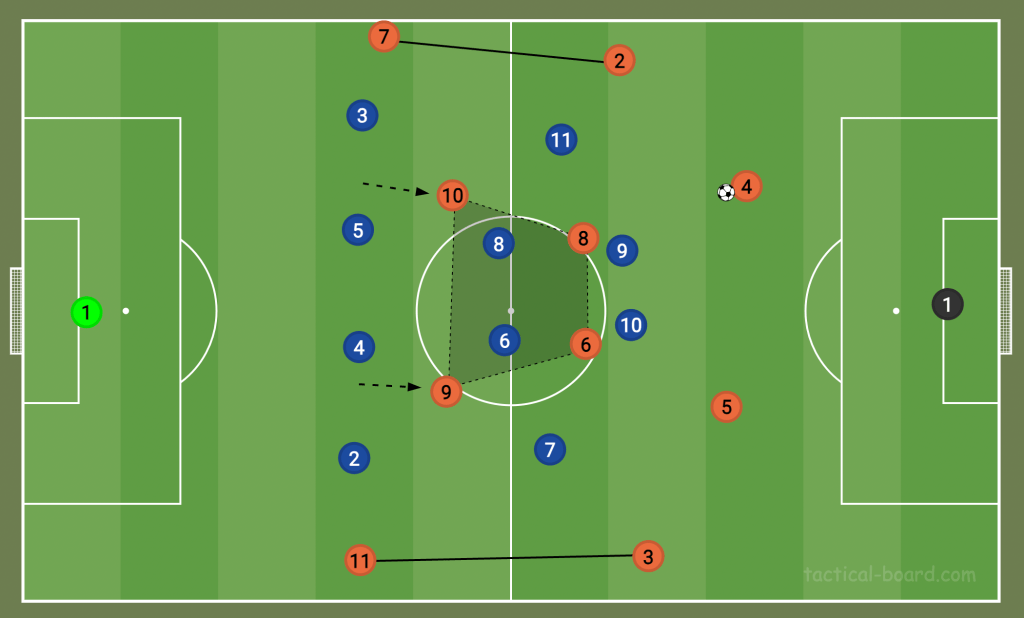
Ultimately, though, every team needs a striker in the long term. And Arteta’s formation was a hair’s breadth from the well-known 4-2-3-1 formation, anyway. The Spanish national team played with a simple, uncomplicated 4-2-3-1 at Euro 2024 — becoming the first side to win every game en route to a European Championship title. Players can still dip into midfield from other positions, but less predictably.

Opponents have reacted with more traditional defensive formations, like a mid-block 4-4-2. Suddenly, teams with four or five players in midfield eight months ago now play with more control and higher possession stats — all with only three midfielders.
Football ebbs and flows; tactics which once seemed revolutionary inevitably step aside in favour of others. Often, decisive moments in history mark a shift from one tactical trend to its complete antithesis.
After a two-year period defined by revolutionary rethinks, we are now entering a sub-era, returning to familiarity. It’s a hark back to the 3-4-1-2s of 1998 and the 4-2-3-1s of 2010. The same systems, but with renewed understanding.
 Tactically Speaking