

If Carlo Ancelotti is known for one thing, it’s trusting his players to work things out for themselves on the pitch — and getting success with it. His love affair with the 4-1-2-1-2 aside, the Real Madrid manager likes to give his players all the tools to be competitive in every game, letting them do the rest. It’s the reason Real Madrid rely so often on ‘moments’ and the ability to flick a switch within the space of a few minutes. But what if they can’t work things out for themselves?
The arrival of Kylian Mbappé at the Bernabéu has ruffled feathers and prompted an entire rethink of Madrid’s system. Ancelotti has sacrificed his beloved midfield diamond in favour of a 4-3-3 formation. That it was probably the best way of incorporating Mbappé, Vinícius Jr, Rodrygo, Jude Bellingham and Fede Valverde into the same side is missing the point. Here are too many attack-minded players who want to venture forward, and not sit back.

Let’s not forget that two members of Madrid’s midfield trio have played very different roles in the white shirt up until this season. Bellingham arrived to play perhaps the most attractive role he could have wished for. A free one, protected by three midfielders and flanked by two excellent forward players. In essence, he was a false-9 who defended as a left-winger.
Valverde was the first beneficiary of the inverted winger trend. A right-winger on paper, overlapped by this full-back in reality and whose midfield roots gave his licence to roam infield. Still, though, with three midfielders behind him.
Bellingham and Valverde are hardly going to sit back while others attack, spraying passes from deep in true Toni Kroos fashion. They want to be in amongst the goal-mouth action, and why shouldn’t they be? They’ve earned the right with their performances at Madrid.
Perfect. Real Madrid have a quite ridiculous attacking five. All they need to make things tick is a ‘rest defence’ of five, made up of the defence and pivot midfielder… and there is the problem.

Real’s full-backs are the kind to make overlapping runs, marauding forward on the outside like wing-backs. What Ancelotti’s team need is comfortable ball players who will tuck inside from full-back. What they’ve got is the opposite.
And so Real Madrid have seven players who all make forward runs with little concern for defensive solidity. It leaves just three outfielders sitting deep to protect against counter-attacks.

Their vulnerability to counters comes from not having a five-man rest defence. The full-backs are too wide, and the midfielders are too high. Whomever it should be sitting back, and frankly too often it’s neither the full-backs nor midfielders, when they lose the ball, they don’t have an adequate setup to defend well.

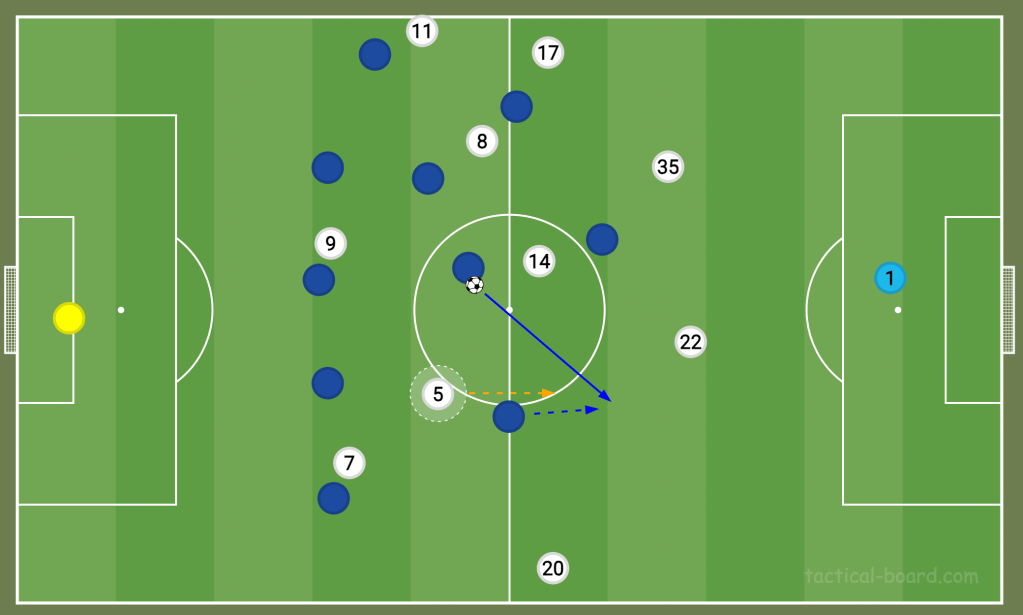
In attack, this causes problems too. On the left side, Vinícius likes to bend his run inside, meaning it’s logical for the full-back to provide the width. What happens, though, is Bellingham’s favourite forward run is already being performed by Vinícius. There are no established combinations.

On the right, Valverde likes to drift wide, as he’s had years becoming comfortable on the flank. Lucas Vázquez at right-back will also attempt an overlapping run, but Rodrygo rarely comes infield, as his role on and off the ball is to stay close to the touchline. On both the left and right, Real suffer from their incoherence.

What happens is Valverde reluctantly drops to help out in build-up, and Bellingham plots a different forward run, either side of where Vinícius ended up. And so, despite having what looks like a dynamic and frightening midfield trio, they have a disconnected one with limited ability to control the tempo or momentum of matches.
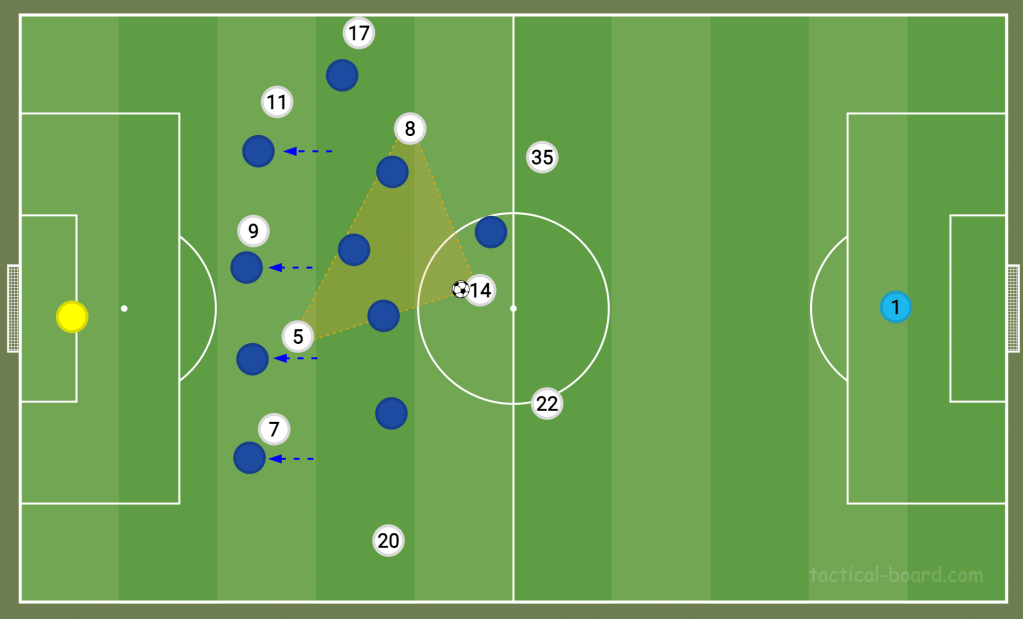
These are things Ancelotti would ordinarily encourage his players to sort out for themselves. But if Real Madrid can’t find ways of making these combinations work, they’ll be punished once more, just like they were by Barcelona, last month. Next time, however, it may not be just a league game.
 Tactically Speaking