
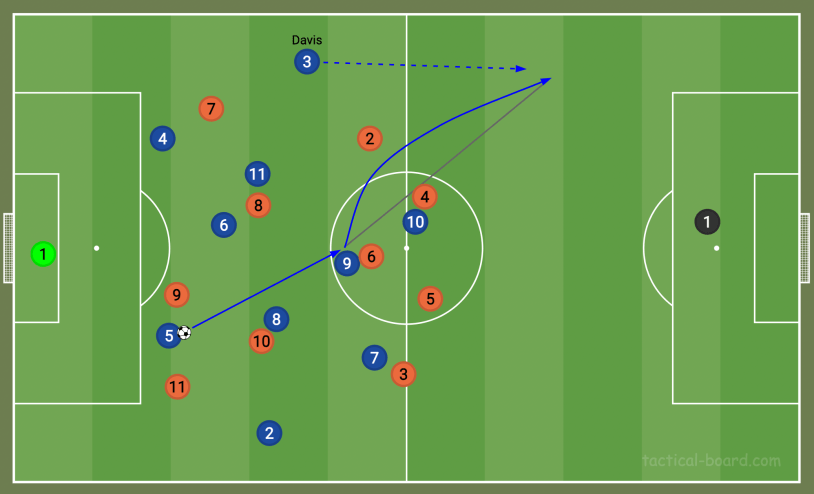
Ipswich Town are beginning to find their groove in Premier League football, with recent results against Leicester, Tottenham and Manchester United. We’ve seen Burnley and Sheffield United gain promotion with expansive football, only to drop straight back down to the Championship again, but Ipswich are using fast transitions to their advantage, segueing into a counter-attacking side.
Left-back Leif Davis plays a large role in their attacking transitions and their ability to perform them effectively. Top of the charts for league assists over the last two seasons, with 14 and 18 back-to-back, Davis likes to make direct overlapping runs forward, often crossing the ball for his teammates.
The 24-year-old has played as a wing-back but is more commonly deployed in a back-four formation at Ipswich. When they defend in a low block — as they’re forced to do frequently in the Premier League, they seamlessly flip between a 4-4-2 and a 5-3-2, using one of the No.6s as a makeshift centre-back when they want to increase the width of their defensive line.
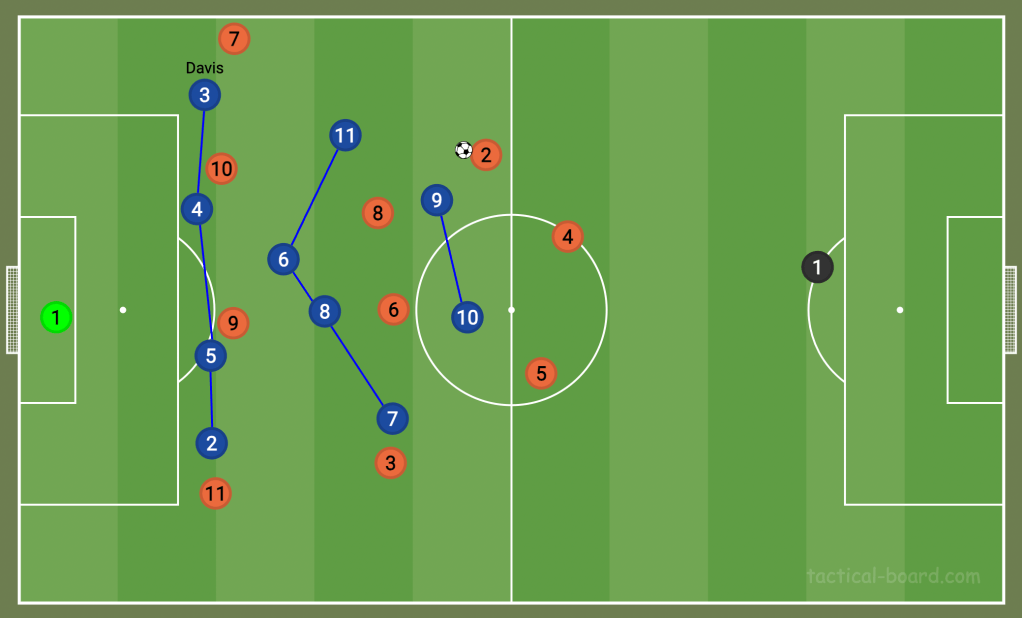

Any team can install this kind of tactical flexibility, but for Ipswich, the genius of this change lies in the forward-thinking. Ipswich have been excellent at winning the ball back with tackles in their own half this season, and the next step is capitalising on this with quick transitions.
Davis will take any opportunity to make a forward run down the flank, and the switch to a 5-3-2 allows him all the space he needs to do it. As Ipswich’s midfield goes from four to three players, the wide midfielders tuck in as auxiliary No.8s, reducing space. This opens up the entire wide channel for Davis, and he knows he can stretch the opposition once Ipswich win the ball back.
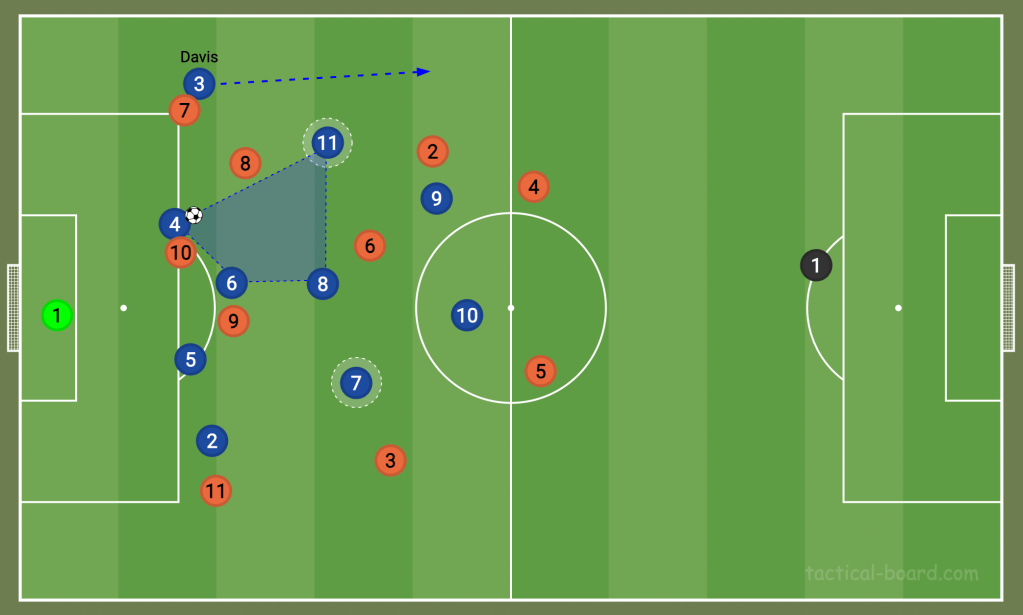
Once they win the ball, Ipswich have become masters of the diagonal counter-attack, moving through the middle at first, then out to Davis on the left in just two or three passes. Many teams favour counter-pressing when they lose the ball now, and Davis is excellent at exploiting the space left on the far side of the pitch.

Ipswich’s forward players are comfortable with hold-up play, and this facilitates wide attacking runs. This ability to build up through the centre and then play wide exploiting space sounds basic. In reality, however, it’s actually very difficult to showcase coherently. Finally, with Davis latching onto a pass out wide, he often finds himself in a prime crossing position — which he loves. A keen crosser of the ball, Davis has teammates who can be particularly dominant in the air, and crosses into the box have proved a great source of goals for newly promoted Premier League sides across the past few years.
In essence, one of the final tactics Ipswich deploy when they’re defending their own goal is the same tactic that sees them finish their attacks with a shooting chance. And with such clarity around the tactic among the team, it’s become a fruitful component of their play in no time at all.
 Tactically Speaking