
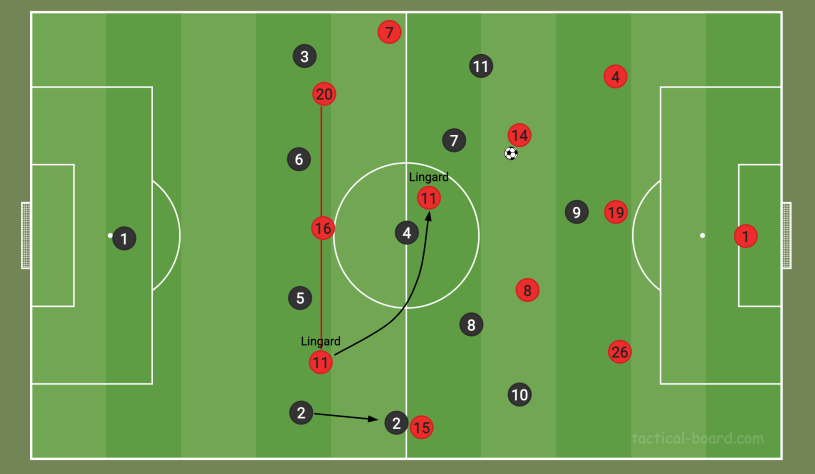
Put simply, Nottingham Forest’s new signing Jesse Lingard has been brought in to offer overloads offensively. However, his services will be just as important defensively as in attack.
Against Newcastle United, he performed a sort of hybrid role between man-marking and structurally shading passing options in defence.
During his brief spell with West Ham United and especially with England at the 2018 World Cup, he was used to link play and roam free for large portions of matches.
Forest will deploy him in a similar way in their 3-4-1-2 formation. During the first phase, he will often be seen in a rare front-three, helping to pin back the opposition’s full-backs. This is a common tactic implemented by teams across the world to prevent other sides from committing full-backs to an initial press.
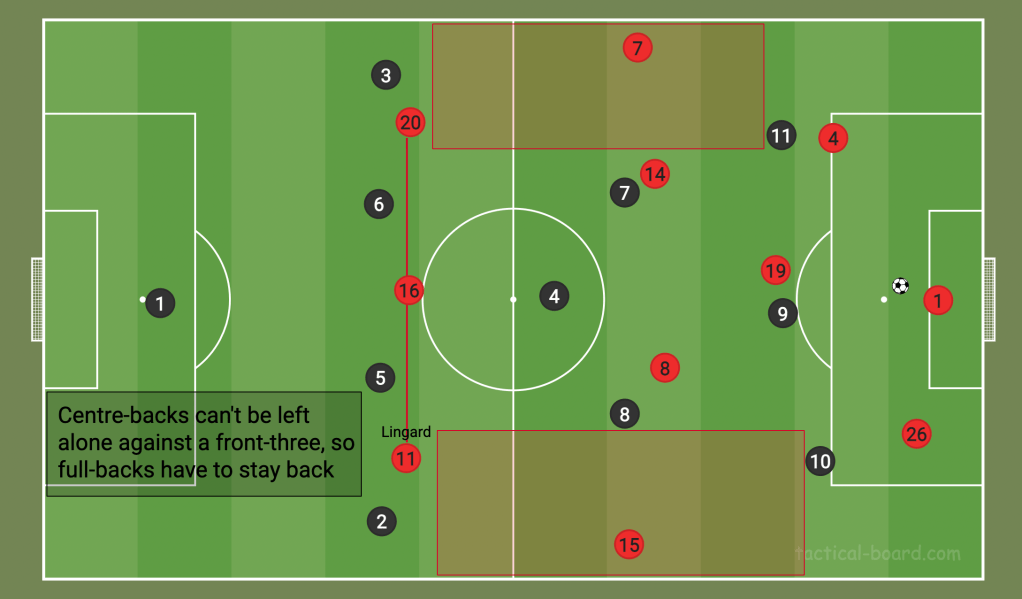
This has worked particularly well for Forest over the last year as it affords their own wing-backs to engage in build-up play unmarked. Their opponents are forced into a decision riddled with negative trade-offs.
Newcastle’s midfield-three occasionally attempted to spread wide and combat Forest’s threat at wing-back, but this also left Bruno Guimarães outnumbered in the central zone versus Forest’s two midfielders. However, as shown by the red boxes above, overloading the midfield would leave Forest’s wing-backs with the entire flank to themselves.
Once Forest are able to bypass the first line of pressure, Lingard will usually break off the shoulder of his opposing full-back, and drop into a central area closer to his teammates in midfield. At this point, it’s virtually impossible to prevent the full-backs from engaging in the press, so he would be better placed in the pocket between the lines.

Steve Cooper’s side struggled to progress up through central zones successfully last season so Lingard’s movement will be vital to ensuring they have enough different ways to build-up against other teams. His ability to create overloads on either flank will also help Forest to break-down teams with notably passive defensive structures such as Everton and Tottenham Hotspur.
Forest will have to do their fair share of defending this year, and once again Lingard’s energy and tactical understanding will be important to Forest’s operation off the ball.
Forest are a relatively high-pressing side, and this won’t change dramatically in the Premier League. Cooper’s 3-4-1-2 formation works excellently as a defensive shape due to the fact that it matches up man-to-man with the traditional 4-3-3 shape used by most English teams. Lingard, therefore will have responsibility over marking the opposition’s defensive midfielder out of the game.
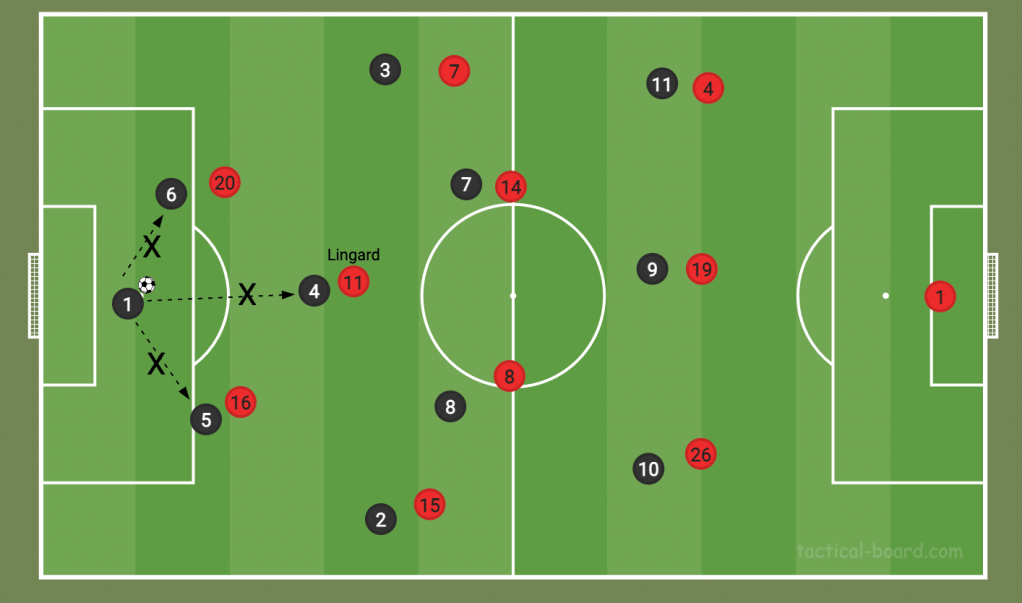
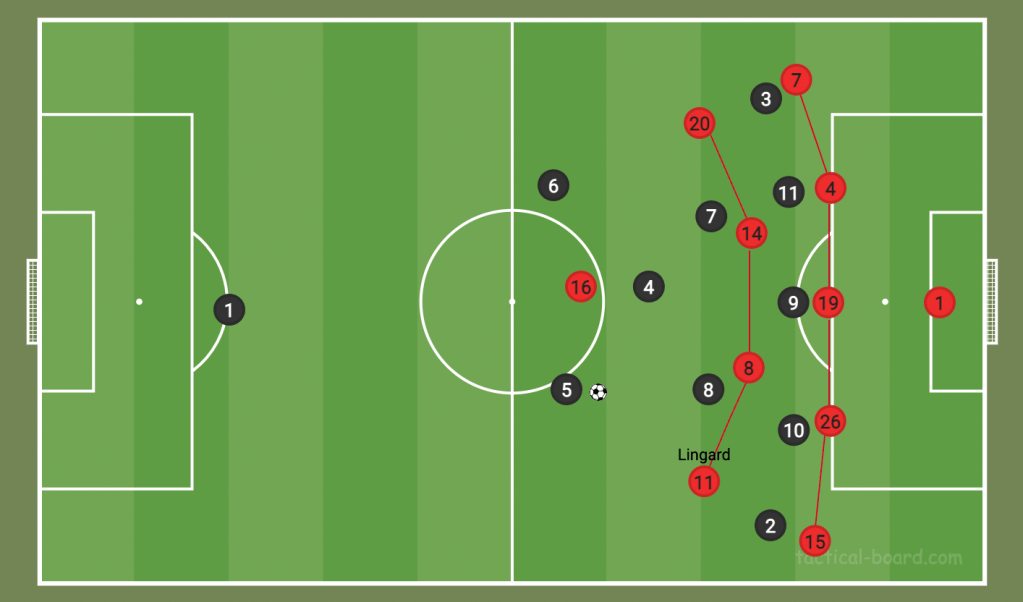
Against Newcastle in the opening game of the season, Lingard remained in close proximity with Guimarães for most of the match. However, against teams who tend to commit more numbers to the attack, we may see Forest deploy a low-block 5-4-1 shape in which Lingard drops to a wide midfield role, shown below.
 Tactically Speaking