

There’s a straightforward way to remember how Spurs attack. They go in to go out. They build up with those (extremely) narrow full-backs, two centre-backs, two No8s, and Yves Bissouma at the base to connect it all together. They make no effort to hide their desire to play intricate passes in the central channels before spraying a pass out to the wingers, who are always on each touchline as a wide reference.
They want to attract central pressure, make the opposition squeeze laterally, and then take advantage of the resulting space out wide by creating a five-v-four overload against their opponents’ defence.


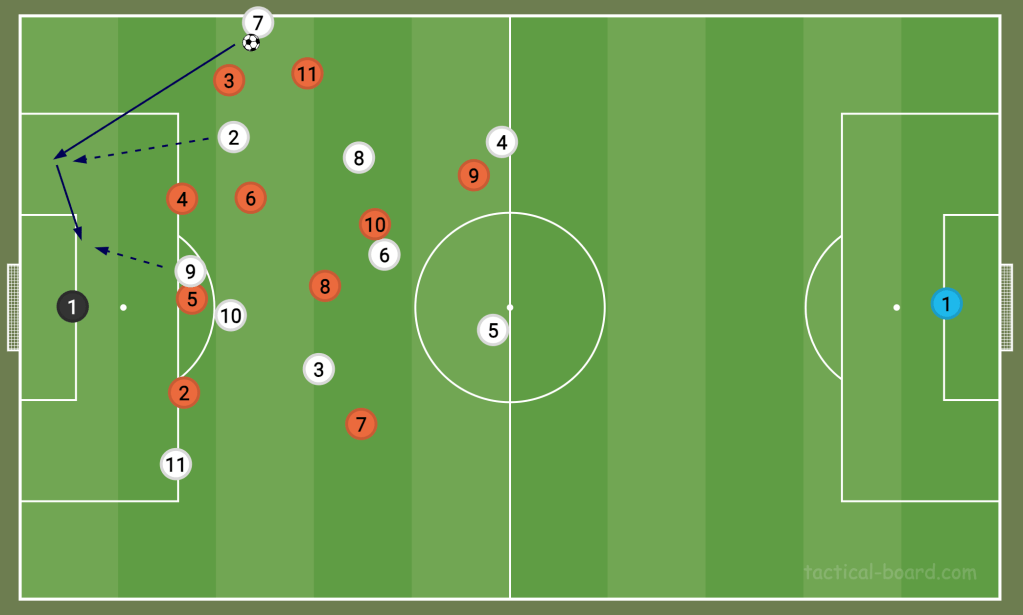
This is how they have created that specific move we’ve come to expect from them this season, in which the underlapping full-back will latch onto a pass in behind and cut it back for Richarlison. They stretch defences.
So why don’t many teams play a back-five (or back-three) against them? Quite simply, they need all the numbers in central midfield that they can muster to stop Spurs dominating in that area.
However, on the few occasions Spurs have faced a back-three side — namely against Everton, both matches against Wolves, and situationally at home to West Ham — they have found no way through. Why?
Thinking about the out-of-possession shape a back-three system will take, where the full-backs drop back, it best matches Spurs’ shape. Teams who have been happy to let Spurs control proceedings have found success in simply shuttling from left to right in a compact and passive press, with a back-five behind.

The 5-3-2s and 5-2-3s Spurs have faced have forced them wide during build-up, then closed off in-routes while covering the underlapping runs of full-backs by denying Spurs a five-v-four overload. There’s a real emphasis on defending the half-spaces.


When Spurs enter the final third, the only space that exists is at full-back, where they prefer to have no one sitting. They inevitably filled the positional void against Wolves because they still couldn’t stretch the defence.

The final reason Spurs have struggled to cope against back-three teams is due to counter-attacks. Tottenham are very open at the back due to how many players they attack with. They’re also so fluid that it can be confusing whose responsibility it is to protect against counters. Wolves and West Ham overwhelmed Spurs with counter-attacks. The nature of a back-three means you can deny wide overloads and create them yourself at the other end of the pitch.


 Tactically Speaking