
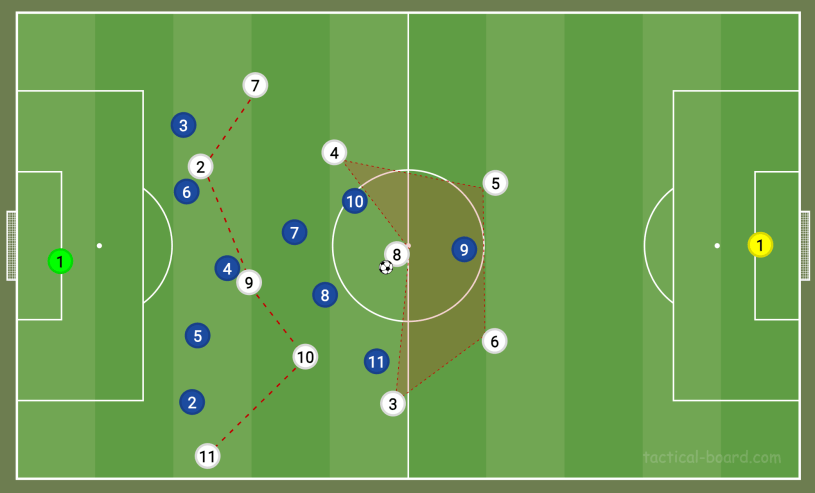
If we weren’t sure whether to talk about ‘Lee Carsley’s England’ as though it was indeed Lee Carsely’s England last month, we are now. The permanent appointment of Ashley Cole three weeks ago as First Team Coach all but confirms Carsley is here to stay.
Describing himself as more of a coach than a manager, the 50-year-old didn’t hold back on implementing his style of play in last month’s fixtures against the Republic of Ireland and Finland. The likes of Levi Colwill, Rico Lewis, and Angel Gomes were thrust into the limelight without hesitation, which leads us to the most notable decision Carsley already seems to have made…
No left-back? Fine. No left-back, it is. For a while now, left-back has been a real headache position for the Three Lions. Behind Luke Shaw, who started 11 of England’s 12 games at Euro 2020 and World Cup 2022 combined, options are scarce.
England paid the price for playing a system contingent upon Shaw’s availability during this summer’s European Championships, and Carsley appears to be saying: if we can’t rely on his fitness, we should prepare for his absence. Enter Colwill and Lewis.
Both very different players, the pair cover a lot of bases between them for England going forward. What they share, though, is the stamp of ‘Carsability’. They’re both players who would work well in Carsley’s style of football, and indeed have done so.
The interim England manager likes his narrow full-backs, because he believes the width should be provided by the wingers. A route for Anthony Gordon to get into the team? Yes. A Phil Foden on the left-wing? Almost certainly not.
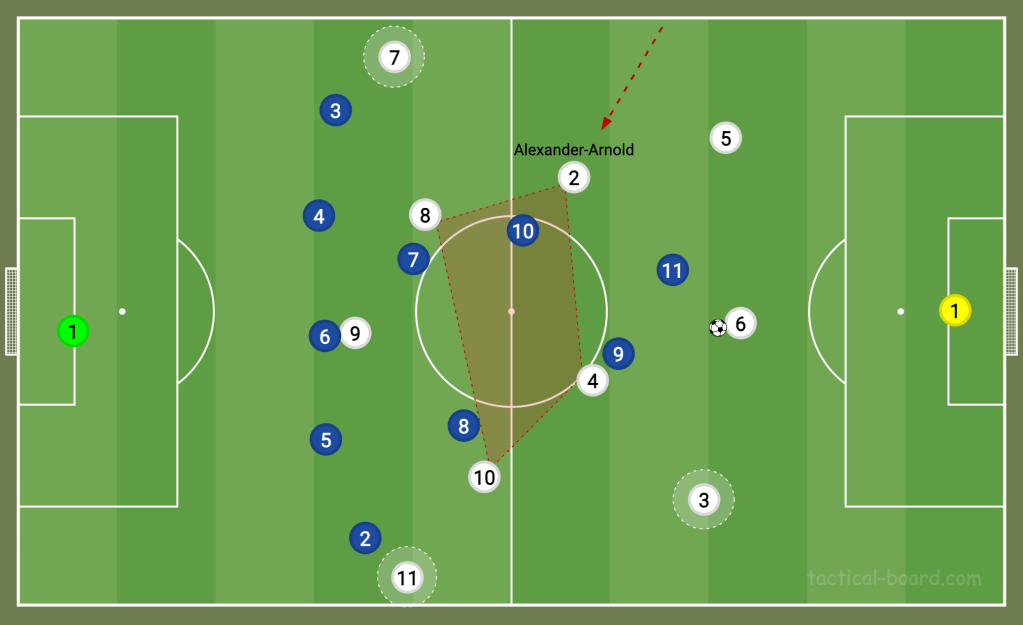
Carsley wants his team to be fluid and make decisions for themselves, taking more risks than perhaps any England team in history have done before. A feature of his England team going forward will surely be Trent Alexander-Arnold as a right-back — an inverted right-back. This opens up the space for England’s left-back to play as a third centre-back in possession. The likes of Colwill and Jarrad Branthwaite ought to be licking their lips.
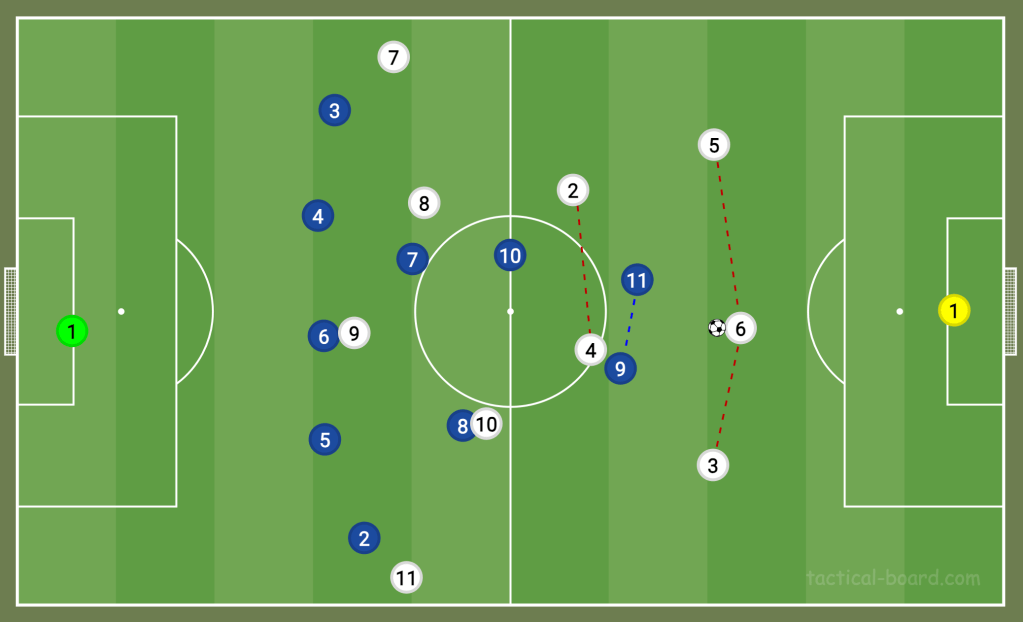
There are any number of reasons why England may build up with a 3+2 rest defence, or change to a 2+3 rest defence (with Alexander-Arnold a bit wider, and a left-back who pushes on more, like Lewis). Often it comes down to how many strikers the opposition are playing with.
If they press with two strikers, Carsley might call on Colwill to play and create a back-three to outnumber the opponent. If England face one striker, three centre-backs may be unnecessary — so Lewis or even Tino Livramento could come into the side.
Either way, it seems like the end of an era. That balance that England fans have become so used to — with Kyle Walker and Luke Shaw at full-back — feels, now, like a bygone comfort. Perhaps England are becoming even more technical on the ball. Maybe England don’t need to rely on crosses into the box if they can wriggle out of tight spaces in midfield.
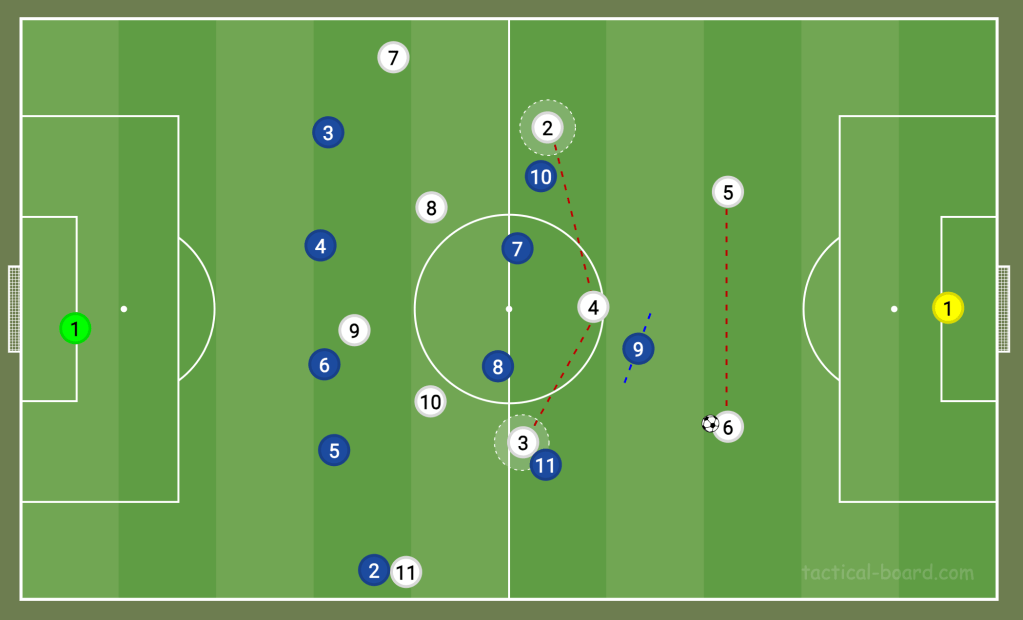
This was a constant throughout Carsley’s first two games in charge, that kind of unwavering stubbornness to play good football through the middle of the pitch. England haven’t played anti-possession-based-football over the last six or seven years, but Carsley encourages far more positional rotation and fluidity among his players. So much so, in fact, that this is one situation England found themselves in during the second half against Finland last month.
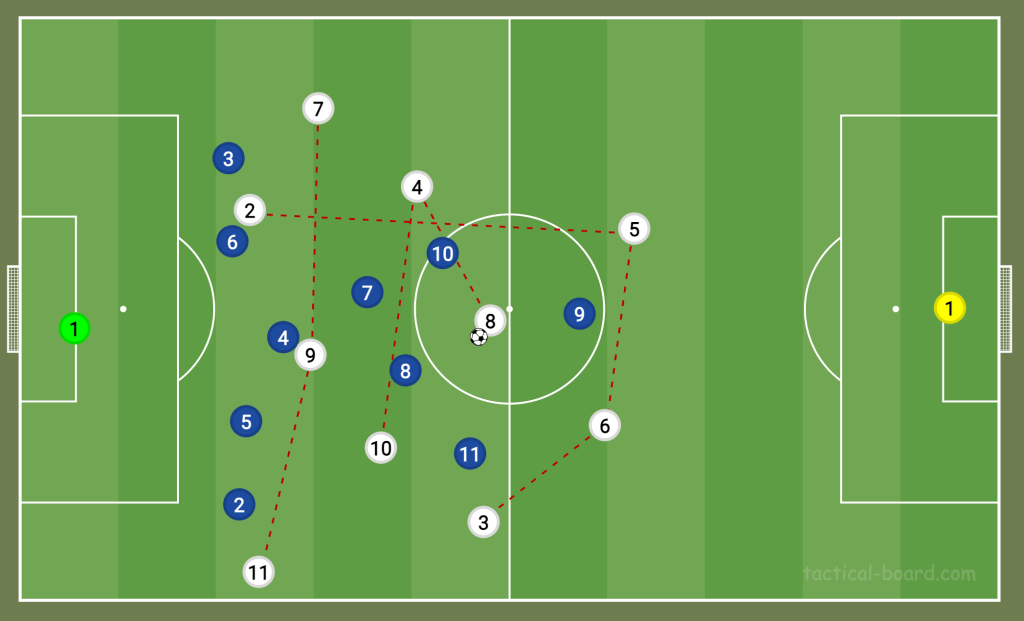
Right-back the furthest player forward, and with players popping up in all sorts of unfamiliar positions, England look a mess. However, the shape in which England wanted to be throughout the game remained the same. A rest defence of five players, with an attacking line of five ahead of them. Carsley won’t mind that his players are ‘out of position’ (for want of a better term), because England have kept their balance.
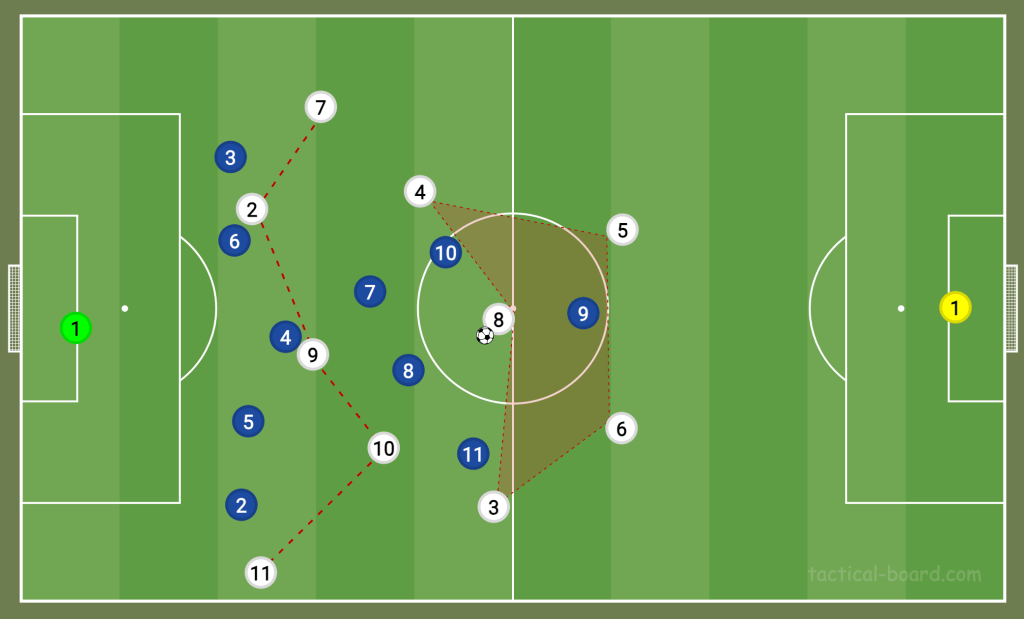
Finally, within Carsley’s 4-3-3 formation, expect to see midfield trios that look ostensibly unbalanced and overly attacking. Whether that’s Gomes, Kobbie Mainoo and Cole Palmer, or Declan Rice, Jude Bellingham and Phil Foden, these are the technicians Carsley wants in his midfield. It’s all about controlling games, and he’s spent every press conference and interview since taking the interim job trying to explain that he isn’t bothered by a player’s natural position, on paper. If they have the attributes to operate in different areas and aid the game plan, he’ll move them around.
 Tactically Speaking